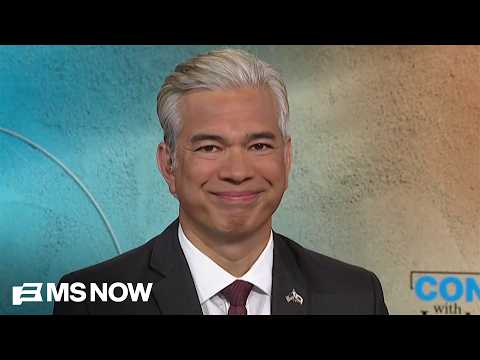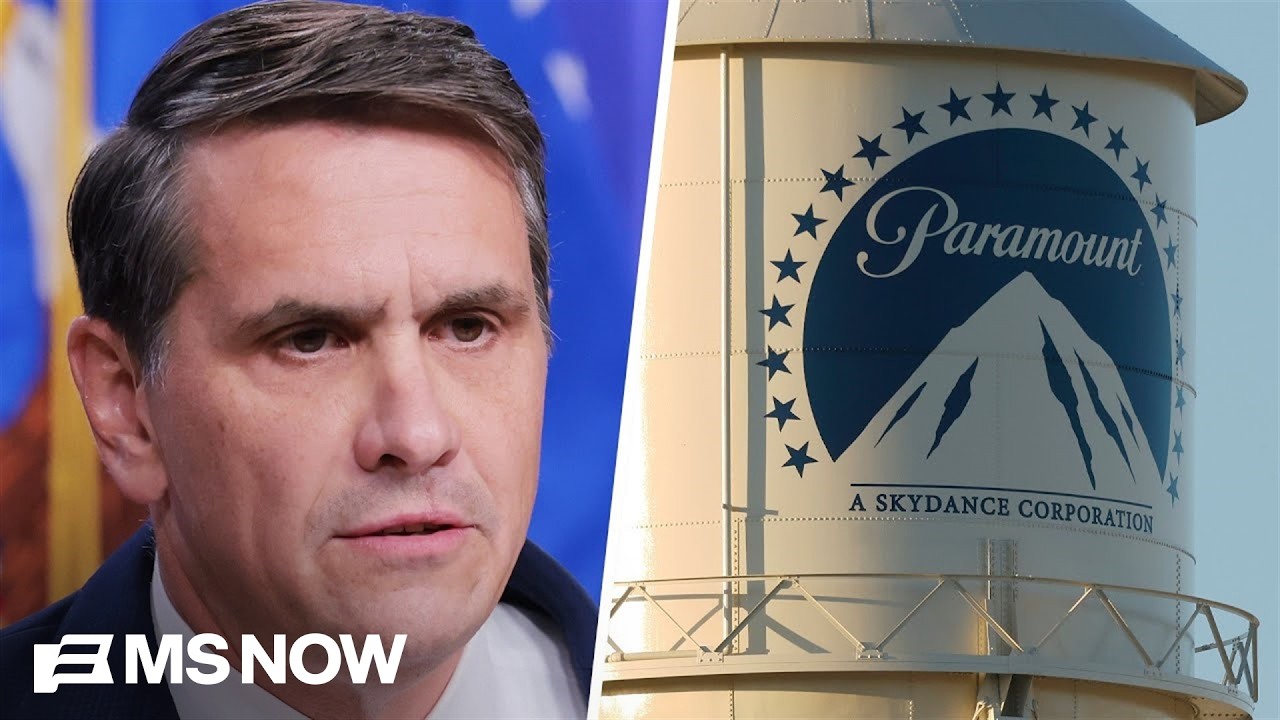

States are trying to block the Skydance-Paramount merger because they believe the $110 billion deal — the largest merger in Hollywood history — would substantially reduce competition, raise prices for moviegoers and cable subscribers, and concentrate dangerous levels of media power in the hands of a single company with close ties to the White House. Leading the charge is California Attorney General Rob Bonta, who filed a sweeping antitrust complaint arguing the merger violates longstanding federal law.
Why Are States Suing to Block the Skydance-Paramount Merger?
California and a coalition of state attorneys general filed suit to stop the proposed merger between Skydance Media and Paramount Global, citing violations of the Clayton Act Section 7, a century-old federal antitrust statute. AG Bonta argues the deal would substantially diminish competition across at least three distinct markets, making it presumptively unlawful under existing federal law.
 00:45
AG Bonta explains why state AGs must act when federal enforcers step back
Watch at 00:45 →
00:45
AG Bonta explains why state AGs must act when federal enforcers step back
Watch at 00:45 →
The complaint — nearly 40 pages filed in federal court — also seeks a temporary restraining order and preliminary injunction to halt the merger from closing while the case proceeds. Bonta was emphatic: this is not a delay tactic or political maneuvering. "This is a straight-up antitrust enforcement action," he said, calling it a "dead bang winner."
The core concern is straightforward. When already-consolidated industries consolidate further, consumers lose. Prices go up. Quality goes down. Choice disappears. And in this case, the stakes extend far beyond ticket prices.
What Does the Ticketmaster Case Tell Us About State Antitrust Power?
If you want to understand why state attorneys general are stepping up here, look no further than what happened with Ticketmaster and Live Nation. The U.S. Department of Justice brought a case, went to trial for a couple of days, and then quietly settled for what critics called a slap-on-the-wrist deal — a sweetheart arrangement that left the company's dominance largely intact.
02:10
Bonta draws direct parallel between Ticketmaster verdict and current Paramount case
Watch at 02:10 →
The states didn't accept that outcome. They fought on independently, took the case to a jury, and won a verdict holding Ticketmaster Live Nation liable. That precedent is exactly what's driving the current multistate effort against the Skydance-Paramount deal.
"The same is true here," Bonta said. "The states need to step into the breach because the U.S. Department of Justice and the FTC, traditional antitrust enforcers, are missing in action."
Will the Skydance-Paramount Merger Raise Prices for Consumers?
According to the state AGs, yes — and significantly. The complaint identifies specific consumer-facing harms the merger would cause:
- Higher movie ticket prices as theater distribution becomes more concentrated
- Increased costs for basic cable and satellite subscribers who rely on Paramount-owned channels
- Reduced content quality and fewer choices as competition between studios diminishes
Bonta was blunt about the economic reality of corporate consolidation: "There is no doubt that corporate consolidation in an already consolidated marketplace will raise prices at lower quality. It will decrease choice and decrease competition." The entertainment industry is not starting from a level playing field — it's already highly consolidated. This deal would make it dramatically worse.
04:30
Bonta responds to Paramount's threat to leave California
Watch at 04:30 →
What Is Clayton Act Section 7 and Why Does It Matter Here?
The Clayton Act is a federal antitrust law that has been on the books for over a century. Section 7 specifically prohibits mergers and acquisitions where the effect may be to substantially lessen competition or tend to create a monopoly in any line of commerce.
This is not a new or untested legal theory. It's the foundational statute that has governed merger enforcement in the United States for generations. When Bonta says the merger is "presumptively unlawful" under Section 7, he's invoking a well-established legal standard — one that courts have consistently applied when a deal tips market concentration past certain thresholds.
The state AGs identified three separate markets where the merger crosses that line. The specifics are laid out in the 40-page complaint, and Bonta's confidence in the case stems directly from how cleanly the facts map onto those legal standards.
Why Did the DOJ Say the Merger Won't Harm Competition?
Just one month before the state lawsuit was filed, the U.S. Department of Justice concluded that the Skydance-Paramount merger was not likely to harm competition or consumers — effectively clearing the deal at the federal level. AG Bonta doesn't just disagree with that finding. He sees it as a symptom of a broader institutional failure.
"This is who the U.S. Department of Justice is right now in terms of its antitrust enforcement — or rather, lack thereof," Bonta said. He acknowledged that career DOJ attorneys want to do fair and firm antitrust enforcement, but argued the White House is repeatedly overriding them, "picking winners and losers" and allowing what he described as corruption to influence outcomes.
The result, in his view, is a federal enforcement apparatus that is not just passive but actively harmful — making things worse by blessing deals that should be blocked. That's precisely why state attorneys general believe they have both the legal authority and the moral obligation to act independently.
How Could This Merger Threaten Press Freedom and News Coverage?
One of the most striking aspects of this case goes beyond economics. A merged Skydance-Paramount entity would control both CBS News and CNN under a single corporate umbrella — and the Ellison family, including both David Ellison and Larry Ellison, have well-documented close ties to President Trump and the current White House.
Bonta raised serious concerns about what that concentration of news media power means for democracy:
- Fewer journalists investigating and reporting the news
- Fewer independent perspectives and viewpoints reaching the public
- Less truth-seeking journalism at a moment when it matters most
- A chilling effect on editorial independence when both major networks answer to the same ownership
"A free, independent press is critical — and critical to democracy," Bonta said. While the lawsuit is grounded in antitrust law rather than First Amendment claims, the media consolidation dimension adds an urgent democratic dimension to what might otherwise look like a dry competition case.
Is Paramount Really Threatening to Leave California?
On the eve of the lawsuit's filing, Paramount began suggesting it might leave California entirely if the merger was blocked — a move that would potentially cost the state thousands of entertainment industry jobs. It was a stark and very public warning designed to put pressure on state officials before the complaint was even filed.
Bonta's response was dismissive and defiant. He called it "a last-ditch, desperate effort to blackmail the enforcers" — an attempt to intimidate state AGs across the country into standing down and allowing what he characterized as an illegal deal to proceed.
"It didn't work. It won't work. It will never work," he said.
He also pushed back on Paramount's broader messaging, which framed the merger as a job creator and competition enhancer. "Up is down, black is white," Bonta said. "The deal that will hurt workers they claim will help workers. The deal that substantially diminishes competition, they say enhances competition." In his view, Paramount's public statements are the predictable playbook of a company trying to close a deal that cannot survive honest scrutiny.
What Happens Next in the Merger Battle?
With the federal government standing aside and the states pressing forward in court, the Skydance-Paramount merger fight is shaping up as a defining test of state-level antitrust enforcement in the modern era. If the preliminary injunction is granted, the deal could be frozen for months while the full case is litigated.
The outcome will matter not just for Hollywood, but for every industry where consolidation is accelerating and federal regulators have stepped back. As Bonta put it: "The people of this nation need the economy to be protected, the rules of the road to be enforced, and affordability to be something that's accessible to them." The states, it seems, have decided they are the last line of defense.