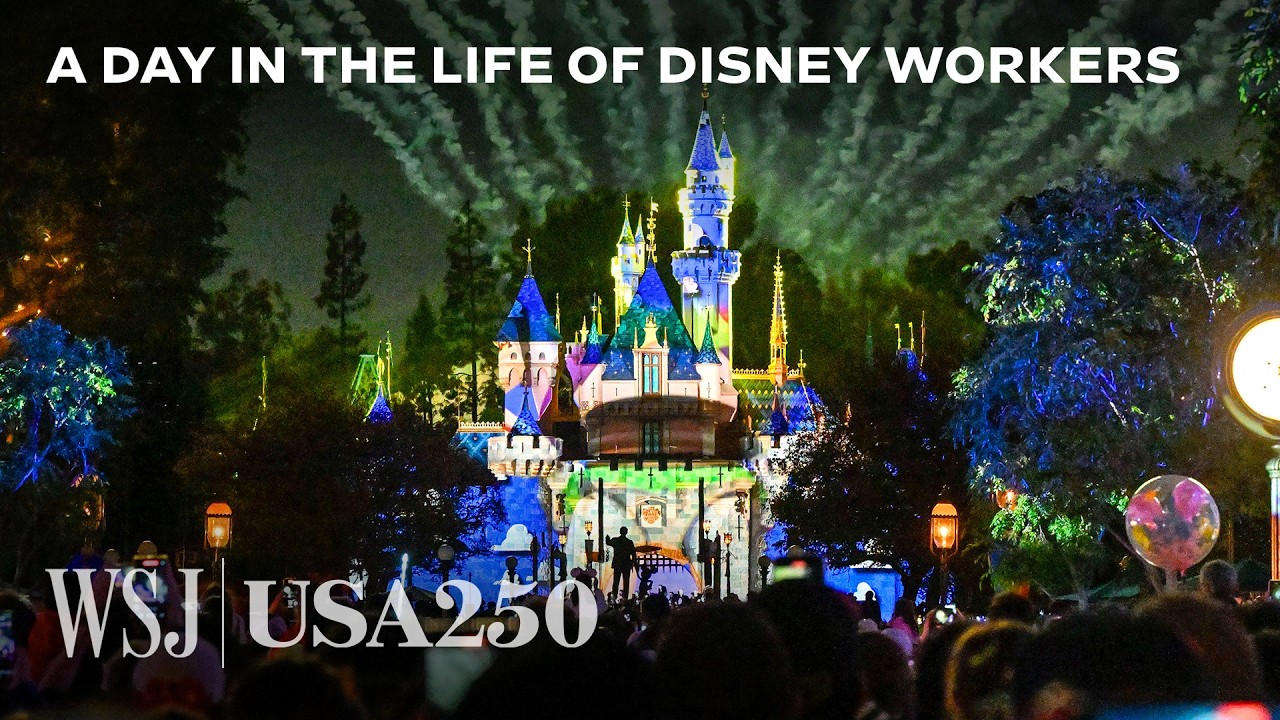

How does Disneyland work behind the scenes? The short answer: like a small city that never sleeps. Over 17 million people visit Disneyland Resort each year, and for most of them, the experience feels effortless — rides that run like clockwork, streets swept clean, cast members who seem genuinely delighted to see you. But underneath that seamless surface is one of the most complex hospitality and entertainment operations in the world. Here's what's really going on when the gates open every morning.
How Does Disneyland Work Behind the Scenes?
The day at Disneyland begins long before the first guest walks through the gates. For operations managers, the alarm goes off at 4:00 AM. By the time families are finishing their breakfast and arguing about whether to hit Space Mountain or Splash Mountain first, a full command structure has already been in place for hours.
Cast members arrive backstage, transition onto the main stage — that's Disney's term for any area where guests can see you — and walk through every corner of the park. Cash registers are tested. Attractions are checked. Morning roll calls are held to address anything that could disrupt the guest experience: a broken register, a ride running slow, a staffing gap. The goal is simple — solve every problem before a single guest ever knows it existed.
As one operations veteran with nearly 39 years at Disneyland put it: "A successful day for me is when we were able to make sure that everything appeared seamless. The best day for me is when no one knows I was there."
That invisibility is the whole point. Disneyland isn't just a theme park — it's a performance. And like any great performance, you only notice it when something goes wrong.
Why Is Disneyland the Most Magical Place on Earth?
Before Disneyland opened in 1955, amusement parks were exactly that — parks with amusements. Ferris wheels. Roller coasters. Cotton candy. Walt Disney had a different vision entirely. He wanted to create something that transported you — a fully immersive experience that dropped guests into a different world, a different time, a different story.
That idea, radical at the time, essentially invented the modern concept of a theme park. And it worked so well that Disneyland didn't just become a beloved attraction — it became a cultural institution. As one cultural observer noted in the video, "Disneyland is almost the perfect embodiment of American entrepreneurship." It's become part of the American middle-class experience, something children grow up knowing they want to visit before they've ever set foot inside.
Today, it's described by Disney insiders as "the crown jewel of all the parks in our collection" — and not just for sentimental reasons. It's the original. The template every theme park since has borrowed from. That legacy creates a kind of responsibility that shapes every single decision made inside its borders.
How Many People Work at Disneyland?
Running Disneyland requires roughly 36,000 employees — and Disney doesn't call them employees. They're cast members. That distinction matters more than it might sound. The language reinforces the mindset: everyone is part of the show, from the ride operator checking your lap bar to the custodial team keeping Main Street spotless at midnight.
The frontline cast members — the ones guests interact with most — are the ride operators, greeting staff, and experience facilitators scattered throughout the park. Their training goes far beyond safety protocols and button-pushing. They're trained to create moments. To notice the birthday button on your lanyard. To catch the look on a kid's face and respond to it. To be genuinely present in a way that most service jobs never ask for.
What Is Rope Drop at Disneyland and Why Does It Matter?
If you've ever planned a Disneyland trip, you've probably heard the term rope drop. It refers to the moment the park officially opens and guests are released from the holding area near the entrance to rush to their first attraction. But the experience is more intentional than a simple gate opening.
Guests are welcomed into a warm, open gathering area before the official 8:00 AM opening — a space designed to feel inviting rather than like a waiting pen. Cast members greet arriving families, set the tone for the day, and build genuine anticipation. When the park opens, it's not just a logistical release. It's the opening act of the show.
"People actually like to come just for rope drop," one operations manager noted. That's not an accident. Disney has engineered even the act of waiting into something guests enjoy — and something they want to repeat.
What Is a Disney Imagineer and What Do They Do?
If cast members are the heart of Disneyland, Imagineers are the brain. The term itself is a mashup of imagination and engineering, and that's exactly what the role demands. Imagineers are responsible for designing, building, and continuously evolving everything guests experience inside a Disney park.
That includes rides, themed environments, show concepts, restaurant layouts, retail spaces, and entirely new lands. One Imagineer in the video described it this way: "It's pretty much anything that you're looking at or experiencing as you ride an attraction, see a show, walk through the parks."
Disney's Imagineering division boasts over 150 disciplines of expertise, handling somewhere between 500 and 800 projects per year. Some Imagineers start small — one 29-year veteran recalled her first intern assignment being a single cash wrap desk that she designed and that still stands in the park today. Others work on multi-year mega-projects like the current expansion of Avengers Campus.
Here's what makes the job uniquely challenging: Imagineers often build new attractions in an operating theme park. Guests are enjoying rides and churros on one side of a construction wall while a team on the other side is welding, installing, and testing the next generation of Disney magic. The pressure to deliver — on time, on budget, and invisibly — is immense.
Their guiding philosophy? "If it doesn't exist, can we invent it? How far can we move the needle on invention?"
How Many Guests Does Big Thunder Mountain Carry Per Day?
Big Thunder Mountain Railroad — "the wildest ride in the wilderness" — is one of Disneyland's most beloved and busiest attractions. On an average day, it carries approximately 30,000 guests, with a peak hourly capacity of around 2,100 riders across five trains running almost simultaneously.
Those numbers give the ride operators very little margin for error — and yet, somehow, they still find time for the human moments. Calling out birthday celebrations. Noticing the celebration pins. Asking the question that leads to an unexpected conversation about love, loss, and a 58-year marriage.
One cast member shared a story from the ride line that captures why Disneyland means something beyond entertainment: a widower who visits 25 or more times a month because Big Thunder Mountain was his late wife's favorite ride. "Hey, why stay home watching the TV when I can be here," the man said. That's the weight a ride operator carries — and why the job is so much more than it appears.
What Is Pixie Dusting and How Do Cast Members Do It?
Pixie dusting is Disney's internal term for creating spontaneous, magical moments for guests — the unexpected gestures that turn a good day at Disneyland into an unforgettable one. It's not scripted. It's a mindset.
It might be a cast member noticing a child's first visit pin and arranging a surprise character interaction. It might be remembering a family's name from a morning greeting and calling it out hours later. It might be, as one ride operator demonstrated, asking what's on a guest's celebration badge and discovering a story of grief and love that reframes the entire experience.
The training behind pixie dusting teaches cast members to be radically observant — to see guests not as a throughput problem to be managed, but as individuals who showed up carrying real lives with them. "It just makes me realize that we provide them that sense of home, that sense of safety, that sense of whatever they need just to kind of feel cared for," one ride operator reflected.
Multiply that connection across thousands of interactions every single day, across 36,000 cast members, across 17 million annual guests, and you begin to understand how Disneyland sustains something that should be impossible: a theme park where people genuinely feel at home.
The Balance Between Nostalgia and Innovation
Perhaps the most difficult challenge Disneyland faces isn't staffing or construction or crowd management. It's maintaining its identity while continuing to grow. As one Disney leader put it: "One foot in nostalgia and tradition and one foot in innovation is really important."
The park that Walt Disney opened in 1955 still exists in the bones of what stands today. The same core promise — welcome, wonder, belonging — runs through everything from the original Sleeping Beauty Castle to the Avengers Campus going up right now. Guests come expecting magic. Disneyland's job, carried out by 36,000 people starting at 4 AM every morning, is to make sure that expectation is not just met, but exceeded.
And when guests head for the exit at the end of a long, sun-drenched day, feeling just a little sad to leave? That's the goal. Because what they're really doing is already planning when they'll come back.