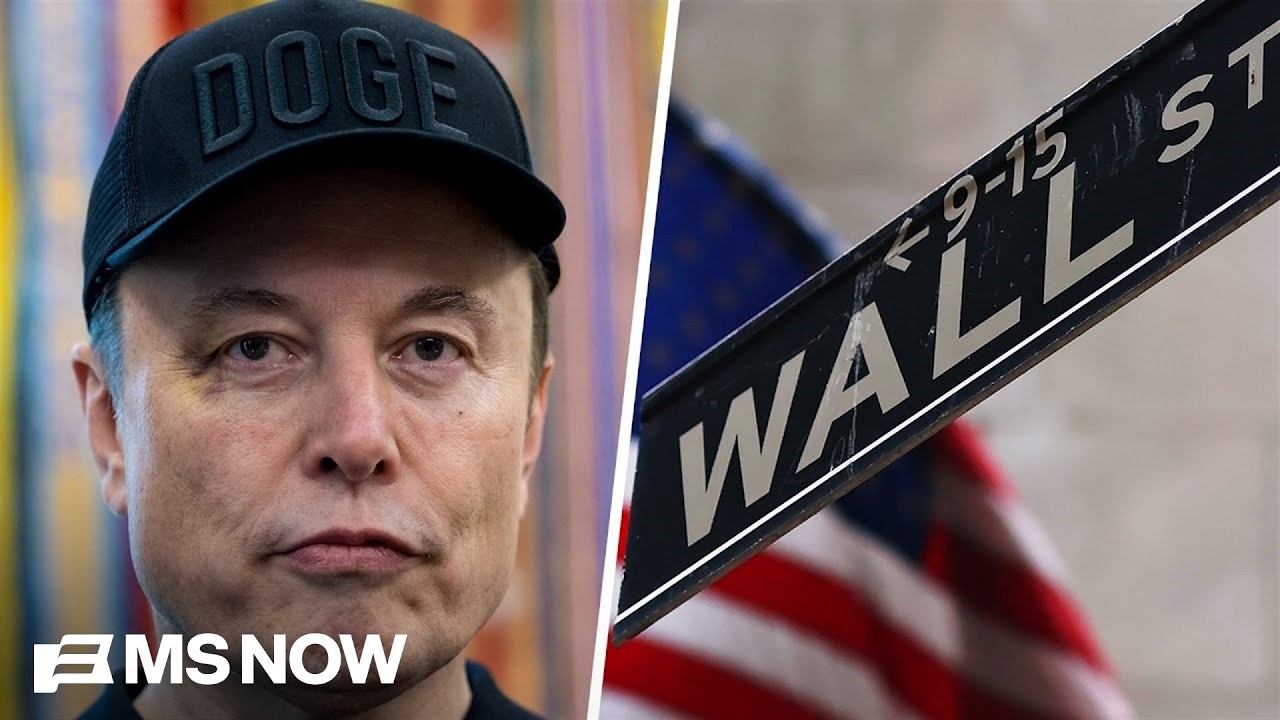

SpaceX is being added to the Nasdaq 100 — and it's happening at lightning speed. Just 15 days after launching its IPO, the company founded by Elon Musk is set to become 1.3% of the index, triggering billions in forced buying across ETFs and index funds. If you have a 401k, there's a good chance you're about to become a SpaceX shareholder whether you like it or not.
Is SpaceX Being Added to the Nasdaq 100?
Yes — and the speed at which it's happening is unprecedented. Nasdaq rewrote its own rules to allow SpaceX to fast-track its entry into the Nasdaq 100, bypassing the standard requirements that every other company has had to meet. Ordinarily, a company must go through what's called a seasoning period before joining a major index. That process exists for two critical reasons: to let the stock price settle to a reasonable level, and to demonstrate that the company is actually profitable.
 01:15
Analyst explains the Nasdaq 100 seasoning period and why SpaceX bypassed it
Watch at 01:15 →
01:15
Analyst explains the Nasdaq 100 seasoning period and why SpaceX bypassed it
Watch at 01:15 →
SpaceX has met neither of those conditions. It has been trading for just over two weeks, and its profitability remains unproven at this scale. Yet Nasdaq changed the rules specifically to accommodate it — a move that critics have compared to FIFA-style governance, where rules get waived when it's convenient for powerful players.
How Does the SpaceX IPO Affect Your 401k?
Here's where it gets personal. The Nasdaq 100 isn't just an abstract list of companies — it's the backbone of some of the most widely held investment products in America. The QQQ ETF alone tracks the Nasdaq 100, and because SpaceX is now part of the index, fund managers are required to buy its stock. There's no opt-out.
That means if your 401k includes any fund that tracks the Nasdaq 100 — or a total market index that includes Nasdaq stocks — you now have exposure to SpaceX. Fidelity Investments, the nation's largest 401k provider, is among the institutions that will be required to hold the stock.
03:40
Breaking down the forced buying numbers: QQQ alone requires $4.5 billion in SpaceX purchases
Watch at 03:40 →
The logic behind index investing has always been like buying a box of tomatoes from a trusted grocer — you expect them all to be edible. Different sizes, different flavors, but all good. SpaceX, as one analyst put it on air, is a green tomato being thrown into the box. We don't yet know if it will ripen into something great or rot on the vine.
Why Did Nasdaq Waive Its Own Rules for SpaceX?
That's the question a lot of market watchers are asking. Nasdaq rewrote the rules that govern how quickly a company can join the index, and the timing is hard to ignore — the change came just in time for SpaceX's post-IPO inclusion. Critics point out that this kind of rule-bending undermines the integrity of passive investing, which millions of Americans rely on for retirement security.
Supporters of the move argue it doesn't matter much in the long run. The counterpoint made by market bulls is compelling on its own terms: NVIDIA was a $250 billion company five years ago. Today it's worth $5 trillion. If SpaceX is on a similar trajectory — becoming one of the most innovative companies of the next two or three decades — then early forced inclusion might actually benefit index investors over time. At 1.3% of the index, the position is small enough that short-term volatility won't crater your retirement portfolio.
But the precedent it sets is worth watching. When major financial infrastructure bends its own rules for high-profile names, it raises legitimate questions about who those rules are really designed to protect.
06:10
Panel discusses Trump accounts and the potential for individual stock inclusion
Watch at 06:10 →
How Much Forced Buying Does This Trigger?
The numbers are staggering. Because ETFs that track the Nasdaq 100 are required to hold every stock in the index, SpaceX's inclusion triggers what analysts call forced buying — purchases that happen not because fund managers chose SpaceX, but because the rules demand it.
- QQQ alone: approximately $4.5 billion in forced SpaceX purchases
- All Nasdaq 100-tracking ETFs combined: estimates range from $22 billion to $127 billion in total forced buying
This is not speculative demand. It's mechanical. Every fund manager running a product tied to the Nasdaq 100 index has no choice but to buy SpaceX stock, regardless of their personal or professional view of the company's fundamentals.
What Are Trump Accounts and How Do They Work?
Separate from the Nasdaq story, there's a second development that could give SpaceX even broader reach into everyday Americans' finances: the so-called Trump accounts. These are government-seeded investment accounts — similar in concept to a savings bond or a starter investment fund — in which the government contributes $1,000 for eligible children at birth.
Run the math on that $1,000 over 18 years with reasonable market returns, and you end up with roughly $3,800 by the time the child reaches adulthood. The program's original design called for investments to be held in broad S&P 500 index ETFs — diversified, passive, low-cost.
But here's where it gets more complicated. There are reports that the rules are being reconsidered to potentially allow individual stock holdings within these accounts. And SpaceX is one of the names being floated.
Could Individual Stocks Like SpaceX Enter Trump Accounts?
If the rules are changed to allow individual stock ownership within Trump accounts, it opens up a whole new dimension of debate. On the surface, allowing a child's government-seeded account to own SpaceX shares sounds like an exciting growth opportunity. On the other hand, it raises serious questions about political influence over public investment programs.
There's also a historical irony worth noting: for decades, conservative and Republican voices were among the loudest opponents of allowing Social Security funds to be invested in equities, precisely because they didn't want government entities owning private company stock. That philosophical position appears to have shifted considerably.
Critics also raise the funding question. Some of the capital for these accounts is expected to come from private donations — with figures like Michael Dell reportedly contributing billions. But that raises an obvious question about sustainability: what happens when the political winds shift and those donations dry up? A program that depends on billionaire goodwill to function isn't exactly a stable foundation for a national savings initiative.
Will Trump Accounts Widen the Wealth Gap?
One of the more underappreciated concerns about Trump accounts is their potential to deepen income inequality rather than reduce it. The mechanics are straightforward and worth thinking through carefully.
Every eligible child gets the same $1,000 government contribution. But the accounts also allow additional contributions — reportedly up to $5,000 per year from families. Families with disposable income will contribute the maximum year after year, compounding aggressively over 18 years. Families living paycheck to paycheck won't add a dollar beyond the government's initial gift.
After 18 years, one child has $3,800. Another, from a wealthier family, has a substantial six-figure lump sum. The program that was sold as a great equalizer ends up functioning as another vehicle that rewards those who were already in a position to save. The intent may be noble, but the structure has a built-in flaw that deserves far more public scrutiny than it's currently receiving.
The core idea — giving every American child a financial head start — is hard to argue against. But the details matter enormously, and right now, many of those details are still being written.