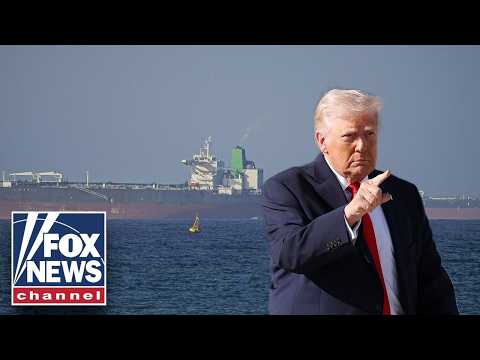
The Iran-US ceasefire announced on April 8th, 2025 is genuinely significant news for the global economy — but no, the crisis is not canceled. Pakistan's prime minister brokered a 14-day suspension of hostilities, immediately reopening the Strait of Hormuz to commercial shipping. Oil prices dropped on the announcement, gas futures pulled back in Europe, and emerging market currencies like the Indian rupee ticked upward. But as we'll explain, the damage already done to global energy, food, and currency markets means prices will stay elevated for weeks, possibly months, regardless of whether this ceasefire holds.
Is the Global Economic Crisis Over After the Ceasefire?
Short answer: slowed down, not canceled. The ceasefire has already had a measurable impact on markets. Brent crude and WTI crude oil both dropped noticeably following the announcement, European natural gas futures pulled back from their war-era highs, and the Indian rupee gained slightly. These are real positive signals.
But here's the reality check. Three major economic crises were set in motion by the war, and none of them vanish overnight with a ceasefire announcement:
- Energy crisis: Crude oil and natural gas prices spiked sharply when the Strait of Hormuz closed. They've come down from their peaks, but they are still well above pre-war levels.
- Fertilizer and food crisis: Urea futures — a key agricultural input — were not yet updated at time of analysis, but the same pattern is expected. Prices remain elevated.
- Emerging market currency crisis: Countries like India, Pakistan, Bangladesh, and the Philippines took a double hit — higher fuel import costs drained their dollar reserves while remittance flows from Middle East workers dried up. These currencies remain under pressure.
So yes, the ceasefire is meaningful. But thinking the global economic crisis is simply switched off by a diplomatic announcement would be a mistake.
Why Are Oil and Gas Prices Still High After the Ceasefire?
Even with ships starting to move through the Strait of Hormuz again, expect prices at the pump and on your energy bill to stay elevated for at least four concrete reasons.
1. Insurance Premiums Remain Sky-High
Shipping companies are not going to immediately trust that the Strait is safe just because two governments announced a ceasefire. War-risk insurance premiums on vessels transiting the Gulf will stay high until there is a sustained track record of safe passage. That makes shipping more expensive, which flows directly into the cost of everything those ships carry.
2. Ships Are Incredibly Slow
This sounds obvious but gets underestimated. Even if every tanker in the world turned around today and headed toward the Gulf, it takes days — sometimes weeks — for those cargoes to arrive and begin relieving shortages, particularly in Asia. There is no instant fix to a supply chain disruption of this scale.
3. War Damage to Production Capacity
The conflict caused real, physical damage to energy infrastructure across Gulf countries. That production capacity does not magically reappear with a peace announcement. Repairs take time, and the gap in output will continue to pressure global energy prices for months.
4. Strategic Hoarding by Governments
Here's one most people won't think about. Governments across Asia, Europe, and beyond watched the Strait of Hormuz close and got a very uncomfortable reminder of their vulnerability. Expect many of them to begin quietly building up strategic reserves of energy and food commodities — which actually increases near-term demand and keeps prices higher for longer, even as the geopolitical situation improves.
How Did Pakistan Broker the Iran-US Deal?
Pakistan's prime minister played the role of mediator, facilitating what appears to be a genuine back-channel between Washington and Tehran. Iran's Foreign Minister formally expressed gratitude for Pakistan's "tireless efforts to end the war." The deal framework involves Iran's ten-point proposal being accepted as the basis for negotiations, with formal talks scheduled to begin in Islamabad on April 10th. Pakistan's geographic and diplomatic positioning — sharing borders with both Iran and having longstanding relations with the United States — made it a credible neutral venue for these discussions.
What Is Iran's 10-Point Peace Proposal?
Iran's conditions, as shared by the Iranian embassy in India, are sweeping and ambitious. Iran's position is blunt: you started this war, but we will set the conditions for ending it. Here is what Iran is demanding:
- A formal non-aggression commitment — no future attacks by the US or Israel
- Iran retains control over the Strait of Hormuz
- Acceptance of Iran's right to enrich uranium
- Full lifting of all sanctions — both primary (against Iran directly) and secondary (against foreign companies doing business with Iran)
- Termination of all UN Security Council resolutions against Iran
- Termination of all International Atomic Energy Agency resolutions critical of Iran
- Financial compensation to Iran — currently appearing to take the form of approximately $2 million per vessel transiting the Strait, though broader compensation may be on the table
- Full withdrawal of US combat forces from the entire Middle East region
- Cessation of war on all fronts, including in Lebanon
The US's 15-point plan is classified, but details leaked in Israeli media suggest Washington wants Iran to dismantle its nuclear program, abandon its regional proxy network (including the Houthis and Hezbollah), and accept strict missile limitations. In return, the US offers a full sanctions lift and assistance with Iran's civilian nuclear program.
The overlap? Both sides actually agree on lifting sanctions and preserving some form of civilian nuclear activity. The gaps? Iran wants enrichment rights. The US wants dismantlement. Iran wants US forces out of the region. The US has never done that. And then there's Israel.
How Likely Is the Iran-US Ceasefire to Hold?
Most geopolitical analysts describe this ceasefire as fragile, and the fragility comes from one direction above all others: Israel. Iran has explicitly stated that cessation of Israel's operations in Lebanon is part of this deal. Israel has explicitly contradicted that. That is a live contradiction sitting inside a 14-day ceasefire window — not a comfortable place to be.
Beyond Lebanon, the credibility gap on both sides is real. How does Iran trust that the US won't simply resume strikes after two weeks? The US has aircraft carriers, long-range bombers, and missiles — a pinky promise is hard to verify. How does the US trust Iran's nuclear commitments without intrusive inspections that Iran has historically resisted?
One genuinely interesting dynamic: Iran's proxy network — Hezbollah, the Houthis, Iraqi militias — was historically Iran's deterrence against a US or Israeli first strike. Now that Iran has demonstrated it can close the Strait of Hormuz and genuinely threaten the global economy, it arguably has a far more powerful deterrent. That could make it easier, not harder, for Iran to walk away from the proxy model as part of a deal.
And Trump? His 2025 national security strategy explicitly prioritized the Americas and China over the Middle East. A deal that lets him withdraw US forces and declare victory fits his stated agenda. Whether he can bring Israel along — or is willing to pressure Israel — is the question nobody can answer right now.
Could Israel Blow Up the Iran-US Peace Deal?
This is the uncomfortable elephant in the room. Israel's strategic interest, as multiple analysts have noted, appears to be reducing every regional rival — Iran, Lebanon, Iraq, Syria — to a shadow of its former self, permanently unable to pose a threat. A stable, sanctions-free Iran with a functioning economy and retained influence in Lebanon does not fit that picture.
Israel continuing operations in Lebanon during or immediately after a ceasefire announcement would be the most direct way to blow up the deal — and Iran has already flagged it as a dealbreaker. Watch Lebanon closely over the next 14 days. If Israeli operations there escalate, the ceasefire collapses. If they pause or scale back, there's a genuine path to the Islamabad negotiations producing something real.
The Bottom Line: Ceasefire Is Good News, But Peace Is What the World Needs
The ceasefire is genuinely positive for markets, for people facing surging fuel and food bills, and for the broader trajectory of a conflict that was starting to look extremely dangerous. But the economic data is clear: prices across energy, food, and emerging market currencies remain well above pre-war levels, and recovery will take weeks to months even under the best-case scenario.
The only real path out of the global economic crisis is a durable peace agreement, not a 14-day pause. And that agreement faces serious obstacles — most notably from Israel, but also from the genuine gaps between what Iran demands and what the US is willing to offer. The next two weeks of negotiations in Islamabad will tell us a great deal about whether this ceasefire is the beginning of a historic settlement or just a temporary breather before the next escalation.