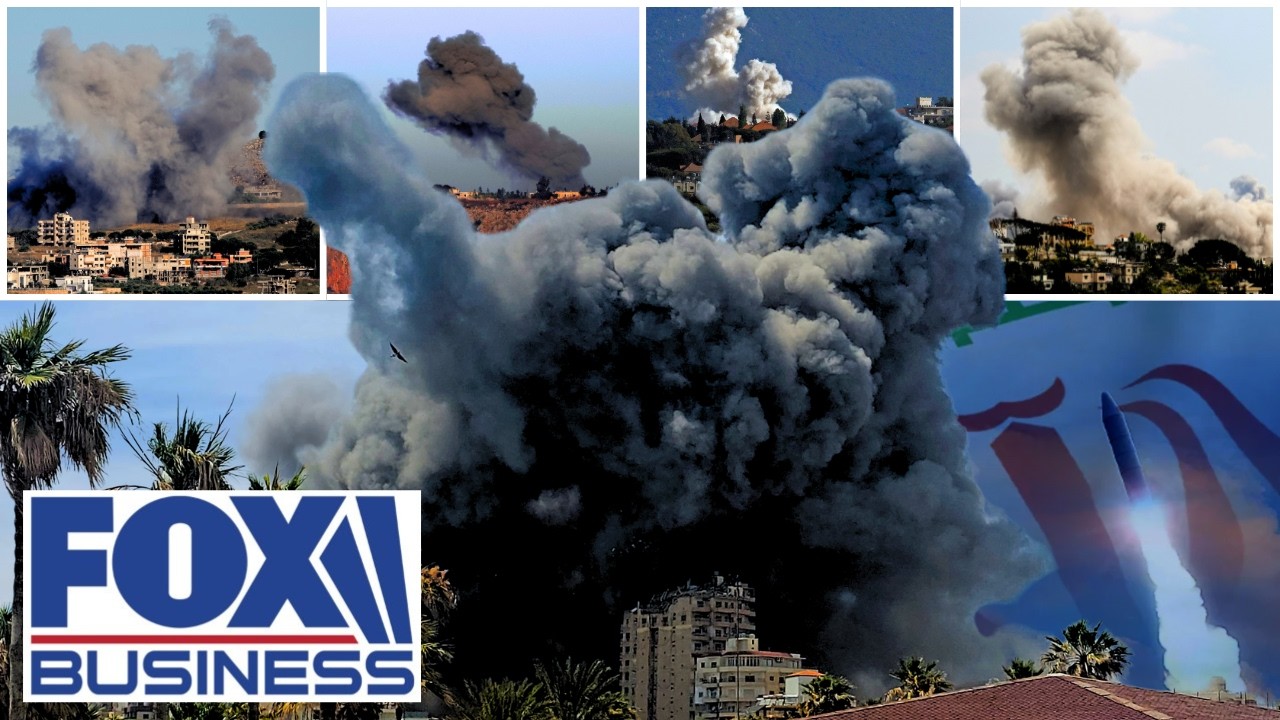

What's Happening With Iran Oil Sanctions and the Strait of Hormuz?
The Trump administration has moved aggressively to cut off Iran's most powerful economic lever: oil revenue. By revoking the waiver that previously allowed Iranian oil sales and signing a new Memorandum of Understanding (MOU), the U.S. Treasury Department has effectively eliminated the biggest primary economic benefit for the Tehran regime. In plain terms, this isn't a physical naval blockade of the Strait of Hormuz — but it functions like a financial one. Former Pentagon official and Navy Captain Brent Sadler described the move as "reinserting the blockade," arguing it strips Iran of the last major leverage it held going into peace negotiations.
The question experts are now asking isn't whether this was the right move — it's whether it goes far enough. The answer, according to national security analysts, is: not yet. Iran can still physically ship oil through existing routes, and the regime has shown little willingness to comply with the MOU from the start. The pressure campaign is working in degrees, but significant gaps remain.
 00:45
Brent Sadler explains why revoking the Iranian oil waiver functions as a financial blockade
Watch at 00:45 →
00:45
Brent Sadler explains why revoking the Iranian oil waiver functions as a financial blockade
Watch at 00:45 →
Is Iran Losing Its Grip on the Strait of Hormuz?
According to reporting from the Wall Street Journal, Iran is steadily losing its grip on the Strait of Hormuz — and that shift is being accelerated by forces beyond just military pressure. Alternative shipping routes, overland pipelines, and a global oil glut are reducing the chokehold Iran has long exercised over one of the world's most critical waterways. When a single nation can't credibly threaten to shut down 20% of global oil flow, its bargaining power collapses.
Analysts point out that some of Iran's recent strikes on commercial vessels may actually reflect desperation rather than strength. A regime that is confident in its leverage doesn't need to lash out repeatedly at international shipping. These attacks may be the behavior of a government watching its strategic position erode in real time.
- Alternative pipelines are increasingly bypassing the Strait entirely
- Global oil supply has expanded, reducing Iran's ability to spike prices through threats
- U.S. military escorts are shepherding commercial ships through the corridor, directly challenging Iranian coercion
How Is the US Military Responding to Attacks on Ships?
The current U.S. military posture involves conducting strikes to degrade Iranian capabilities and physically escorting vessels through vulnerable corridors. But defense analysts argue the rules of engagement need a serious review. Brent Sadler made the case that IRGC forces operating along the coastline should be treated as inherently hostile — meaning any Iranian Revolutionary Guard presence in certain zones could be engaged immediately, rather than waiting for an attack to begin.
02:10
Discussion of the cycle of Iranian strikes and US retaliation in the Strait of Hormuz
Watch at 02:10 →
The cycle as it stands looks like this: Iran strikes a ship, the U.S. retaliates, Iran regroups and strikes again. Critics of the current approach argue this loop only ends when the tempo of American strikes outpaces Iran's ability to reconstitute its military capabilities. If the U.S. degrades Iranian hardware faster than Tehran can replace it, the threat eventually collapses. If not, the 60-day negotiating window simply expires and the cycle restarts.
What Would a More Aggressive Posture Look Like?
Experts are calling for a combination of moves: revising rules of engagement to allow preemptive action against IRGC coastal forces, maintaining relentless military pressure during the negotiation window rather than easing off, and ensuring Iran cannot use any pause in hostilities to reconstitute its naval and missile capabilities. The goal is not permanent war — it's making the cost of continued aggression prohibitive enough that Tehran genuinely wants a deal.
What Role Are IRGC Forces Playing in the Persian Gulf?
The Islamic Revolutionary Guard Corps Navy has been the primary instrument of Iranian coercion in the Persian Gulf and along the Strait of Hormuz. Their small-boat harassment tactics, mine-laying operations, and seizures of commercial vessels have long been used to intimidate regional shipping and signal to global powers that Iran controls access to the Gulf. Under the current MOU, the United States has essentially been forcing Iranian-backed forces to stand back while U.S. military assets shepherd commercial ships through the corridor — a direct challenge to the IRGC's claimed dominance of those waters.
The argument from analysts like Sadler is that the IRGC's continued presence along the coastline during active hostilities should itself be treated as a hostile act. This would represent a fundamental shift from reactive to proactive military posture — one that could dramatically change the calculus for Iranian commanders deciding whether to order another attack.
04:30
Rebeccah Heinrichs outlines Trump's NATO spending legacy and the Greenland security argument
Watch at 04:30 →
What Did Trump Accomplish at the NATO Summit 2025?
President Trump arrived at the NATO Summit while simultaneously managing the Iran crisis — a deliberate show of multitasking that his allies noted. Hudson Institute Senior Fellow Rebeccah Heinrichs described it as a historic opportunity, arguing Trump has done something no previous president managed to pull off: actually getting NATO allies to open their wallets.
The numbers are significant. Since Trump's first term began applying pressure on NATO members to meet their defense spending commitments, allied nations have collectively invested more than $1.2 trillion in defense and signed hundreds of billions of dollars in contracts with American defense companies. That isn't just an abstract geopolitical win — it translates directly into American manufacturing jobs and a revitalized U.S. defense industrial base.
How Much Has NATO Increased Defense Spending Under Trump?
For decades, American presidents complained about NATO burden-sharing. Trump turned complaints into consequences — and it worked. The alliance has seen defense investment increase dramatically, with member states signing major procurement contracts that funnel money back into American defense industries. Heinrichs argued that if Trump keeps the focus on this legacy at the summit, he earns a genuine victory lap.
That said, analysts are clear that this is not the moment to ease pressure on European allies. Many NATO members are still recovering from years of deliberate military underfunding, and the structural gaps in alliance readiness remain significant. The investment trend is moving in the right direction — but the job isn't finished.
Why Does Trump Keep Pushing to Control Greenland?
Trump's push to bring Greenland under U.S. control is back on the table at the NATO Summit, and he's making no apologies for it. His argument is straightforward: Greenland's geographic location makes it a critical node in U.S. and NATO strategic defense. As Russia and China increase their military and economic encroachment in the Arctic, the island's value as a missile defense platform — potentially the anchor point for a future "Golden Dome" missile shield — makes it irreplaceable from a national security standpoint.
Trump's position: Denmark doesn't have the resources or the will to properly develop and defend Greenland, but the United States does. Secretary of State Rubio has been working through diplomatic channels with Denmark to address security concerns constructively, but Trump's public pressure campaign shows no sign of letting up.
What Is the Golden Dome and Why Does Greenland Matter?
The "Golden Dome" concept refers to a proposed advanced missile defense architecture for the continental United States and its allies — a layered shield against ballistic and hypersonic missile threats. Greenland's position between North America and Europe, and its proximity to polar attack corridors used by Russian ICBMs, makes it a logical and arguably essential location for radar installations, interceptor batteries, and early-warning systems. Until Denmark and the U.S. resolve the governance and security questions around Greenland, that strategic gap remains open.
The bottom line across all of these fronts is consistent: the Trump administration is playing an aggressive, multi-theater pressure game simultaneously — squeezing Iran economically and militarily, demanding more from NATO allies, and pushing hard for strategic real estate in the Arctic. Whether it all converges into durable wins depends on whether the pressure holds long enough to force genuine concessions.