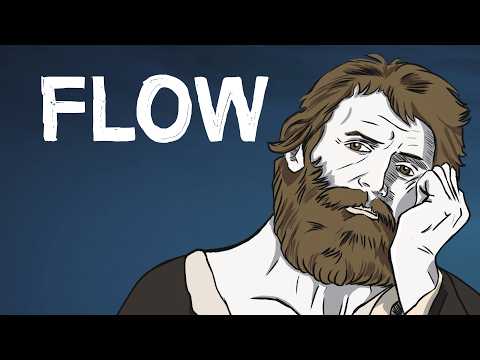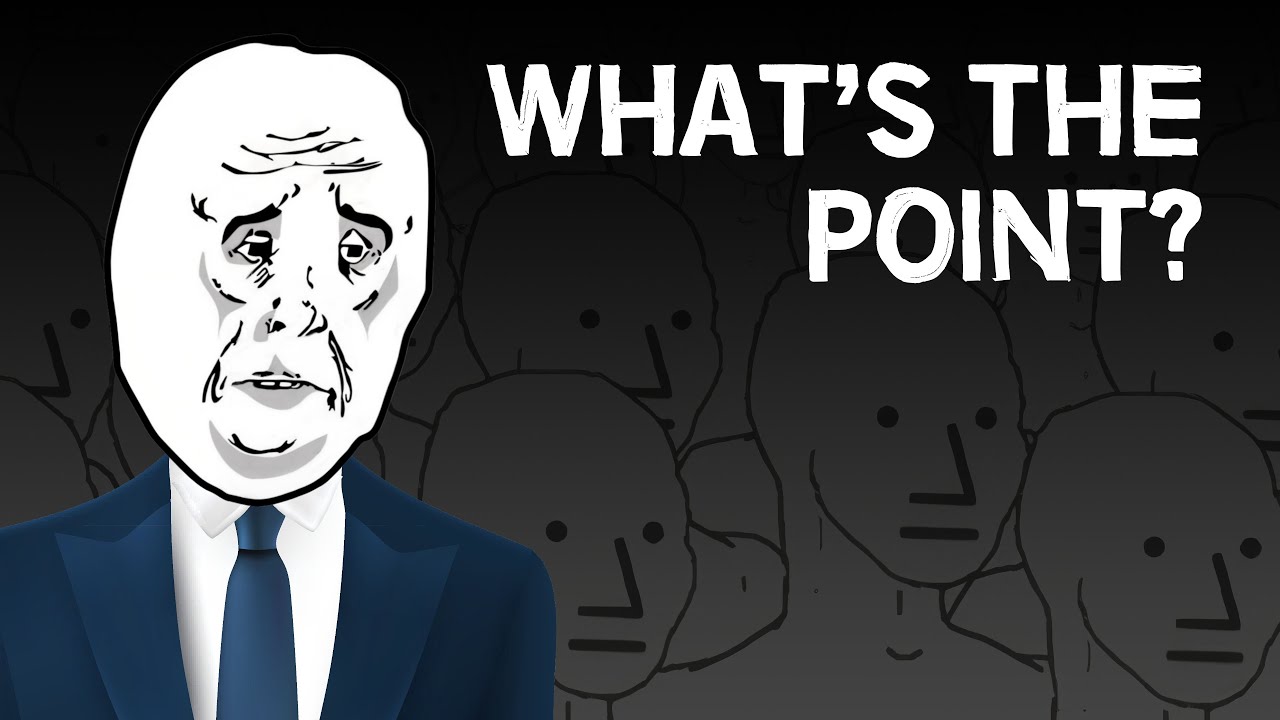

Life feels boring and meaningless today for a surprisingly precise reason: the world has been stripped of its mystery. Technology, globalization, and algorithm-driven culture have conspired to flatten the planet into something predictable, familiar, and ultimately dull. The question of why life feels so flat isn't just personal — it's philosophical, cultural, and worth taking seriously. Because if you've felt it, you're not imagining it. Something genuinely has changed.
Why Does Life Feel So Boring and Flat Today?
Think back — or imagine — a time when the world was largely unknown. When a city like Madrid or Tokyo existed in your mind as little more than a name on a map, a tiny photograph in an encyclopedia, and a handful of exotic facts. That gap between what you knew and what was really out there was electric. It created yearning. It made the world feel enormous and alive with possibility.
 01:15
Stefan describes staring at a photo of the Twin Towers as a child — one of the few glimpses of New York he had growing up
Watch at 01:15 →
01:15
Stefan describes staring at a photo of the Twin Towers as a child — one of the few glimpses of New York he had growing up
Watch at 01:15 →
That gap is now gone. Want to see any street in Tokyo before you visit? Open Google Street View. Want to know which restaurant is best in a Lisbon neighborhood? You have 4,000 reviews waiting. Want to experience Machu Picchu without leaving your couch? There are hundreds of YouTube videos, some filmed live, walking you through every stone. The mystery has been replaced by a preview, and the preview has killed the experience.
This is why so many people today feel a strange, low-grade dissatisfaction with life — not depression exactly, but a kind of flatness. The world has transformed, as one observer put it, from a giant enigma filled with riddles and secrets into a massive, interconnected shopping mall. Every meaningful place is on display like shoes in a store window. True adventure and discovery feel like relics of another era.
Why Does Every City Look the Same Now?
Walk down a shopping street in Tokyo, Amsterdam, Buenos Aires, or Cape Town, and something quietly unsettling happens: you recognize everything. Zara. H&M. McDonald's. Starbucks. Apple. Nike. The same logos, the same store layouts, the same cups of coffee. Even the people are often dressed identically, scrolling the same apps on the same phones.
04:30
Zapffe's concept of 'spiritual unemployment' explained alongside the contrast between an 18th-century voyage and a modern flight to Tokyo
Watch at 04:30 →
This is hyperglobalization in action — and it has come at a steep cultural cost. Paris, once unmistakably itself, now competes with generic international retail chains for space on its own boulevards. Spain's peseta and the Netherlands' guilder are long gone, replaced by the euro, which made transactions easier but also quietly erased the visceral feeling of arriving somewhere genuinely different.
South Korean philosopher Byung-Chul Han calls this the "terror of the same" — a process by which society violently destroys "the Other," meaning everything unfamiliar, foreign, or strange. In eliminating strangeness, we eliminate the very friction that makes experience meaningful. The world becomes smooth, efficient, and utterly hollow. Globalization promised diversity and delivered uniformity.
Why Has Travel Lost Its Wonder and Adventure?
Consider the contrast between two journeys to Tokyo. Today, you open an app, book a flight, book a hotel, pack a bag, and arrive in under twenty hours in a comfortable seat. Convenient. Safe. Almost boring in its ease.
07:10
Walking through Tokyo, Stefan notices the same global brands colonizing the shopping streets — Zara, McDonald's, Starbucks, Apple
Watch at 07:10 →
Now consider an 18th-century traveler making the same journey from Amsterdam to Edo, as Tokyo was then known. You board a VOC merchant ship. The voyage takes six to nine months. You face storms, shipwrecks, scurvy, pirates, tropical fevers, and the very real possibility of never returning home. If you survive, you arrive somewhere genuinely alien — a closed-off island civilization that almost no Westerner had ever seen.
That journey was not just a trip. It was a life-defining ordeal. It had depth, weight, and meaning precisely because of its difficulty and uncertainty. Norwegian philosopher Peter Zapffe would have called it spiritual labor — the hard, transformative work of confronting an uncertain and unpredictable world. Today's twenty-hour flight, by contrast, has become what he called a "meaningless inconvenience." We can't wait to get off the plane.
Travel hasn't become worthless — being physically present somewhere still differs from watching a video. But technology has dramatically reduced the overall depth of the experience. We arrive knowing exactly what to expect, we encounter what we expected, and we leave having consumed a destination rather than truly experienced one.
How Has Technology Ruined Real Life Experiences?
It would be unfair to say technology has ruined everything — it's made life safer, faster, and more connected. But it has also quietly performed a kind of surgery on human experience, removing the difficult and uncertain parts that once gave events their meaning.
Zapffe, writing in the early 20th century, already saw this coming. He argued that as technology takes over the "spiritual labor" of survival and discovery, people experience a kind of spiritual unemployment — a vacancy where struggle and meaning used to live. We no longer need to navigate uncertainty to get what we want. We tap and swipe. And in making everything easy, we've made everything a little less real.
This goes beyond travel. Information itself has been transformed. Growing up in the 1990s, an encyclopedia entry about a distant city — a paragraph, a population figure, a small photograph — was enough to fuel hours of imagination. The not-knowing made those places feel enormous and alive. Today, that same city is available in 4K, narrated, reviewed, and mapped down to the square meter before you've ever set foot there. The imagination has been outsourced to algorithms, and imagination was precisely the thing that made the world feel magical.
What Is the Paradox of Choice on Dating Apps?
The same dynamic plays out in one of the most intimate areas of human life: romantic connection. Before dating apps, meeting someone involved genuine stakes. You went somewhere — a bar, a party, a local gathering — and the dating pool was limited to your town and nearby villages. That limitation wasn't a flaw. It was a feature. It made you more attentive, more present, more willing to take a risk on someone in front of you.
Approaching a stranger once required courage. You noticed someone across a room, felt something stir, gathered the nerve to say hello, and risked rejection right to your face. That vulnerability wasn't just uncomfortable — it was meaningful. It made the connection matter.
Dating apps have turned that experience into something fundamentally different. Potential partners scroll past like items on an assembly line, each one replaceable by a theoretically better one just a swipe away. The paradox of choice kicks in hard: the more options available, the less satisfying any single option feels. Apps have given people access to a vast, global dating pool and, in doing so, have made genuine connection harder to find and easier to avoid. People haven't become worse at love — the conditions for it have been systematically undermined.
What Did Zapffe Mean by Spiritual Unemployment?
Norwegian philosopher Peter Zapffe, born in 1899, was one of the first thinkers to articulate what technology actually costs us on a human level. He coined the term spiritual unemployment to describe what happens when machines and convenience absorb the challenges that once gave human life its texture and meaning.
For Zapffe, struggle wasn't something to be eliminated — it was the raw material of a meaningful life. A dangerous sea voyage, a difficult journey through unknown terrain, the challenge of surviving an unpredictable world: these weren't just obstacles. They were the experiences that shaped character, deepened understanding, and gave life its weight. When technology removes those challenges, it doesn't free us — it leaves us with nothing substantial to do, feel, or become.
He went so far as to call the use of flying machines to explore uncharted land a crime against human experience. That may sound extreme, but the logic holds: when discovery requires no effort and involves no risk, it ceases to be discovery at all.
What Is the Terror of the Same?
Byung-Chul Han's concept of the terror of the same extends this critique into the digital age. Han argues that contemporary culture has developed a deep hostility toward anything unfamiliar — toward the genuinely Other. Algorithms feed us content that matches what we already like. Social media shows us people who think like we do. We self-select into cultural bubbles that confirm and repeat our existing worldview.
As Han writes: "One travels everywhere, yet does not experience anything. One catches sight of everything, yet reaches no insight. One accumulates information and data, yet does not attain knowledge. One lusts after adventures and stimulation, but always remains the same."
This is the core of the problem. Life feels flat not because nothing is happening, but because nothing is actually landing. We consume experiences, places, people, and information without being changed by any of them. The friction — the strangeness, the foreignness, the difficulty — that once forced genuine growth has been engineered away. And without friction, there is no depth. Without depth, everything eventually tastes the same.
So What Do We Do About It?
There's no simple answer, and this isn't an argument for returning to shipwrecks and scurvy. But there is something worth recovering: a willingness to seek out difficulty, unfamiliarity, and the genuinely unknown. To travel without a fully mapped itinerary. To meet people who think differently. To resist the algorithm's pull toward comfortable sameness. To let some things remain mysterious before you look them up.
The world hasn't entirely lost its magic. But finding it now requires resisting the systems designed to make everything easy, familiar, and pre-consumed. The sense of wonder doesn't disappear — it just gets buried under convenience. The question is whether we're willing to dig.