
What Is the Panopticon and Why Does It Matter Now?
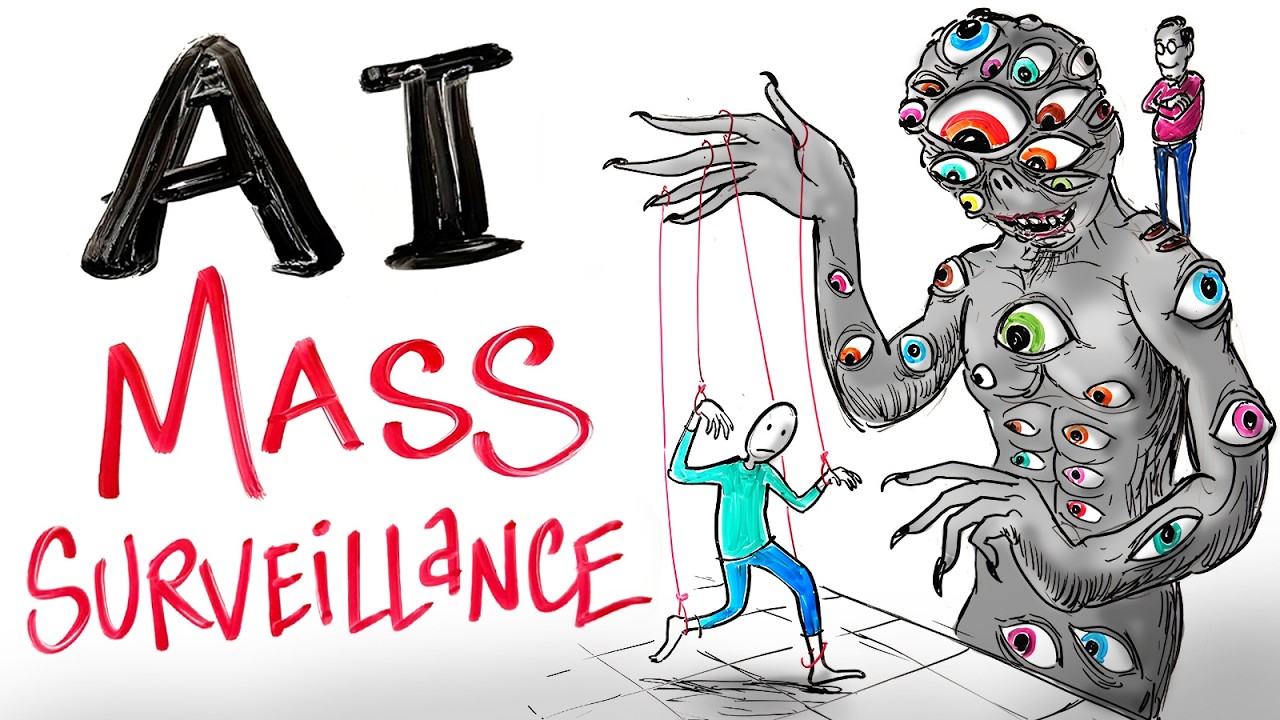
The panopticon is a prison design conceived by 18th-century philosopher Jeremy Bentham, built around a single terrifying idea: inmates could always be watched, but could never know when they were being watched. The result? Prisoners would police themselves. No force required. Today, AI surveillance is recreating this exact psychological dynamic — not in a circular prison, but across the entire digital world. If you've ever wondered whether your data is being used to monitor, predict, or influence your behavior, the answer is almost certainly yes. And the system doing it never sleeps.
Bentham drew inspiration from the Greek myth of Panoptes — a 100-eyed giant who only ever closed two eyes at a time to sleep, making him a perfect, tireless watchman. The word panopticon literally means "all-seeing." The prison he designed placed a watchtower at the center of a circular cell block. Guards could observe every prisoner at any moment, but a screen on the tower meant prisoners could never confirm if they were being watched right now. The psychological effect was the whole point: uncertainty breeds self-censorship. Bentham believed this would reform inmates more effectively than physical punishment ever could.
Now fast-forward to the present. Satellites, cameras, microphones, smartphones, and AI systems are harvesting data about virtually every human being on the planet, every single day. The watchtower is now an algorithm. And the prisoners are all of us.
How Does AI Threaten Your Privacy and Freedom?
The threat AI poses to privacy goes far deeper than most people realize. It's not just that someone might read your emails. It's that AI systems are powerful enough to take thousands of seemingly disconnected data points — the places you visit, the things you buy, the way your mouse hovers over certain parts of a webpage, a passing comment made to a friend — and assemble them into a detailed, intimate portrait of who you are.
Companies collecting this data are already better at predicting your political views, your personal struggles, and your future choices than your closest friends or even your romantic partner. That's not speculation — that's the current state of the technology. And as AI becomes cheaper, faster, and more widely deployed, the cost of aggregating and analyzing this data at a global scale is dropping toward zero.
The real danger isn't just surveillance — it's behavioral control. If you know that a system somewhere has the ability to connect every dot of your life and model your deepest fears, secrets, and desires, you start to self-regulate. You think twice before posting that opinion. You hesitate before attending a protest, signing a petition, or voting for a particular candidate. You become, in effect, your own prison guard. That is the panopticon working exactly as designed — except now it operates at civilizational scale.
What Is Mass Surveillance and How Does It Actually Work?
Mass surveillance in the modern era doesn't require a spy following you down the street. It's largely invisible, automated, and embedded into the infrastructure of daily life. Almost everything you do now generates data: your location via GPS, your purchases via credit cards, your communication via messaging apps, your health via wearables, your political interests via search history.
This data doesn't sit in one place. It gets sold, traded, and stored across thousands of companies — the vast majority of which you've never heard of and certainly never consented to share your information with. In the past, spying was expensive. Kings and emperors wanted to monitor their populations for signs of rebellion, but they were limited by the sheer cost of deploying human spies at scale. That constraint no longer exists.
AI changes the economics of surveillance completely. The same capabilities that allow an AI to read an entire novel and identify character relationships, themes, and subplots also allow it to scan millions of people's behavioral data and find patterns invisible to the human eye. It can do predictive modeling — essentially forecasting what you're likely to do next based on what you've done before. Government agencies, police departments, and private tech companies are all building and deploying these tools right now, often in the name of security and public safety. The problem is these systems collect data on everyone, treating the entire population as suspects.
What Did Socrates Mean — And Why Does It Matter Today?
Nearly 2,500 years ago, Socrates stood trial in Athens for allegedly corrupting the city's youth with philosophy. His judges offered him a deal: choose exile over death, but agree to stop teaching. Socrates refused. His answer has echoed through Western civilization ever since: "The unexamined life is not worth living."
He chose to drink poison hemlock rather than surrender his freedom of thought. What Socrates was defending wasn't just philosophy as an academic exercise — it was the human right to think freely, to question, to examine one's own beliefs and actions without external control. He understood that the moment you hand over that freedom, something essential about what it means to be human is lost.
Today, that freedom is under threat in a way Socrates never could have imagined. Most of us still believe our inner lives are private — that only we know the full picture of our fears, hopes, struggles, and desires. But that assumption is increasingly false. Our online behavior, our network of relationships, and our consumption patterns tell a revealing story about us to anyone with the tools to read it. The examined life that Socrates died to protect is now being examined by systems we don't control and can barely see.
How Is Big Data Used to Predict and Control Behavior?
Big data doesn't just describe who you are — it predicts what you'll do next. This is where surveillance transitions from passive observation to active control. The more data that exists about your choices — what you read, what you watch, what you buy, who you spend time with — the easier it becomes for AI systems to model your decision-making and influence it.
This plays out in obvious ways, like targeted advertising, and in far less obvious ways. Recommendation algorithms decide what information you see, gradually shaping your worldview. Political micro-targeting uses behavioral data to identify your pressure points and serve you content designed to shift your views or suppress your motivation to vote. The technology doesn't need to be 100% accurate to be effective. Even a modest ability to nudge millions of people's behavior has enormous consequences for democracy, commerce, and social cohesion.
- Location data reveals your daily routines, your relationships, and your political activities
- Purchase history predicts your financial situation, health concerns, and personal beliefs
- Search behavior exposes your anxieties, curiosities, and private questions
- Social graphs map your influence, your vulnerabilities, and your ideological leanings
Fiction has long warned us about this. George Orwell's Big Brother in 1984 and the pre-crime system in Minority Report both center on the idea that technology used to know people's thoughts and intentions before they act is inherently a tool of oppression. We are closer to these scenarios than most people are comfortable acknowledging.
What Is the 'Permanent Underclass' Inside Silicon Valley?
As of 2026, the phrase permanent underclass has been spreading rapidly online. Most people assume it refers to workers displaced by AI automation — people whose jobs no longer exist because a machine can do them cheaper and faster. That interpretation is concerning enough. But inside Silicon Valley, the term carries a far darker meaning.
The real fear is not just economic displacement. It's the emergence of two fundamentally different types of human beings: those who control AI, and those who are controlled by it. One group enjoys unprecedented power, freedom, and visibility into the lives of others. The other group lives inside a virtual prison, their behavior monitored, predicted, and shaped by systems they can't access, understand, or resist.
This is why there is a frantic, almost irrational urgency among AI companies to scale as fast as possible, safety and ethics be damned. The race isn't really about building better products. It's about securing a position on the right side of that divide — permanently. The companies spending trillions in pursuit of this goal aren't building a future anyone asked for. They're building leverage that, once established, may be impossible to dismantle.
How Can We Protect Privacy Before It's Too Late?
The good news is that we don't live in that world yet. The virtual panopticon is under construction, but it is not complete. There is still time to make deliberate choices about what kind of society we want to build — but that window is narrowing fast.
Protecting privacy in the age of AI requires action on multiple fronts. It means stronger laws around data collection, storage, and sale. It means meaningful restrictions on the kinds of surveillance tools that can be built and how they can be deployed. It means holding both governments and private companies accountable for how they use the data they harvest. And it means a broader public conversation about what freedom actually requires — not just freedom from physical coercion, but freedom from psychological control.
Socrates understood that the freedom to examine your own life — to think, question, and feel without fear — is not a luxury. It is the foundation of a meaningful human existence. The question we face now is whether we are willing to defend that freedom with the same conviction he did. The tools to build the panopticon already exist. Whether we choose to live inside one is still, for now, up to us.