
What Is the Ring of Fire and Why Is It So Dangerous?
The Ring of Fire is a roughly horseshoe-shaped belt surrounding almost the entire Pacific Ocean, and it's responsible for nearly all of Earth's earthquakes and volcanic eruptions. We're talking about the sites of some of the biggest earthquakes ever recorded, massive volcanoes stretching from Indonesia to Russia to Antarctica, and explosive geological events happening both on land and deep underwater. The reason the Ring of Fire has so many earthquakes and volcanoes comes down to one powerful geological process: subduction. Where dense oceanic plates dive beneath lighter continental plates, they drag water into the hot mantle below — and that water causes overlying rocks to melt, fueling relentless volcanic activity and tectonic stress that releases as earthquakes.
But to really understand why the Ring of Fire exists, you need to understand the system that created it — plate tectonics — and that story starts deep inside the Earth.
How Does Plate Tectonics Actually Work?
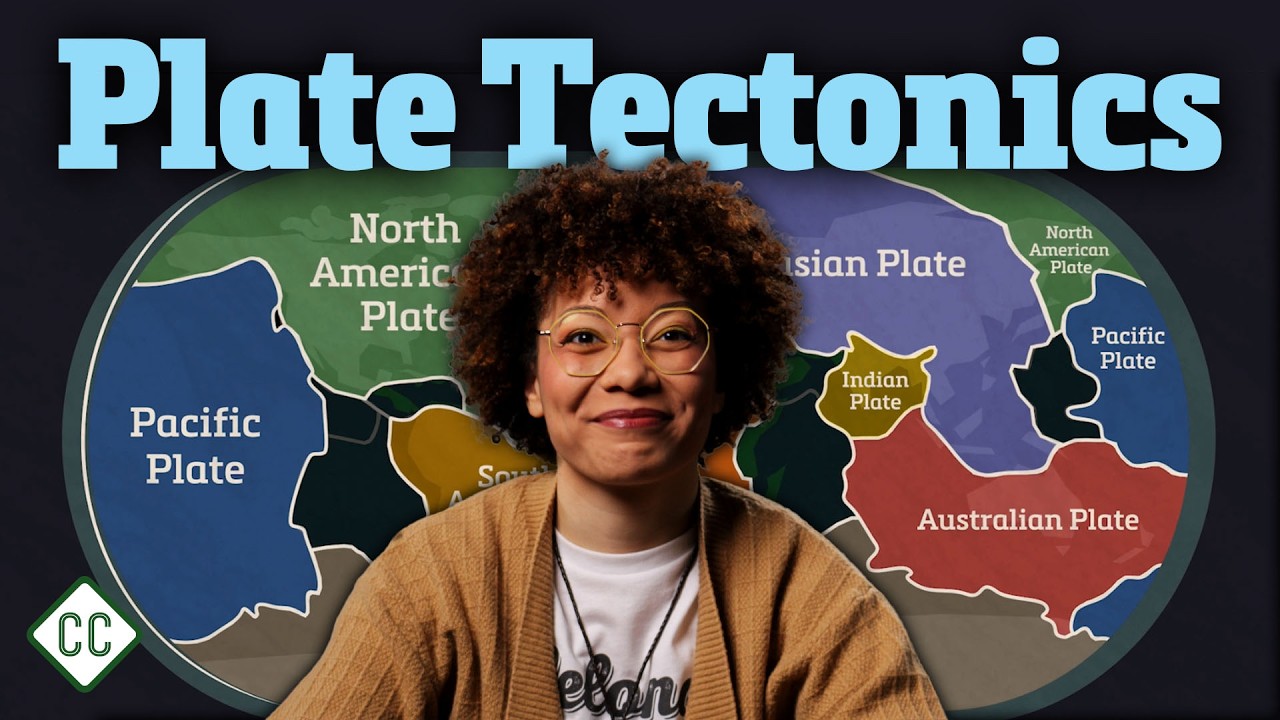
Earth has three main layers: the crust, the mantle, and the core. The rigid outer shell — called the lithosphere — is made up of the crust and the uppermost part of the mantle. And here's the key thing: the lithosphere isn't one solid piece. It's broken into massive slabs of rock called tectonic plates that are puzzle-pieced together across the entire surface of the planet.
There are two types of lithosphere making up these plates. Continental lithosphere forms the land we live on and is made mostly of thick, lightweight granite. Oceanic lithosphere makes up the seafloor and is composed of denser, heavier rocks like basalt and gabbro. Roughly 95 percent of Earth's surface is covered by just seven major plates, with dozens of smaller ones filling in the gaps.
Beneath all those plates sits the asthenosphere, where intense heat from Earth's core warms mantle rocks until they flow and bend like taffy. The hottest rock creeps upward toward the surface while cooler rock sinks back down, creating convection currents — heat-based flow cycles that power the movement of the plates above them. That slow, continuous movement is what we call plate tectonics, and it has been reshaping Earth's surface for roughly 3 billion years.
The continents currently drift at an average of about 1.5 centimeters per year. In all of recorded human history, the ground beneath you has probably shifted only about 76 meters — roughly the width of a soccer field. Too slow to feel, but transformative over millions of years.
What Are the 3 Types of Plate Boundaries?
All the geological action happens where plates meet, at zones called plate boundaries. There are three main types, and each one creates dramatically different features on Earth's surface.
Divergent Boundaries: Plates Pulling Apart
At divergent boundaries, plates move away from each other. When oceanic plates diverge, hot mantle rock wells upward, erupts as lava, and cools into brand-new oceanic crust — a process called seafloor spreading. This is driven largely by ridge push, the gravity-powered force that causes new seafloor to sink and push older crust outward. When continental plates diverge, the crust thins and breaks apart, forming rift valleys. You can actually watch this happening right now in East Africa, where the Nubian and Somalian plates have been pulling apart for about 25 million years.
Convergent Boundaries: Plates Crashing Together
At convergent boundaries, plates collide — and this is where the Ring of Fire gets most of its drama. When a dense oceanic plate meets a lighter continental plate, the oceanic plate is forced underneath in a process called subduction, pulled down by slab pull — the gravitational force yanking it into the mantle. As the slab descends, it releases water into the surrounding hot rocks, which causes them to melt and drives intense volcanic activity at the surface.
When two oceanic plates converge, subduction carves out the deepest places on Earth — like the Mariana Trench, the deepest point in the entire world, sitting right in the Ring of Fire. When two continental plates converge, neither wants to subduct, so they crumple upward instead, forming massive mountain ranges like the Alps and the Himalayas.
Transform Boundaries: Plates Sliding Past Each Other
At transform boundaries, plates grind sideways past each other like two sheets of sandpaper. The friction builds enormous stress until the ground finally snaps — releasing energy as an earthquake. California's San Andreas Fault is a classic example, responsible for earthquakes like the devastating Loma Prieta quake in 1989. Importantly, earthquakes aren't exclusive to transform faults — they can occur at any plate boundary when enough stress accumulates.
Who Actually Discovered Plate Tectonics?
The theory didn't arrive overnight. It took decades of evidence — and a few brilliant scientists who didn't always get the credit they deserved.
It started in the 1910s when German geologist Alfred Wegener noticed that the continents looked like they could fit together like puzzle pieces. He proposed the theory of continental drift — the idea that continents had once been joined and slowly drifted apart. He even coined the term Pangea, meaning "all of the earth." The geological community largely dismissed him at the time, but he was onto something real.
The biggest breakthrough came in the 1950s and '60s when American geologist Marie Tharp and her collaborator Bruce Heezen used sonar to map the ocean floor for the first time. Because of the era's sexist restrictions, Bruce gathered data aboard ships while Marie — working on land with pens, ink, and rulers — painstakingly plotted every data point alongside her colleague Hester Haring. What they found changed geology forever: not a flat, barren seafloor, but a 40,000-mile underwater mountain range circling the globe like a seam on a baseball — the mid-ocean ridge, a continuous chain of divergent plate boundaries.
Marie Tharp later collaborated with Austrian artist Heinrich Berann to produce the World Ocean Floor panorama, published in 1977. In 1999, she was named one of the four greatest cartographers of the 20th century by the Library of Congress. Science historian Naomi Oreskes called plate tectonics the first theory ever to achieve full consensus in the entire history of Earth science. That's a big deal.
What Was Pangea and Will It Happen Again?
At multiple points in Earth's history, the drifting continents have collided and fused into single massive landmasses called supercontinents. The most recent one was Pangea, which existed roughly 200 to 300 million years ago before breaking apart into the continents we recognize today. Plate tectonics is why Europe is warm enough for human civilization while Antarctica sits frozen and largely uninhabited.
And it will likely happen again. Some geologists predict that in approximately 250 million years, Earth's plates could converge into another supercontinent. What it will look like exactly, nobody knows for certain — but the process that built Pangea is still running.
What Happens When Plate Tectonics Eventually Stops?
Plate tectonics is powered by heat from Earth's interior. Over billions of years, that heat will gradually dissipate — and when the planet cools enough, the whole system will grind to a halt. The consequences would be profound: mountains would erode into flat plateaus with nothing to rebuild them, Earth's magnetic field — which depends partly on convection in the core — could weaken significantly, and continents could slowly sink beneath rising ocean levels.
The good news? That scenario is potentially billions of years away. For now, the seafloor keeps spreading, gravity keeps pulling plates downward, and the Ring of Fire keeps reminding us that we live on a restless, dynamic planet. Understanding plate tectonics isn't just fascinating — it's essential. It helps scientists predict volcanic eruptions, prepare communities for earthquakes, and issue tsunami warnings that save lives.
Earth's plates are moving right now, underneath your feet, as you read this. Slowly, steadily, magnificently.