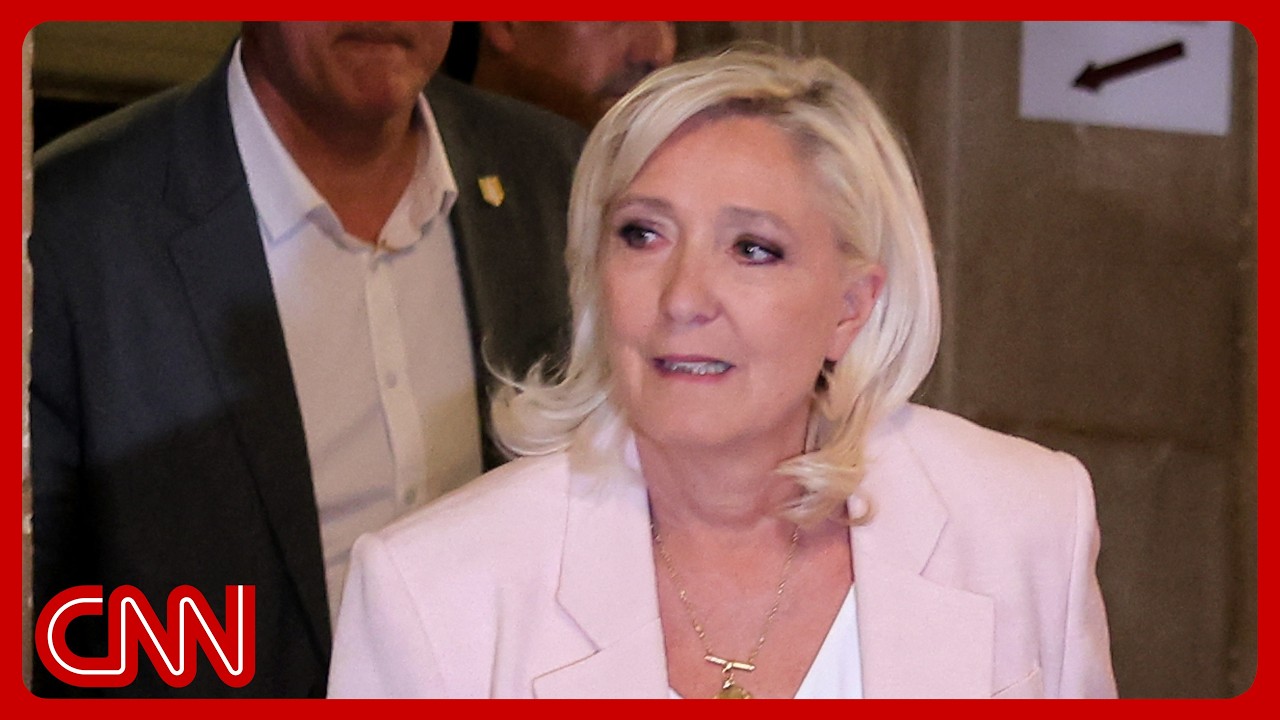

Marine Le Pen has confirmed she will run for president of France in 2027 — and she is doing so with remarkable defiance. Despite a court upholding her conviction for embezzlement and ordering her to wear an electronic ankle bracelet, Le Pen stepped in front of the cameras and announced she is entering the race. She is appealing the appeals court decision, and she believes that process will ultimately clear her name and allow her to campaign freely. After 16 months of the country holding its breath waiting for this verdict, Le Pen has made her position unambiguous: she is running.
Will Marine Le Pen Run for President in 2027?
Yes. Marine Le Pen has formally confirmed her candidacy for the 2027 French presidential election. For months, there had been genuine uncertainty about whether she would stand, particularly if she faced an ineligibility ban or was forced to campaign under the constraints of an ankle bracelet. She had previously said she would not mount a fourth presidential bid if she had to wear one — describing it as too complicated to negotiate with a magistrate every time she needed to leave her house to campaign.
But the court's ruling changed the calculus. While the verdict upheld her conviction and the ankle bracelet requirement, it also shortened the ineligibility ban, meaning she is technically and legally permitted to stand. That window was enough. Le Pen seized it immediately, appearing on television to announce her candidacy with what reporters described as a very strong sense of defiance.
Her announcement also confirmed the political configuration her party will present to French voters: Le Pen as the presidential candidate and Jordan Bardella as her running mate. If she wins, Bardella would become prime minister. The 2027 campaign, in effect, has now officially begun.
What Was Marine Le Pen Convicted Of?
Le Pen was found guilty of embezzlement in a case centered on the misuse of European parliamentary funds. The charge stemmed from a scheme in which her party, National Rally, was found to have paid party political workers using funds from the European Parliament — money that was intended for parliamentary assistants, not party operatives.
The original verdict came down roughly 16 months before this latest appeals ruling, and it included two significant penalties: a fine, a suspended prison sentence, and — most consequentially — a five-year ban on holding or running for public office. It was that ban that threatened to end her presidential ambitions entirely. The appeal process froze enforcement of that ban, keeping her path to 2027 open while the legal process played out.
Throughout the proceedings, Le Pen insisted the courts were not independent, that judges were partisan, and that the entire process was designed to stop her from standing. She described it as an attack on the democratic rights of French voters, not just on her personally.
Can Marine Le Pen Appeal Her Conviction?
Yes, and she has confirmed she will. Under French law, Le Pen has 10 days to appeal the appeals court decision — essentially launching a further appeal against the appeal ruling. She confirmed on television that she is doing exactly that. She believes this next stage of the legal process will exonerate her entirely and allow her to campaign without restrictions.
Legal analysts note that two courts have now upheld her conviction without overturning it. That makes a full reversal at the next stage appear unlikely, though not impossible. Le Pen herself is publicly dismissing that pessimism. She stated plainly that she expects the court to find in her favor and overturn the conviction completely.
In the meantime, there will also be separate negotiations over the modalities of how she wears the ankle bracelet — including how much flexibility she has to leave her home for campaign activities. Those arrangements are reportedly more flexible than they might initially seem, with probation officers able to negotiate scheduled departures for specific purposes such as earning a living or, potentially, campaigning.
Will Le Pen Campaign With an Ankle Bracelet?
This is one of the most extraordinary questions in French political history. The answer, at least for now, is: possibly, yes. Le Pen previously said she would not stand with a bracelet. But that was before the court shortened her ineligibility period and opened the door to candidacy. With that door now open, her calculus has shifted.
What happens next depends on the outcome of her further appeal. If it succeeds, the bracelet goes away entirely. If it fails, she will campaign as a convicted felon under electronic monitoring — an almost unprecedented scenario for a major presidential candidate in a Western democracy.
There is, however, a political dimension to this that her advisors and observers are already discussing. Some analysts suggest Le Pen could reframe the ankle bracelet not as a liability but as a badge of honor — visible proof that the establishment is trying to stop her from reaching the people. That framing would be very familiar to American audiences who watched Donald Trump turn his multiple indictments and convictions into a fundraising and rallying tool during the 2024 presidential race.
Is Le Pen Using the Same Playbook as Trump?
The parallels are striking and, by many accounts, deliberate. When Le Pen was originally convicted, Donald Trump posted on Truth Social calling to "Free Marine Le Pen" and drawing explicit comparisons between her legal situation and his own. Le Pen, for her part, has used the word lawfare — a term Trump popularized — to describe what she says is a politically motivated judicial campaign to silence her.
She went on French television the night of her original conviction to say that millions of French people understood what was happening and were outraged. The language, the framing, and the strategic defiance are all recognizable as part of a broader far-right populist playbook: present the courts as agents of an out-of-touch elite, position yourself as the voice of the people under attack, and let your persecution become your campaign message.
Whether that strategy works in France the way it worked for Trump in the United States remains to be seen. France has a different political culture and a different relationship with its judiciary. But Le Pen and her team are clearly betting that the emotional logic — they are trying to silence your voice, not just mine — will resonate with her base and possibly beyond it.
Who Is Jordan Bardella and What Role Will He Play?
Jordan Bardella is the president of the National Rally party and Le Pen's designated heir apparent. Young, telegenic, and popular within the movement, Bardella had been widely discussed as a potential presidential candidate if Le Pen was ultimately barred from standing. Over the past 16 months of legal uncertainty, other parties had been positioning themselves against the possibility of facing Bardella rather than Le Pen.
With Le Pen's announcement, that question is settled — for now. Bardella will not be the top of the ticket. Instead, Le Pen confirmed a joint ticket arrangement: she runs for president, and if she wins, Bardella becomes prime minister. This mirrors the cohabitation dynamics that French politics has seen before, but with the twist that both figures come from the same party and are presenting themselves as a unified governing team from the outset.
What Do the Polls Say About Le Pen in 2027?
Polling conducted in the lead-up to this verdict showed something remarkable: National Rally leads the polls whether the candidate is Le Pen or Bardella. The party's support appears to be resilient to either leadership configuration. That said, analysts agree that the identity of the actual candidate matters enormously for how rival parties and candidates position themselves going into the race.
Le Pen's confirmation of her candidacy now gives those rivals a clearer target. Centrists, left-wing coalitions, and other right-wing figures who might enter the race will all now build their strategies around the question of how to defeat her — or how to position themselves as the most credible alternative. In that sense, her announcement does not just confirm a candidacy. It reshapes the entire landscape of French politics heading into 2027.
France has been waiting 16 months for clarity. It finally has it. Marine Le Pen is running — legally permitted, publicly defiant, legally embattled, and, by every current measure, the candidate to beat.