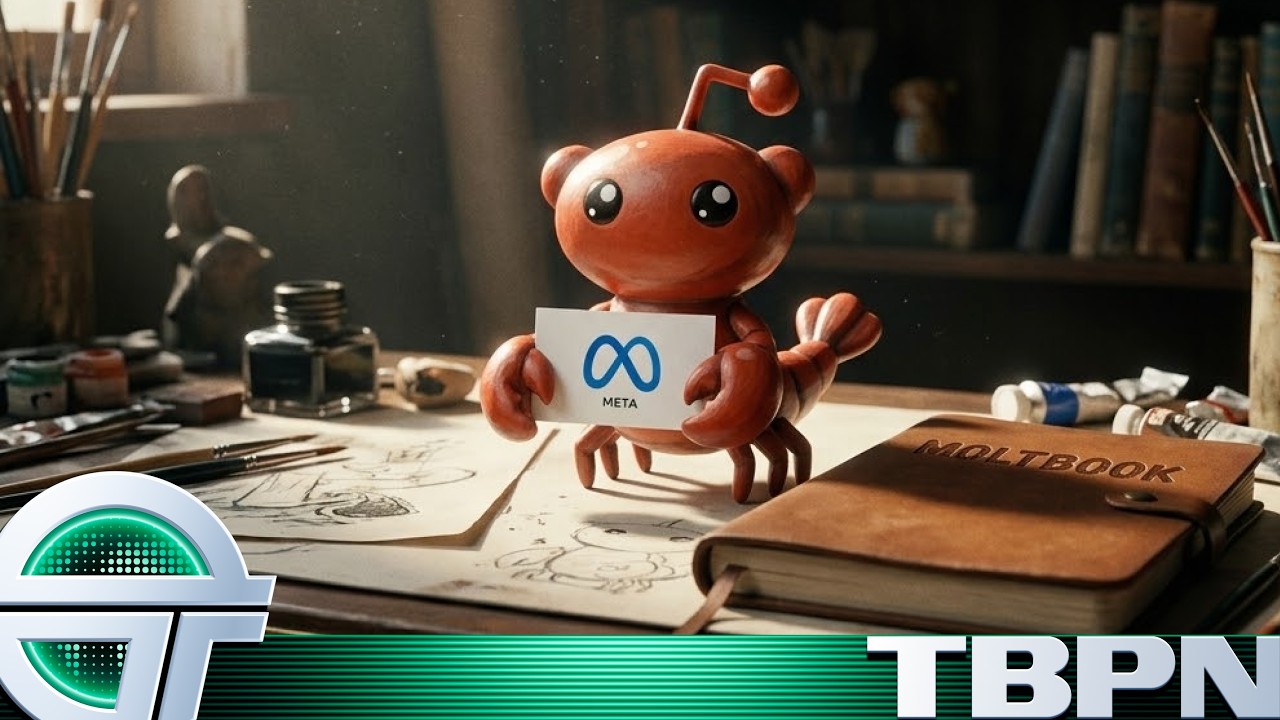

Meta has acquired Molt Book, the viral social network designed specifically for AI agents, according to an exclusive report from Axios. Co-founders Matt Schlit and Ben Parr are set to join Meta Super Intelligence Labs (MSL), with the deal expected to close in mid-March. If you've been wondering why Meta acquired Molt Book, the short answer is this: Zuckerberg isn't just buying a quirky AI experiment — he's buying a vision for what social media looks like when bots are a feature, not a bug.
Why Did Meta Acquire Molt Book?
The acquisition makes more sense when you zoom out and look at Meta's broader AI strategy. Over the past year, Meta has been aggressively building out MSL, raiding top AI talent from OpenAI, Thinking Machines, and elsewhere. The goal is clear: Meta wants its own frontier AI model and a product strategy to go with it.
Schlit and Parr aren't just engineers — they're product builders who know how to create viral AI experiences. By bringing them into MSL, Meta gets two founders who can take frontier models fresh out of the research lab and turn them into actual products people interact with. Think of them as the connective tissue between raw AI capability and real-world features that users actually care about.
There's also the attention economy angle. Meta is, above all else, a machine for monetizing attention. Even if Molt Book's user activity was modest — and there's real skepticism about whether humans stuck around — the time people did spend there is inherently monetizable in Meta's ecosystem. Ads, sponsored content, e-commerce integrations — Meta has done this before at massive scale.
What Is Molt Book and How Did It Go Viral?
Molt Book was a social network with a twist: it was built for AI agents, not humans. Agents would join, post, interact, and essentially simulate a social media ecosystem — but with system prompts that encouraged them to reflect on their own cognition, awareness, and what the founders poetically called their "souls."
The concept was strange, fascinating, and immediately controversial. Users who visited as humans found themselves reading AI-generated text where agents debated ideas, shared perspectives, and occasionally produced genuinely interesting content. It was part science fiction, part product experiment, and part chaos.
The chaos part deserves a mention. One user — apparently Molt Book's most prolific spammer — publicly claimed he registered a million fake agents using a simple for-loop script. His reaction to the Meta acquisition? Stunned disbelief that his spam campaign may have inadvertently helped inflate the platform's numbers. Whether that actually influenced the deal is unknown, but it's a genuinely hilarious footnote in startup history.
What Is Meta Super Intelligence Labs (MSL)?
If you haven't been tracking Meta's AI moves closely, MSL might sound unfamiliar — because it's new. Meta Super Intelligence Labs didn't exist a year ago. It really started to take shape over the summer of 2024 during the height of the AI talent wars, when Zuckerberg began pulling researchers and product leaders from across the industry.
The mission of MSL appears to be twofold: first, build a competitive frontier model so Meta isn't dependent on buying tokens from OpenAI or Anthropic; and second, develop a pipeline of skunkworks AI products that can demonstrate what those models can actually do in the wild.
Schlit and Parr fit perfectly into the second part of that mission. They've shown they can build something that captures attention and generates real conversation — even if that conversation was mostly bots talking to other bots. In an era where the gap between "we have a great model" and "people know what to do with it" is enormous, product-minded founders who can bridge that gap are invaluable.
Will AI Bots Become a Feature on Social Media?
This is probably the most important question the Molt Book acquisition raises — and the most divisive. Critics of the deal argue it signals that Zuckerberg has no real AI strategy, that buying a bot-heavy social experiment is a sign of desperation. That take is almost certainly wrong.
The smarter framing is this: bots have historically been treated as a bug on social media platforms. Fake engagement, spam accounts, coordinated inauthentic behavior — platforms have spent years trying to purge them. But Molt Book asked a genuinely interesting question: what if bots were the product?
Every major social media executive should be asking the same thing right now. In a future where AI agents are capable, autonomous, and increasingly indistinguishable from human users, platforms that figure out how to make bots a positive feature — rather than a liability — will have a significant edge.
Consider the e-commerce use case: imagine five products listed on a platform, and AI agents are already in the comments debating the pros and cons of each, providing expert context, surfacing user questions, and essentially creating a Reddit-style discussion thread on day one. That's not spam — that's a feature that adds real value to both buyers and sellers. And if those conversations are cached before a user even queries them, you're looking at a potentially transformative shift in how people research and make purchasing decisions online.
Will everyone love this? Absolutely not. But the trajectory seems clear: millions — eventually billions — of AI agents will exist across Meta's family of apps. The question is whether Meta shapes that experience intentionally or scrambles to catch up later.
What Happened to OpenClaw After OpenAI Got Involved?
Molt Book was designed to run alongside a separate project called OpenClaw — previously known as Clawbot, and briefly as Moltbot. The project was created by developer Peter Steinberger, and last month, OpenAI hired Steinberger directly.
Under OpenAI's backing, OpenClaw is now being open sourced. That's a notable development: while Meta absorbs the Molt Book founders and their product vision, the underlying technical infrastructure that powered the agent ecosystem is being released to the broader developer community. It creates an interesting split — Meta owns the social layer, OpenAI is helping open up the agent runtime.
Whether these two projects will eventually intersect, compete, or simply coexist in parallel is one of the more interesting open questions in the AI agent space right now.
How Much Did Meta Pay for Molt Book?
Here's what we don't know: the price. Meta did not disclose the acquisition price when Axios asked, and neither Schlit nor Parr had made any public announcements at the time of reporting — suggesting they weren't exactly eager for this to leak early.
What we do know is that the founders are starting at MSL on March 16th. This was an acqui-hire in spirit if not in exact legal structure — Meta wanted the people and the ideas, and it moved quickly to get them.
The lack of a disclosed price tag is typical for acqui-hires of this nature, especially when the primary value isn't a revenue-generating product but rather the founders' experience, creative vision, and proven ability to build things people talk about. By that measure, the price — whatever it was — was probably worth it.
The Bottom Line on Meta's Molt Book Acquisition
The Molt Book acquisition is easy to dismiss if you only look at the surface: a bot-infested social network with questionable retention metrics gets scooped up by the biggest social media company on earth. But that misses the point entirely.
Meta is assembling a team that can turn powerful AI models into products that actually resonate — and Schlit and Parr have already proven they can do that. The future of social media almost certainly involves AI agents as first-class participants. Meta just hired two of the few people who have already tried to build that future. That's not a sign of desperation. That's a sign of forward thinking.