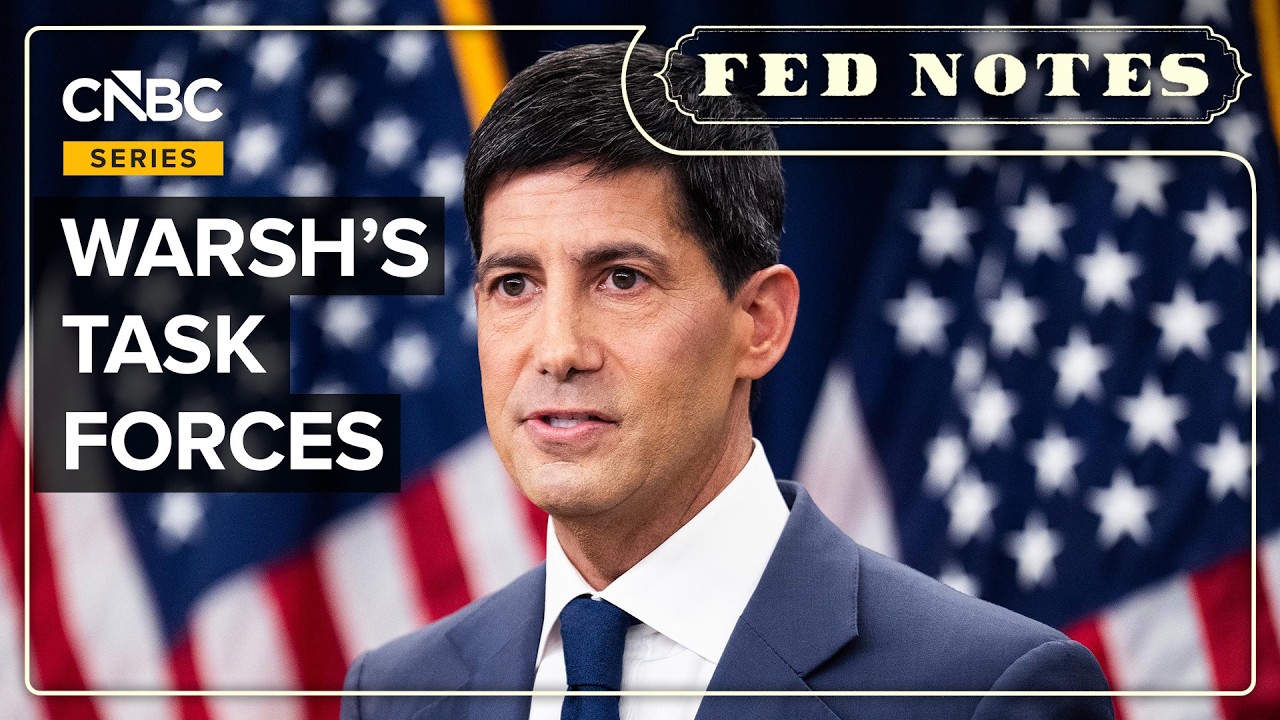

At his first press conference as Fed Chair, Kevin Warsh laid out a sweeping plan to reshape the Federal Reserve from the ground up. His approach centers on five task forces — pulling in experts from business, academia, economics, and technology — to rethink how the Fed measures inflation, communicates with markets, manages its massive balance sheet, and even how it thinks about artificial intelligence. If Warsh gets his way, the Fed you've known for the past decade could look very different in a few years.
Here's a breakdown of every major idea Warsh introduced, what it means in plain English, and why it matters for interest rates, mortgages, and the broader economy.
What Is Kevin Warsh's Plan for the Federal Reserve?
Warsh's core strategy is to modernize an institution he believes has fallen out of step with the modern economy. Rather than issuing a sweeping mandate on day one, he's created five task forces — each focused on a different area of Fed policy — and is staffing them with what he calls "the best minds" inside and outside the Fed. That includes people from business, economics, academia, and the technology sector.
The five areas these task forces are examining include: how the Fed defines and measures inflation, how it communicates with financial markets, how it uses real-time economic data, how it manages its balance sheet, and how emerging technologies like AI should inform monetary policy. Each task force is expected to produce concrete recommendations — meaning these aren't just talking shops. Warsh appears to want actual structural changes to follow.
The challenge? Warsh doesn't run the Fed alone. He has to convince the other members of the rate-setting Federal Open Market Committee (FOMC) to go along with him. The task force structure is, in part, a political strategy — a way to build consensus and bring skeptical colleagues along rather than forcing changes through unilaterally.
What Is the Fed Balance Sheet and Why Does Warsh Want It Smaller?
The Federal Reserve balance sheet is one of the most consequential — and least understood — tools in modern monetary policy. After the 2008 financial crisis, the Fed found itself in a bind: interest rates were already near zero, so it couldn't cut them further to stimulate the economy. The solution was to start buying financial assets — primarily U.S. Treasury bonds and mortgage-backed securities — pumping trillions of dollars into the financial system. This process is called quantitative easing, or QE.
Today, the Fed's balance sheet sits at several trillion dollars. Warsh has been clear: he believes the Fed needs a smaller balance sheet. His argument is that the asset-buying program disproportionately benefits people who already own financial assets — stocks, bonds, real estate — rather than everyday workers and consumers. In other words, QE made the rich richer, and Warsh wants to unwind it.
But shrinking the balance sheet isn't painless, which leads directly to the next concern.
Could Fed Balance Sheet Cuts Push Mortgage Rates Higher?
This is where things get politically sensitive — especially under the Trump administration, which has made lowering mortgage rates a stated priority. When the Fed holds mortgage-backed securities on its balance sheet, it's effectively keeping demand for those bonds high, which keeps their yields (and thus mortgage rates) lower. When the Fed starts selling those assets or letting them mature without reinvesting, demand drops and yields can rise.
In plain terms: Fed balance sheet reduction could push mortgage rates higher, not lower. That's a real tension inside the Warsh agenda. He wants a leaner Fed balance sheet for philosophical and fairness reasons, but the short-term consequence could be more expensive home loans for American buyers — exactly the opposite of what the administration wants.
How Warsh navigates this tension will be one of the defining tests of his tenure.
Why Does Kevin Warsh Think AI Should Lower Interest Rates?
One of Warsh's most distinctive — and debated — views is that artificial intelligence is a long-term reason to cut interest rates. The argument draws a direct parallel to the 1990s, when the widespread adoption of computers drove a surge in productivity. Businesses became more efficient, output rose, and the economy could grow faster without triggering inflation. The Fed was able to keep rates relatively accommodative through that period as a result.
Warsh believes AI could do the same thing — making businesses and consumers more productive at scale, which would allow the economy to grow without overheating. If productivity rises, you don't need to raise rates as aggressively to keep inflation in check.
This isn't an abstract view for Warsh. He has spent significant time with leading figures in the AI and technology investment world — including Peter Thiel, Marc Andreessen, and Alex Karp — and is genuinely convinced that the AI productivity wave is real and coming fast. That puts him in a different camp from more traditional central bankers who are waiting for hard data before adjusting their models.
Not everyone on the Fed agrees. As one observer noted, the other FOMC members aren't ignoring AI — they're just not convinced the short-term monetary policy implications are clear yet. The debate inside the Fed on this question is just getting started.
What's Wrong With How the Fed Measures Inflation?
Warsh has a pointed critique of the data the Fed relies on. Most of the economic statistics that central bankers consume — jobs reports, inflation readings, consumer surveys — are built on survey methods that he argues are outdated. Response rates to these surveys have declined significantly, and some of the questions being asked reflect economic realities from a generation ago, not today's economy.
Take the monthly jobs report. That single number — how many jobs were added or lost — routinely gets revised by tens or even hundreds of thousands of jobs in the months that follow its initial release. Warsh's argument is that the Fed is making trillion-dollar policy decisions based on data it knows is likely to be significantly wrong. He believes there is far better, more real-time data available in the modern economy that the Fed should be tapping into instead.
Beyond data quality, Warsh also has a specific and important view on what inflation actually is. He argues that inflation isn't just about the price of eggs going up. The real danger is when rising prices cause businesses and consumers to expect that more prices will rise — and start acting accordingly. That expectation itself becomes self-fulfilling. Warsh wants the Fed to focus on anchoring those expectations, not just chasing individual price indexes.
Why Does Warsh Dislike the PCE Inflation Measure?
The Fed currently uses something called core PCE — Personal Consumption Expenditures — as its preferred inflation gauge. "Core" means it strips out food and energy prices, which can be volatile month to month. The logic was that excluding those categories gave a cleaner read on underlying inflation trends.
Warsh thinks that approach is outdated. He's argued that excluding food and energy made sense when data was rough and economists needed to smooth out noise. But with modern data tools available, there's no need for that shortcut anymore. He wants to look at the full picture of underlying inflation — not a trimmed version designed for a less sophisticated data environment.
His task force on inflation measurement is expected to dig into exactly this question: what should the official definition and measure of inflation be going forward? Whatever they recommend could change how the Fed communicates its targets and how markets interpret its decisions for years to come.
What Is the Fed Dot Plot and Is Warsh Getting Rid of It?
The dot plot is one of the most-watched communications tools in all of finance. It's a chart that shows where each individual Fed official thinks interest rates should be over the next few years — represented as anonymous dots on a graph. Markets parse it obsessively after every Fed meeting as a signal of where rates are heading.
Warsh is skeptical of it. In fact, at his first press conference, he pointedly refused to submit his own projections — a deliberate signal of his long-held view that the Fed shouldn't be in the business of telling markets where rates are going during normal, non-crisis times. He believes that kind of forward guidance can box the Fed in, reduce its flexibility, and create market distortions.
The communications task force will almost certainly recommend changes to the dot plot — possibly eliminating it in its current form or significantly restructuring how the Fed signals future rate intentions. For markets that have built entire trading strategies around the dot plot, that would be a significant shift.
What Warsh Is Really Trying to Do
Underneath all of these specific policy debates, Warsh is making a broader argument: the Federal Reserve has grown too large, too communicative, and too reliant on outdated data and methods. He wants a leaner, more nimble institution that uses better real-time data, resists the temptation to over-communicate, reduces its footprint in financial markets, and stays open to the economic disruptions that technologies like AI will bring.
As he put it himself: "We want to stop inflation, but we don't want to stop greatness." Whether the rest of the FOMC comes along for that ride — and whether the task forces produce changes that stick — will define whether Warsh's Fed becomes a historical footnote or a genuine turning point for American monetary policy.