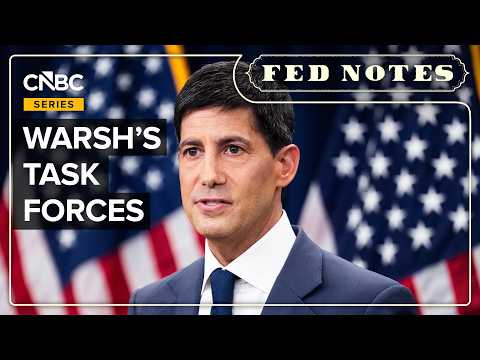

For the first time in 75 years, America has both a sitting and a former Federal Reserve chair at the same time — with sharply different visions for the future of monetary policy. Jerome Powell, who normally would have stepped aside, has refused to leave the institution, citing what he called unprecedented legal attacks. Into this unusual vacuum steps Kevin Warsh, the newly appointed Fed chair who has promised what he openly calls a regime change at the most powerful financial institution in the country. What he does next will directly affect your mortgage, your savings, your investments, and the broader cost of living.
Why This Transition Is Unprecedented
The Federal Reserve chair serves a four-year term appointed by the president, and by long-standing custom, the outgoing chair steps aside when the new one takes over. The last time the sitting chair stayed on was 1948, when President Truman personally requested it. This time, nobody asked — Powell simply announced he was staying. That means the Fed now operates under a split leadership with two figures holding fundamentally different economic philosophies. Markets and investors are left to figure out which vision actually governs policy, and that uncertainty is already showing up in bond yields and rate expectations.
Warsh's Four-Part Monetary Reset
1. Aggressively Shrink the Fed's Balance Sheet
The Fed currently holds approximately $6.7 trillion in bonds and mortgage-backed securities accumulated during the 2008 financial crisis and the COVID-19 pandemic. Warsh has argued that this level is far too large, stating that reducing the balance sheet by a couple of trillion dollars over time would "turbocharge the real economy" by reducing market distortion and lowering the inflation risk premium investors demand.
Critics, however, warn that pulling that much money out of the financial system simultaneously risks pushing the stock market lower while causing interest rates to rise — the worst of both worlds for most investors.
2. Eliminating Forward Guidance and Reducing Meetings
For the past 14 years, the Fed has published a quarterly dot plot — a chart showing where each voting member expects interest rates to go over the coming years. Every hedge fund, mortgage lender, and institutional investor uses these projections to price their products. Warsh wants to eliminate the dot plot entirely and cut annual Fed meetings from eight down to four, arguing that a Fed that talks less and acts more is healthier for the economy.
Opponents say this approach would make it nearly impossible for markets to adjust gradually to new information, likely producing more abrupt and violent price swings in both directions.
3. Changing How Inflation Is Measured
Under Jerome Powell, the Fed's primary inflation gauge was core PCE, which strips out food and energy prices due to their volatility. Warsh wants to switch to a trimmed mean methodology, which drops the most extreme price changes — both high and low — to get what he argues is a cleaner read on underlying inflation.
The concern among critics is that this change could make inflation appear lower than it actually is, providing political cover to cut interest rates even when price pressures remain real. That kind of methodological shift does little to build market confidence.
4. Earned Independence
Perhaps the most philosophically significant change: Warsh rejects the idea that Federal Reserve independence is an unconditional principle. Where Powell treated independence as sacred and non-negotiable, Warsh says independence must be earned by hitting targets. The precise implications of this are still unclear, but it has raised serious questions — particularly given that Warsh was appointed by President Trump, who has been vocal about wanting lower interest rates.
Why Lower Rates Are Not a Given
A common assumption is that because Trump wants cheap money and appointed Warsh, rate cuts are coming soon. This misunderstands how the system actually works. The Fed directly controls only short-term borrowing rates. The rates that govern your daily financial life — mortgage rates, auto loans, savings account yields — are determined by the bond market, which operates on supply and demand.
If long-term investors believe inflation is rising or monetary policy is becoming less credible, they demand higher yields to compensate for that risk. Right now, that is exactly what is happening. As of this writing, markets are actually beginning to price in the possibility that Warsh's first policy move will be a rate hike, not a cut — because inflation remains elevated, oil prices are high, and investor confidence in the Fed's inflation-fighting commitment has eroded.
 18:30
Bond market yield chart showing elevated long-term Treasury rates
Watch at 18:30 →
18:30
Bond market yield chart showing elevated long-term Treasury rates
Watch at 18:30 →
The 30-year Treasury yield has already climbed above 5%, a level not seen in nearly two decades. This means that even if the Fed cuts the short-term federal funds rate, mortgage rates and long-term borrowing costs may not follow — and could actually rise further.
Who Wins and Who Loses
The Biggest Losers
- Borrowers with variable-rate debt: Credit card rates already exceed 20% on average. Auto loans, personal loans, and variable-rate mortgages all become more expensive the longer rates stay elevated.
- First-time homebuyers: Mortgage rates are approaching 7% again, and Warsh's plan to sell off the Fed's mortgage-backed securities would put additional upward pressure on home loan rates.
- Growth and tech stocks: Higher interest rates reduce the present value of future earnings, which directly compresses valuations on high-multiple stocks priced on profits years from now.
- The federal government: Higher Treasury yields mean more interest payments on the $36 trillion national debt. Larger interest payments mean larger deficits, which require more borrowing, which pushes rates higher still — a compounding cycle.
The Clear Winners
- Savers: High-yield savings accounts, CDs, and short-term Treasuries are offering some of the best risk-free returns in two decades. Anyone with cash on the sidelines is being meaningfully compensated for the first time in years.
- Banks: Higher rates allow banks to charge more for long-term loans while paying less on short-term deposits, expanding net interest margins and boosting profitability.
- Dollar-denominated purchasing power abroad: A stronger dollar means American consumers and travelers get more value when spending internationally.
What to Do With Your Portfolio Now
The most honest takeaway is that anyone waiting for cheap money to return is likely going to be waiting longer than expected. The bond market is not convinced that inflation is under control, and no amount of regime-change rhetoric changes the underlying numbers. Until inflation meaningfully declines and the Fed rebuilds credibility with investors, long-term borrowing costs will remain elevated regardless of what happens to the short-term federal funds rate.
A prudent approach in this environment means staying diversified, avoiding heavy leverage on anything dependent on near-term rate cuts, and keeping some cash in high-yield instruments that are finally paying a real return. The next Federal Reserve policy meeting is scheduled for June 17th, which will be the first real test of how Warsh intends to govern — and how markets respond to this new and genuinely unusual era in American monetary policy.