If you want to build genuine core strength — not just surface-level abs — weighted core training is one of the most effective approaches. This 50-minute workout uses a single dumbbell (or even a water bottle if you're just starting out) to challenge your core through 15 varied exercises. The format is simple: 45 to 50 seconds of work followed by 10 seconds of rest. Move with control, keep breathing through every rep, and focus on form over speed.
Workout Structure
The session runs through 15 exercises back to back, targeting everything from deep stabilizers to rotational strength. You'll need one dumbbell in hand and one placed on your mat for exercises that require a switch. If you don't have dumbbells, a water bottle works as a substitute for lighter movements.
- Work interval: 45–50 seconds per exercise
- Rest interval: 10 seconds between exercises
- Equipment: One or two dumbbells (or a water bottle)
Exercises 1–5: Floor-Based Core Foundations
1. Weighted Dead Bug
Lie on your back and hold one dumbbell straight above your chest with both hands. Extend one leg out at a time in a slow, controlled motion. The key here is keeping your lower back pressed into the mat and maintaining steady breathing — don't let the weight cause you to hold your breath.
2. Dumbbell Flutters
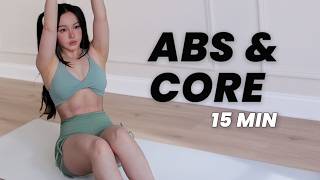
Lift your shoulders and legs off the mat, then flutter them up and down in small, rapid movements while holding the dumbbell. Keep your core braced throughout so your lower back stays supported and doesn't arch off the floor.
 03:30
Demonstration of dumbbell flutter kicks with shoulders and legs lifted off the mat
Watch at 03:30 →
03:30
Demonstration of dumbbell flutter kicks with shoulders and legs lifted off the mat
Watch at 03:30 →
3. Dumbbell Sit-Up to Press
Hold your dumbbell at chest height, then sit up and press the weight overhead at the top of the movement. Lower the dumbbell back to your chest as you roll down with control. This combines an abdominal crunch with a shoulder press for a compound core challenge.
4. Dumbbell Crunch
A focused crunch where you lift the dumbbell toward your feet at the top of each rep. Keep the movement deliberate — no swinging the weight to generate momentum.
5. Dumbbell Hold March (Bridge Position)
Get into a bridge position and press the dumbbell straight above your chest. From here, lift one knee toward your chest, lower it, then switch legs. Your hips should stay level and your core tight as your legs alternate.
Exercises 6–9: Bridge and Pullover Variations
6. Pullover Bridge Hold
Maintain the bridge position from the previous exercise, but this time lower the dumbbell overhead rather than holding it above your chest. The combination of the bridge and the overhead load significantly increases the demand on your core and glutes.
7. Pullover Leg Drop
Lie on your mat and hold the dumbbell above your chest. Lower the weight overhead as you simultaneously lift one leg up while lowering the other toward the floor. Raise the dumbbell back as you switch legs. Move slowly — this exercise requires coordinated control across your entire trunk.
18:00
Pullover leg drop showing alternating leg movement coordinated with dumbbell overhead reach
Watch at 18:00 →
8. Plank Pull-Through (Bear Position)
Get into a bear plank — knees hovering just off the mat — with a dumbbell placed beside you. Reach under your body with one hand to pull the dumbbell across to the other side, then switch hands. The challenge is keeping your hips level and resisting rotation throughout.
9. Dumbbell Bear Crawl
Still in the bear plank position with a dumbbell in each hand, crawl a few small steps forward and then back. Move slowly and deliberately. This is a full-body stability challenge that demands significant core bracing with every step.
Exercises 10–13: Dynamic and Rotational Movements
10. Plank Around the World
Get into a high plank with one dumbbell placed in front of you. Use one hand to guide the dumbbell in a full circle around your body — bringing it to one side, across the top, and then the other hand takes over to complete the arc. Alternate directions. Your hips should stay square and still throughout.
28:00
High plank dumbbell around-the-world showing circular movement pattern around the body
Watch at 28:00 →
11. V-Sit Pass Under
Sit on your mat and lean back into a V-sit position with your feet slightly lifted. Pass the dumbbell under your legs, then extend your legs out and repeat. Balance and controlled movement are essential — avoid collapsing your posture as you pass the weight.
12. Single-Leg Dumbbell Crunch (Right Side)
Lie on your back with a dumbbell held above your chest. Bend your right knee and extend your left leg. Lift the left leg as you crunch toward it, then lower back down slowly. This unilateral variation increases the oblique engagement on one side of the body.
13. Single-Leg Dumbbell Crunch (Left Side)
Repeat the same movement on the opposite side — right leg extended, left knee bent — to ensure balanced development across both sides of your core.
Exercises 14–15: Finishing Strong
14. Seated Rainbow
Sit on your mat with the dumbbell held between your feet. Lean back slightly, supporting yourself with your hands. Lift your legs and draw a wide arc — a rainbow shape — with the dumbbell, moving it from one side to the other. Keep your chest lifted and core engaged throughout the arc.
43:30
Seated rainbow exercise showing dumbbell arc movement between feet from side to side
Watch at 43:30 →
15. Low Plank Pull-Through
The final exercise. Get into a forearm plank with one dumbbell placed beside you. Reach your opposite arm underneath your body to pull the weight across to the other side, alternating between sides. Keep your hips steady and your core locked in — it's a strong finish to a demanding session.
Key Takeaways
Adding weight to core exercises forces your muscles to stabilize under load, building functional strength that transfers to everyday movement and athletic performance. Throughout this workout, the recurring emphasis is on control over speed and breathing through the effort — two principles that separate effective core training from simply going through the motions. Whether you're using a proper dumbbell or a water bottle, consistency with this format will produce measurable improvements in core endurance and stability over time.