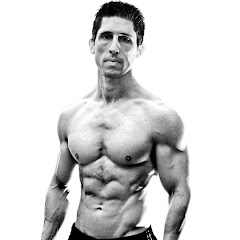
Getting rid of stubborn body fat — especially around the midsection — isn't a mystery. It's a lack of doing the right things often enough. The gap between where you are now and where you want to be comes down to four questions. Answer them honestly, and you'll know exactly what's holding you back. Dodge them, and nothing changes.
Question 1: Are You Drinking?
Alcohol is a significant factor in body fat retention, and it's one most people don't want to confront. The question isn't whether you drink at all — it's how much and how often.
If you drink one to two times per week and consume one to two glasses of wine or two to three beers per sitting, that's a moderate intake of roughly four to six drinks per week. At that level, reaching a flat stomach is still achievable. But if your goal is a truly lean, defined physique, that intake needs to come down or disappear entirely.
If you're drinking more than twice a week, the math compounds quickly. In that case, each session needs to drop to a single glass of wine or two beers at most — reducing total weekly alcohol consumption significantly. There is no scenario where increasing alcohol intake helps you decrease body fat. The direction is always one way: less alcohol, more progress.
Question 2: Are You Creating a Caloric Deficit — and Doing It Responsibly?
To lose body fat, you must consume fewer calories than you burn. That's non-negotiable. But how you create that deficit matters enormously.
Irresponsible deficits — crash diets, extremely low calorie intake, cutting out entire macronutrient groups like carbohydrates — can produce short-term results while causing long-term damage. They disrupt your relationship with food, make consistency impossible, and often lead to rebound weight gain.
A responsible deficit is a reduction of 200 to 500 calories per day through food intake. That's sustainable, preserves muscle, and compounds over time into real, lasting results.
If you're not in a deficit at all, work through two follow-up questions. First, are you actually eating clean — not just claiming to, but genuinely eating healthy foods on a consistent basis as a lifestyle, not a temporary fix? Second, are your portions under control? You can eat nutritious food and still overeat it. Learning to divide your plate properly is a simple skill that eliminates a lot of guesswork.
 09:45
Diagram showing how to divide a plate for balanced macronutrients and portion control
Watch at 09:45 →
09:45
Diagram showing how to divide a plate for balanced macronutrients and portion control
Watch at 09:45 →
Question 3: Are You Training the Right Way?
Many people trying to lose fat default to steady-state cardio — jumping on a treadmill or elliptical to burn a few extra calories. The problem is that cardio alone doesn't build muscle, and muscle is your most powerful long-term tool for fat loss. Muscle tissue is metabolically active, meaning the more of it you carry, the more calories your body burns at rest.
Here's how to think about training based on where you are:
- Above 15% body fat (men) or 25% (women): Prioritize weight training over cardio. Resistance training builds the muscle mass that accelerates fat loss. Aim for three to five sessions per week.
- Below those thresholds: Add cardio and conditioning two to four times per week as a complement to your weight training, not a replacement for it.
- Complexes: If you're not already using barbell or dumbbell complexes — chaining compound movements like a row into a hang clean into an overhead press — start. They build muscle and burn calories simultaneously, fitting neatly into your existing weight training sessions two to three times per week.
13:20
Demonstration of a barbell complex: row into hang clean into overhead press into front rack reverse lunge
Watch at 13:20 →
Question 4: Are You Training Your Core Consistently?
Ab and core training is frequently either ignored or treated as an afterthought — a few crunches at the end of a workout. The recommendation here is different: daily core training for no more than ten minutes at a time.
This isn't about spot reduction of fat. It doesn't work that way. It's about two things. First, even at higher body fat levels, developing the muscles underneath creates visible definition — upper abs and obliques become apparent before the lower abs do, but none of them show up if they haven't been trained. Second, and perhaps more importantly, a short daily commitment to ab work creates a behavioral momentum that extends to everything else.
A five- or seven-minute ab routine done ten days in a row becomes twenty days, then a full month. That streak of consistency generates real motivation. You start seeing results. You start feeling capable. And that confidence bleeds into your nutrition, your training frequency, and your choices around alcohol. A small daily habit becomes the engine driving all the larger changes.
The goal isn't just a six-pack — it's training the entire core, including the obliques and deep stabilizing muscles, which improve posture, performance, and the overall visual impression of a leaner physique.
Putting It All Together
The four questions — about drinking, diet, training type, and core consistency — form a self-diagnosis that anyone can run through in a few honest minutes. The answers tell you exactly which levers to pull.
What separates someone with a flat stomach from someone with a visibly ripped physique isn't genetics or secret techniques. It's the degree of consistency applied across all four areas simultaneously. A cheat meal once a week is compatible with reaching a flat stomach. A cheat day every week likely isn't. Getting to an elite level of leanness requires compressing those exceptions even further.
Most people already know which of the four questions they've been answering dishonestly. The mirror isn't for identifying the problem — you already know where the fat sits. It's for forcing the kind of candid self-assessment that actually leads to change. When you get honest about where you're falling short and address those specific areas, that's when real progress begins.