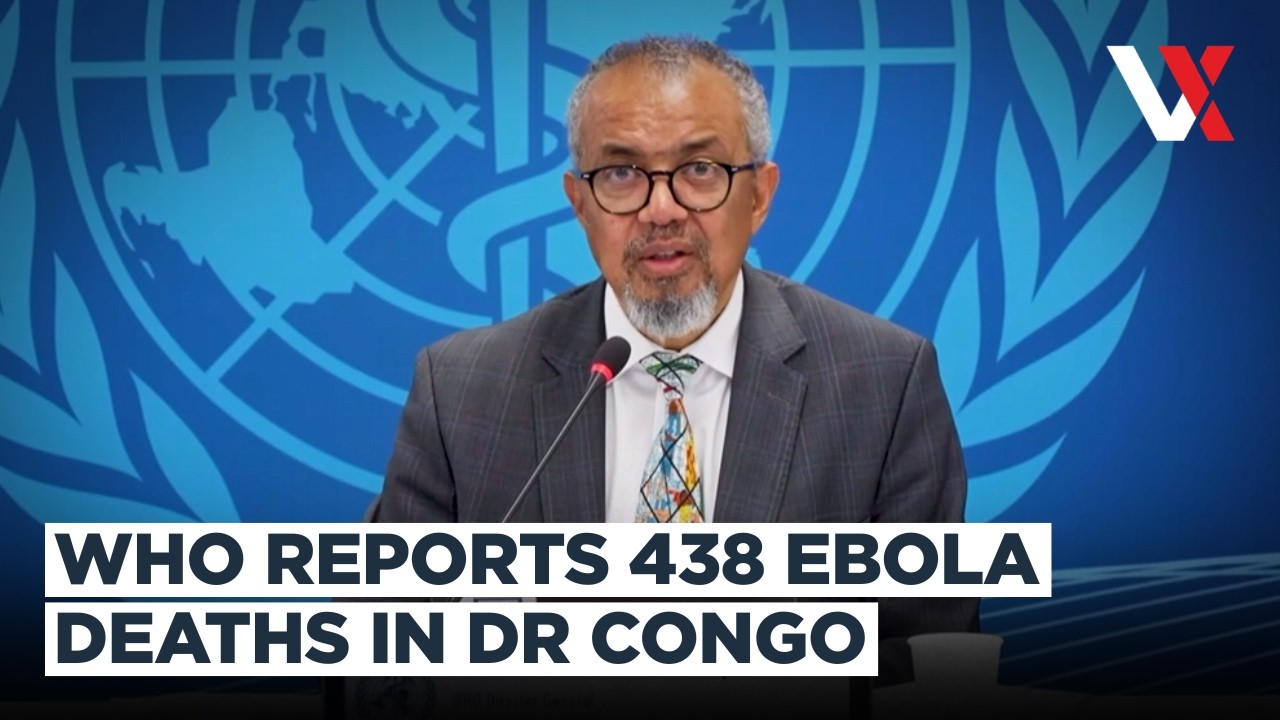

The Ebola outbreak in the Democratic Republic of the Congo is expanding rapidly — and it shows no sign of slowing down. As of late May 2019, 1,406 cases have been confirmed and 438 people have died, with an average of 38 new confirmed cases every single day over the past two weeks. The World Health Organization has described the outbreak as deeply concerning, and the challenges on the ground — from overwhelmed treatment centers to outright violence — are making containment an enormous struggle. If you've been asking how bad is the Ebola outbreak in the DRC, the honest answer is: very bad, and getting worse.
How Bad Is the Ebola Outbreak in the DRC Right Now?
The numbers alone are staggering. Over 1,400 confirmed cases and nearly 440 deaths place this outbreak among the most severe in the history of Ebola. Unlike the catastrophic 2014–2016 West Africa epidemic, this one is unfolding in a conflict zone in eastern DRC — specifically across three provinces where armed groups, humanitarian crises, and deep community distrust have created conditions that make a public health response extraordinarily difficult.
 01:15
WHO spokesperson presenting updated DRC Ebola case counts including 1,406 confirmed cases and 438 deaths
Watch at 01:15 →
01:15
WHO spokesperson presenting updated DRC Ebola case counts including 1,406 confirmed cases and 438 deaths
Watch at 01:15 →
Health authorities have made some measurable progress. Testing capacity has expanded to 10 laboratories positioned closer to affected communities. Contact tracing has improved, with four in five known contacts now being followed up. Treatment capacity now stands at approximately 650 beds across 22 health centers — though roughly 96% of those beds are currently occupied, and an additional 300 beds are urgently being added.
But those gains are being outpaced by the virus itself. The daily case count remains stubbornly high, and the healthcare infrastructure in eastern DRC was fragile long before Ebola arrived. Every bed that fills up, every contact that goes untraced, and every treatment center that closes represents a gap through which the outbreak can spread further.
What New Ebola Treatments Are Being Tested in the DRC?
In a significant development, a clinical trial of two promising Ebola therapeutics launched with the enrollment of its first patient. Known as the PARTNERS trial, it will evaluate two drugs: the monoclonal antibody MBP134 and the antiviral drug remdesivir, both individually and in combination.
02:30
Announcement of the PARTNERS clinical trial launch for MBP134 and remdesivir therapeutics
Watch at 02:30 →
The study is being coordinated by the DRC's National Institute for Biomedical Research, with support from a coalition of partners including the WHO. Crucially, it is being conducted in close cooperation with the affected communities themselves — an important step given the deep mistrust that has plagued the response.
Patients who enroll in the trial will receive comprehensive supportive care and close follow-up. WHO has also pledged to work toward ensuring those patients retain access to whichever drugs prove safe and effective once the trial concludes. This trial represents one of the most significant scientific developments in the current outbreak, and its results could reshape how future Ebola cases are treated worldwide.
Why Is It So Hard to Stop the Ebola Outbreak in the DRC?
The short answer: Ebola is not the only crisis happening in eastern DRC. The region has endured decades of armed conflict, displacement, and humanitarian emergencies. The outbreak is unfolding in this context, and the consequences are devastating.
This week, an Ebola treatment center in Ituri province was attacked. Two people were killed, the center was set on fire, and patients fled into the surrounding community. Attacks like this do more than destroy infrastructure — they undo weeks of painstaking relationship-building with communities, scatter potentially infectious patients, and demoralize health workers who are already risking their lives.
04:10
Discussion of the Ituri treatment center attack and community mistrust challenges in eastern DRC
Watch at 04:10 →
The attack in Ituri was triggered in part by local resistance to the burial of a community member — a deeply painful intersection of cultural practice, grief, and public health protocol. Health workers have been working hard to engage communities, invite them into care facilities, and demonstrate the quality and compassion of the care being provided.
- Mistrust remains one of the biggest barriers to containing the outbreak. Some communities view health workers and even Ebola itself with suspicion.
- Violence directed at health workers and treatment centers has occurred multiple times since the outbreak began.
- Contact tracing gaps mean that not enough contacts are being identified per confirmed case — a critical weakness in any outbreak response.
- Conflict zones limit access to affected populations and create dangerous conditions for responders.
Over the past six weeks, health authorities have reported a general reduction in violent incidents and growing confidence in the response from many communities. But with 38 new cases per day, the situation remains on a knife's edge.
Is the Hantavirus Cruise Ship Outbreak Finally Over?
Yes — and it's genuinely good news. The WHO has officially declared the Hantavirus outbreak linked to the cruise ship MV Hondeus to be over. The final contact person of someone exposed to Hantavirus on the ship completed their quarantine period, tested negative, and returned home.
The outbreak resulted in a total of 13 cases, including three deaths. More than 650 contacts were identified and followed up by health authorities across 33 countries and territories — a remarkable feat of international coordination. No further cases have been reported since May 25th.
While the outbreak is over, the WHO has emphasized that it will continue working with governments and partners to deepen understanding of this outbreak and of Hantavirus more broadly. The virus, which is typically transmitted to humans from rodents, is rare in the context of cruise ship travel, and the event raised important questions about disease surveillance in mobile international populations.
What Is the Marburg Virus Case Detected in Uganda?
On Tuesday of this week, Uganda notified the WHO of a confirmed case of Marburg virus disease in the country's western Kyegegwa district. The case was identified through enhanced disease surveillance originally set up to detect Ebola — a reminder of how surveillance investments pay unexpected dividends.
Health authorities are currently monitoring all identified contacts. As of the WHO's update, none of those contacts had shown symptoms. The WHO is supporting ongoing investigations to determine the source of the patient's exposure, assess the broader public health risk, and support community engagement efforts in the affected area.
Marburg virus disease is closely related to Ebola and is similarly severe, with high fatality rates in past outbreaks. The rapid identification of this case — before a cluster could form — illustrates exactly why robust disease surveillance infrastructure matters so much.
What Is WHO's New Bundibugyo Virus Diagnostic Test?
In a quieter but meaningful development, the WHO granted emergency use listing to the first molecular diagnostic test for Bundibugyo virus. Bundibugyo virus is a species of Ebolavirus first identified in Uganda in 2007, and until now, rapid molecular diagnostics for it have been limited.
Emergency use listing by the WHO signals that a product meets acceptable standards of quality, safety, and efficacy for use in public health emergencies. Having a validated diagnostic tool for Bundibugyo virus improves the ability of health systems to quickly distinguish between different filovirus species during an outbreak — critical information for guiding treatment decisions and containment strategies.
What All Three Outbreaks Have in Common
Whether it's Hantavirus on a cruise ship, Ebola in a conflict zone, or Marburg virus in a rural Ugandan district, these outbreaks share one defining characteristic: no single country can handle them alone. The Hantavirus response spanned 33 countries. The Ebola response involves dozens of international partners. The Marburg investigation is being supported by the WHO from day one.
As the WHO has put it clearly: there is no alternative to international cooperation in the face of international threats. The infrastructure, the relationships, and the trust built between nations before an outbreak begins are what determine whether a pathogen becomes a tragedy or a footnote. The work happening right now in DRC, Uganda, and beyond is a testament to what that cooperation looks like in practice — imperfect, costly, and absolutely essential.