
What Is No Longer Human Actually About?
No Longer Human by Osamu Dazai is about a young man named Oba Yozo who feels fundamentally disconnected from humanity — and the devastating lengths he goes to in order to hide that fact from the world. Originally published in 1948 under the Japanese title Ningen Shikkaku (literally Disqualified as a Human Being), the novel unfolds as a series of confessional notebooks in which Yozo recounts his life from childhood through adulthood. What emerges is one of the starkest, most accurate portrayals of loneliness, social anxiety, and self-destruction ever put to paper. It doesn't rely on violence or chaos to disturb you. It disturbs you through mundanity — through the quiet, relentless awareness of a mind that can't quite find its place in the world.
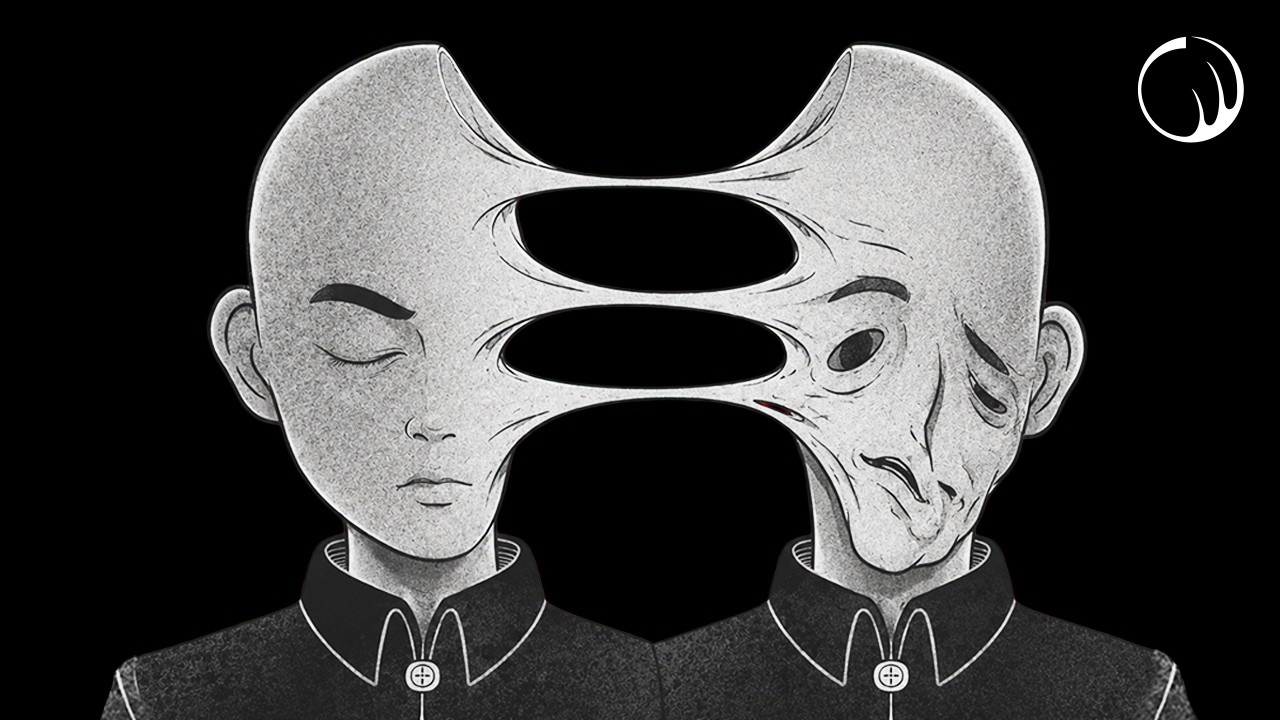
The book places you so deeply inside Yozo's head that it becomes difficult to see where his perception ends and reality begins. That is precisely the point. Dazai wants you to feel the distance between who we truly are and how we perform ourselves for others — a gap that, for some people, becomes an unbridgeable chasm.
Who Is Oba Yozo and Why Does He Matter?
Yozo is introduced as a child who simply cannot understand people. He finds human desires — even something as basic as hunger — strange and almost grotesque. He doesn't dislike people so much as he finds them bewildering. In one of the novel's most telling early passages, Yozo describes climbing up and down a station bridge as a child, convinced it existed for aesthetic pleasure rather than practical use. When he discovers it's merely functional, he loses all interest in it entirely. This small moment says everything: Yozo experiences the world through a deeply personal, imaginative lens that the rest of society doesn't share.
Unable to connect authentically, Yozo constructs a persona. He becomes the class clown — always joking, always performing — not because he enjoys humor, but because laughter is a kind of social currency. If he can make people laugh, they'll let him in without ever needing to truly know him. It's a Trojan horse strategy for navigating society, and it works, at a tremendous personal cost.
"Before anyone realized it, I had become an accomplished clown, a child who never spoke a single truthful word."
By adulthood, the mask has calcified. Yozo is no longer playing a character — he is the character, and the original self beneath it has nearly disappeared. What replaces it is a spiraling pattern of self-denial fueled by alcohol, hollow relationships, and an ever-widening sense of unreality. He ends up institutionalized, removed from the society he could never fully enter in the first place.
What Are the Main Themes of No Longer Human?
No Longer Human operates on several overlapping and deeply resonant themes that make it feel as urgent today as it did in 1948.
The Performance of Identity
Perhaps the novel's most enduring theme is the tension between our authentic selves and the selves we perform for others. Yozo understands early on that human society runs on a kind of mutual, functional deceit — people present curated versions of themselves and accept the same from others without anyone's feelings getting hurt. He participates in this exchange, but unlike most people, he is hyper-aware of doing so, and that awareness destroys him. He can't unsee the performance, which makes authentic connection feel impossible.
Loneliness and Social Anxiety
The loneliness in this novel isn't melodramatic. It's quiet, domestic, and suffocating. Yozo is surrounded by people throughout his life — family, friends, lovers — and yet he remains profoundly alone. His social anxiety isn't fear of embarrassment; it's something deeper: a fundamental sense that he is operating in a species he doesn't belong to, doing things he doesn't understand for reasons he can't articulate.
Self-Destruction as a Symptom
Yozo's alcoholism and drug use aren't random vices — they're symptoms of an inner world that has nowhere to go. With no authentic self left to inhabit and no real connection to anchor him, Yozo turns inward and burns. His self-destruction is the inevitable outcome of a life spent hollowing himself out to please others. Dazai frames it not as weakness but as the logical conclusion of a certain kind of unbearable awareness.
Is No Longer Human Based on Osamu Dazai's Real Life?
Yes — and this is what makes the novel so unsettling. No Longer Human is widely regarded as semi-autobiographical, drawing heavily from Dazai's own life experiences: his social alienation, his substance abuse, his multiple suicide attempts, and his fraught relationships. The novel was published in 1948, the same year Dazai died — he drowned in what is believed to have been a suicide pact with a companion — lending the title an eerily literal second meaning.
Dazai was already considered one of Japan's most influential literary figures before his death, but No Longer Human, his final novel, cemented that legacy. Knowing it is essentially the author's confession — a documented account of what it felt like to be him — elevates the reading experience into something closer to witnessing than entertainment. You're not just reading a story. You're being let into someone's head in a way most people never allow, even with those closest to them.
What Does the Ending of No Longer Human Mean?
The novel's epilogue shifts perspective entirely. We move away from Yozo's narration to an unnamed individual — seemingly a writer — who has come into possession of Yozo's notebooks through a barkeeper who knew him. The writer asks the barkeeper what she thought when she read them. Did she cry?
Her response is devastating: "No, I didn't cry. I just kept thinking that when human beings get that way, they're no good for anything."
This is the novel's cruelest moment. Society's final verdict on Yozo isn't cruelty or contempt — it's indifference framed as practicality. He wasn't useful enough to save. And yet, in the very last line, the same barkeeper describes the Yozo she knew as "an angel." He was never perceived as especially strange or troubled by those around him. His suffering was entirely invisible. That is Dazai's final, gutting point: the most tormented among us can go their entire lives without their pain ever being known, named, or addressed.
Why Is No Longer Human a Classic of Japanese Literature?
No Longer Human holds its place as a classic not because it is pleasant or resolved, but because it is honest in a way that literature rarely is. It belongs to Japan's I-novel (shishōsetsu) tradition — a form of confessional fiction in which the author's own life is the raw material — but it transcends the genre through the universality of its themes. Readers across cultures and generations recognize Yozo's experience: the exhausting performance of normalcy, the corrosive effects of inauthenticity, the terror of being truly known.
As translator Donald Keene noted in his introduction to the novel, the book's effect is not that of a wound gratuitously inflicted on the reader. It is, paradoxically, moving and even inspiring — because to name despair this clearly is itself a form of triumph.
What Can We Learn From No Longer Human Today?
The most obvious lesson is a call to authenticity — live honestly, have the courage to be disliked, resist the pressure to perform a self that isn't yours. And that lesson is real and valuable. As Dostoevsky wrote in Crime and Punishment: "Your worst sin is that you have destroyed and betrayed yourself for nothing."
But Dazai won't let us rest there. The harder truth the novel forces us to sit with is that authenticity isn't always a choice freely available to everyone. Yozo isn't ignorant of who he is — he's painfully aware. His tragedy is that the gap between his inner world and the external one feels unbridgeable. He's not wrong about people, or about how society works. He's just unable to cross the distance between his perception and a functional life.
What No Longer Human ultimately asks us is a quiet, unsettling question: How much of who we are is hidden — from the world and from ourselves? How much have we sacrificed to fit in, to be liked, to seem human? And for those of us who feel that distance most acutely, what creative, honest, or courageous act might finally build a bridge across it — before it's too late?
Ironically, for Dazai himself, the bridge turned out to be the novel you're holding. Through writing it, he let the world in — and let himself out. The tragedy is that he didn't live long enough to see how many people were waiting on the other side.