Blaise Pascal believed the human condition is defined by wretchedness, distraction, and a desperate hunger for meaning — and that confronting this truth honestly is the first and bravest step toward any kind of redemption. That is the core argument running through his unfinished masterpiece, Pensées, and it is why Pascal remains one of the most unsettling, relevant, and quietly hopeful thinkers in the history of philosophy. His ideas about what it means to be human cut through centuries without losing a single edge.
Who Was Blaise Pascal and What Did He Achieve?
Pascal was born in 1623 in Clermont-Ferrand, France, and the odds were stacked against him from the start. His mother died when he was just three years old. He suffered chronic illness throughout his life — digestive disorders, migraines, neurological episodes, and a pervasive physical fragility that kept him socially constrained from childhood. Yet out of this vortex of isolation and suffering emerged one of the sharpest minds of the scientific revolution.
By age 12, Pascal had independently worked out Euclid's first 32 geometric propositions. By 16, he had produced a theorem in projective geometry that still bears his name. In his twenties alone, he built the first mechanical calculator, formulated the principles behind the hydraulic press and syringe, helped establish modern probability theory, and contributed to Paris's first public transit system. He was, by any measure, a genius operating at full throttle.
And then, just as suddenly, he stopped. By his early thirties, Pascal had essentially abandoned math and science entirely. Something had broken open inside him — or perhaps broken through.
What Was Pascal's 'Night of Fire' That Changed Everything?
At age 31, Pascal experienced what he would describe only as fire. Alone one night, he was overwhelmed by a sudden, violent, and visceral encounter with what he called God — a torrent of peace, joy, and certainty that bypassed language, reason, and philosophy entirely. He scrawled notes about the experience on a piece of paper and sewed it into the lining of his coat, where it was found after his death. He called it simply: the night of fire.
Whether you read this as a genuine spiritual awakening, a neurological episode triggered by his chronic illness, or some convergence of both, the effect was total and irreversible. Pascal turned away from the world of equations and experiments and toward the messier, more urgent questions: Why are we here? What is wrong with us? And is there any way out?
What Is Pensées About and Why Does It Still Matter?
Pascal began writing a book intended to defend Christianity and guide readers toward God. He never finished it. He died at 39, his health finally giving out entirely. What remained were thousands of scattered notes, fragments, and arguments in various stages of development. Collected and arranged after his death, they became Pensées — a book that, somewhat ironically, became far more celebrated for its secular philosophical insights than for its religious apologetics.
Pascal originally envisioned the book in two parts: a diagnosis of the human condition as an illness, followed by a prescription of Christianity as the cure. What survived is something stranger and richer — an aphoristic, fragmented meditation on existential despair, the hunger for hope, the limits of reason, and the strange persistence of the human will to keep searching. Its disordered structure, far from being a weakness, mirrors the disordered progression of thought itself. It feels lived-in. That is precisely why it endures.
What Did Pascal Believe About the Human Condition?
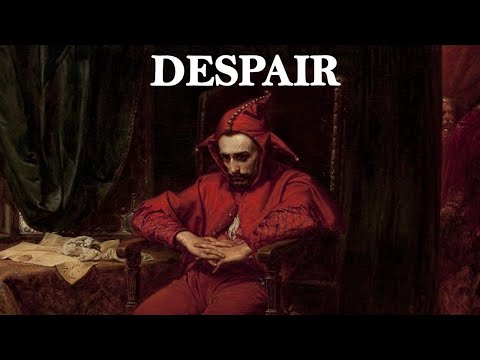
Pascal's diagnosis of the human condition is not gentle. He believed that at the core of human experience lies a fundamental wretchedness — a confrontation with our own smallness, mortality, and emptiness that most of us spend our entire lives running from. The museum of existential horrors, as he imagined it, does not contain skulls or dramatic spectacles. It contains only silence, stillness, and the unmediated experience of being alone with yourself.
His most famous and piercing observation cuts right to it: "All of man's unhappiness comes from his inability to stay peacefully alone in his room." We fill our lives with noise, ambition, entertainment, and endless distraction not because these things fulfill us, but because they keep us from the unbearable awareness of what we really are. Strip away the diversion, Pascal argued, and most people collapse into boredom, anxiety, and a vague but crushing sense of nullity they cannot name.
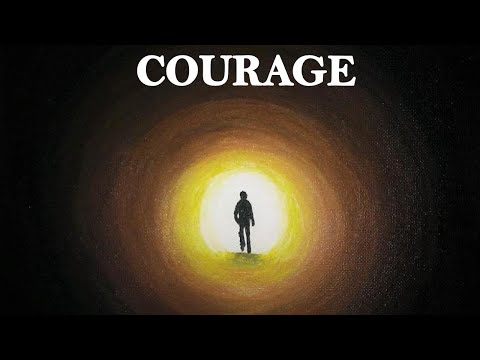
But here is where Pascal complicates his own pessimism. He did not believe this awareness of wretchedness was a trap. He believed it was a doorway. "Man's greatness comes from knowing he is wretched," he wrote. A tree does not know it suffers. We do. And in that knowledge — however painful — lies the seed of something extraordinary. Facing the full weight of the human condition honestly is not defeat. It is the first act of genuine courage.
Why Do Humans Avoid Self-Reflection at All Costs?
Pascal observed that virtually everything human beings do is, at some level, a strategy for avoiding themselves. Our careers, our social lives, our ambitions, our pleasures — they all function partly as elaborate machinery designed to keep the deeper questions at bay. He wrote about how young people especially live lives of pure noise, distraction, and future-focus, never pausing long enough to feel the emptiness underneath. And when the noise does stop, even briefly, the result is panic.
This insight feels almost unnervingly contemporary. In an era of infinite scrolling, constant connectivity, and algorithmically optimized distraction, Pascal's diagnosis reads less like 17th-century theology and more like a clinical description of modern life. We have simply built faster and more efficient machines for doing what humans have always done: running from the room.
- Distraction keeps us from confronting mortality and meaninglessness.
- Ambition gives the illusion of forward motion toward something permanent.
- Entertainment fills the silence that would otherwise ask uncomfortable questions.
- Social performance substitutes external validation for an internal sense of worth.
For Pascal, recognizing this pattern is not cause for despair. It is the beginning of an honest life.
What Is Pascal's Wager and Does It Still Apply Today?
Pascal's wager is one of the most debated arguments in the history of philosophy, and its logic is deceptively simple. Pascal argued that when it comes to believing in God, the rational bet is always to believe. If God exists and you believe, you gain eternal salvation. If God exists and you don't believe, you lose everything. If God doesn't exist and you believe, you lose only some finite earthly pleasures — which Pascal considered trivial relative to the stakes. And if God doesn't exist and you don't believe, you gain nothing you wouldn't have had anyway. The math, he argued, favors belief.
Pascal was careful to clarify that this is not proof of God's existence. It is proof that the search for God is worth undertaking — that striving toward transcendent hope and meaning is a rational and worthwhile way to live, regardless of metaphysical certainty.
But here is the more provocative question the wager raises: could the same logic apply to the search for meaning in human life itself, entirely apart from religion? Consider a secular reframing of the wager: it is a better bet to believe that this life is meaningful, valuable, and worth fully inhabiting. If you're right, you experience the only time you have with love, presence, and purpose rather than disdain or passive waiting. If you're wrong and something beyond this life exists, you've lost nothing — and gained everything you were given here. The wager does not require God. It requires only the willingness to search.
Can Pascal's Ideas Help You Find Meaning Without God?
Pascal intended to lead his readers to Christianity. What he actually left behind was something more universally applicable: a rigorous, unflinching case for why the search for meaning — in whatever form it takes — is the most fundamentally human act there is. His cure was God. But the deeper current running through Pensées is that the impulse to seek a cure, to refuse despair as the final word, is itself the evidence of something worth believing in.
Whether through religious faith, philosophical inquiry, creative work, love, or the stubborn refusal to stop asking questions, the human capacity to confront wretchedness and still reach toward something better is, in Pascal's framework, proof of our greatness. He wanted to show us how broken we are. What he actually showed us is how strong we are — how relentlessly, almost absurdly, we keep going.
History, as Pascal might have put it, is a constant reinvention of hope. We question, answer, build, destroy — and then question again. We cannot help ourselves from helping ourselves. That impulse, irrational and unkillable, is the thread running through Pascal's life, his unfinished book, and every honest human life since. The museum of existential horrors is real. But we keep walking through it, looking for the exit — and sometimes, in the looking, we find something better than an exit. We find a reason to stay.