
Toyota is moving Tacoma truck production from Mexico to San Antonio, Texas — and the reason is simple: a 25% tariff makes building in Mexico economically painful. The Japanese automaker announced a $3.6 billion investment in American manufacturing, creating 2,000 direct jobs and potentially 20,000 more through supply chain and multiplier effects. Senior Counselor for Trade and Manufacturing Peter Navarro says this is not a coincidence, and it's not the last time you'll see this headline.
Why Is Toyota Moving Production from Mexico to the US?
The short answer? Economics. When you impose a 25% tariff on goods built in Mexico, companies do the math quickly. Toyota didn't need a phone call from Washington — the numbers spoke for themselves. Navarro was blunt about it: "You don't have to have discussions with companies. It's simple economics."
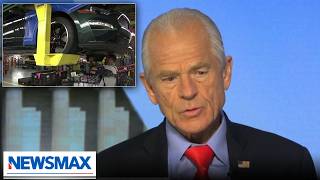 0:28
Peter Navarro explains why Toyota didn't need a direct call from Washington — the tariffs made the economics undeniable
Watch at 0:28 →
0:28
Peter Navarro explains why Toyota didn't need a direct call from Washington — the tariffs made the economics undeniable
Watch at 0:28 →
Two major policy moves converged to push Toyota's decision. First, the Section 232 tariffs on auto imports and auto parts made Mexico-based production significantly more expensive. Second, the U.S. Trade Representative Jameson Greer announced that the United States would not be renewing the US-Mexico-Canada Agreement (USMCA) on its original schedule. Together, these signals told every automaker operating in Mexico: the free ride is over.
The $3.6 billion investment in San Antonio represents more than just a factory expansion — it's a signal to the entire global auto industry that the rules of the game in North America have fundamentally changed.
What Is the 25% Tariff on Mexico Auto Imports?
The Trump administration imposed 25% tariffs on automobiles and auto parts manufactured in Mexico, citing both national security and economic security concerns. The reasoning goes back to a strategy first outlined in the 2018 National Security Strategy: economic security is national security.
2:15
Navarro describes Mexico as a 'staging area' for Chinese auto parts entering the US supply chain
Watch at 2:15 →
Navarro pointed to a historical precedent that underscores just how seriously the administration views domestic auto production: during World War II, American auto plants were converted into tank and aircraft factories — the so-called Arsenal of Democracy. Losing that manufacturing base isn't just an economic problem; it's a defense problem.
The 25% tariff is designed to make foreign-built cars and parts expensive enough that it becomes more profitable to build in America — even accounting for higher operational costs. And based on Toyota's announcement, it appears to be working exactly as intended.
Will USMCA Be Renegotiated in 2025?
USMCA — the trade deal that replaced NAFTA — was supposed to be a win for American manufacturing. Instead, according to Navarro, it backfired. The U.S. trade deficit with Mexico and Canada grew by 50% under USMCA, directly contradicting the deal's core promises. American-made auto parts that were supposed to flow into cars built under the agreement actually declined.
The announcement that the U.S. won't automatically renew USMCA on schedule sent shockwaves through the trade world. Negotiations to revamp the deal are expected, but Navarro made clear the current framework is unacceptable. Mexico and Canada used a 2-to-1 vote to override U.S. positions on how to value content in vehicles — and that decision opened the door to a flood of Chinese auto parts entering the supply chain without proper labeling.
4:10
Navarro names Hyundai, Honda, and Nissan as the next automakers expected to announce US investment moves
Watch at 4:10 →
Whether USMCA gets renegotiated into something better or collapses entirely remains to be seen. But the message from Washington is unambiguous: if you want access to the American market, you need to play by American rules.
How Are Chinese Auto Parts Sneaking Into the US Through Mexico?
This is where it gets complicated — and alarming. China has a massive overcapacity problem in automobiles, steel, copper, and dozens of other industries. Rather than slow down production, Beijing has encouraged Chinese companies to invest in countries like Mexico, where looser regulations allow Chinese-made components to enter the USMCA supply chain without being labeled as Chinese content.
In practice, this means a car assembled in Mexico might contain Chinese parts that are never flagged as such — and that car can enter the U.S. market under favorable USMCA terms. It's a loophole that China has been exploiting aggressively, and Mexico's regulatory environment has made it easy.
Navarro described Mexico as a "staging area" — a transit point for Chinese manufacturing to reach American consumers while bypassing the tariffs and scrutiny that would apply to goods shipped directly from China. Closing that loophole is a central goal of the administration's trade policy, and the pressure on Mexico to reform is only going to intensify.
How Many Jobs Will Toyota's $3.6B Investment Create in Texas?
The numbers are significant. Toyota's San Antonio investment is projected to create:
- 2,000 direct jobs at the manufacturing facility itself
- 20,000 additional jobs through supply chain and economic multiplier effects in the broader Texas economy
That multiplier effect is crucial to understanding why reshoring matters beyond the factory floor. Every manufacturing job supports multiple jobs in logistics, parts supply, local services, and ancillary industries. San Antonio is set to become a major hub for American auto production — and if Navarro's predictions are right, it's only the beginning.
Are Labor Costs in Mexico Still Cheaper Than the US for Automakers?
Historically, the answer was a clear yes — and that cheap labor was the primary reason automakers moved production south of the border in the first place. But Navarro argues that framing is increasingly outdated.
"That's kind of old school thinking," he said. Modern auto manufacturing is dominated by robotics, advanced machinery, and automation. In a highly automated factory, the wage differential between a Mexican worker and an American worker matters far less than it did in the 1980s and 1990s. What matters more is productivity, infrastructure, supply chain reliability, and — increasingly — tariff exposure.
When you stack a 25% tariff on top of whatever labor cost savings Mexico offers, the equation shifts dramatically. Add in the uncertainty around USMCA and the reputational and legal risks of Chinese parts infiltrating your supply chain, and suddenly building in San Antonio starts looking very attractive.
Which Other Automakers Are Expected to Follow Toyota to the US?
Toyota may be first, but Navarro says it won't be alone for long. He specifically named three manufacturers he expects to announce similar moves in the coming months:
- Hyundai
- Honda
- Nissan
"They're all going to come here," Navarro said confidently. The combination of tariffs, USMCA uncertainty, and the administration's clear long-term commitment to manufacturing reshoring gives every foreign automaker strong incentive to get ahead of the curve rather than wait and absorb costs later.
For American workers and American communities, this reshoring wave — if it materializes as predicted — represents one of the most significant shifts in domestic manufacturing in decades. Whether you agree with the tariff strategy or not, the early data point is hard to argue with: $3.6 billion and 22,000 jobs are coming to San Antonio, Texas. Round one goes to the tariffs.