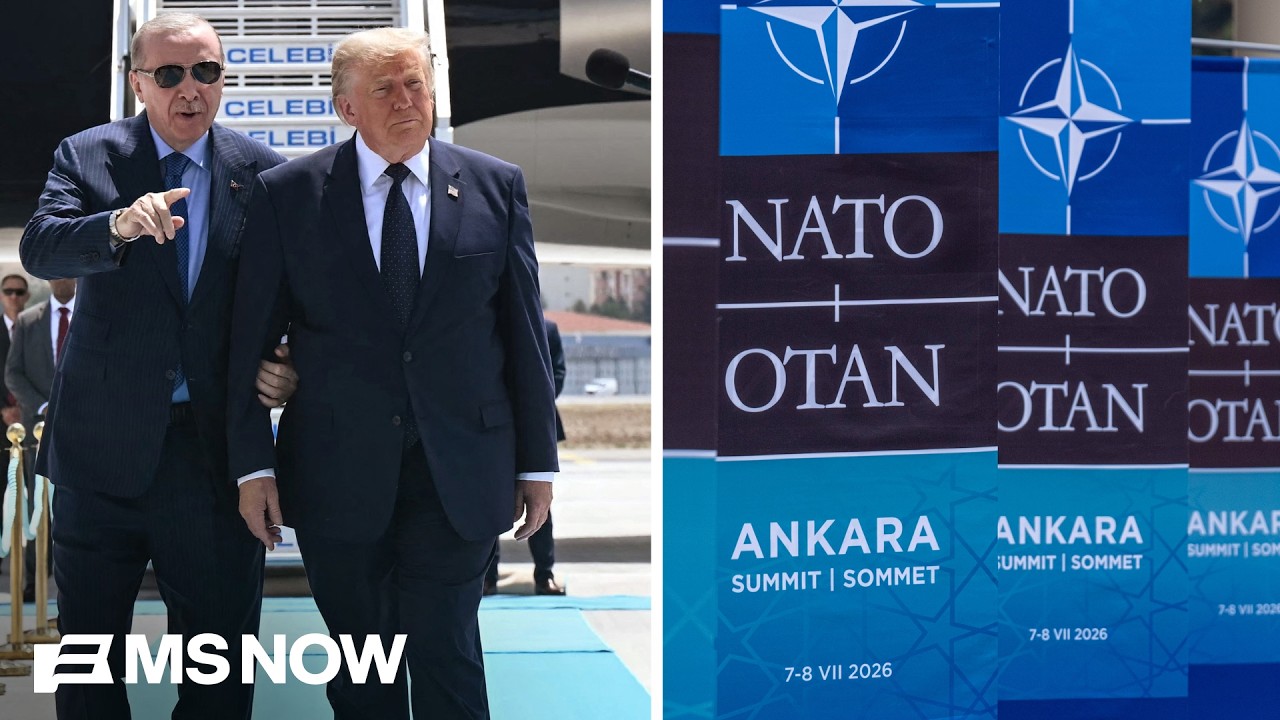

President Trump has touched down in Ankara, Turkey, for the 2025 NATO Summit — and the stakes could not be higher. The summit arrives at one of the most turbulent moments in the alliance's modern history, with Trump openly questioning NATO's purpose, threatening to withdraw US troops from Europe, and demanding allies dramatically increase their defense budgets. So what is happening at the NATO summit in 2025, and what does it mean for the future of the Western alliance? Here is a complete breakdown.
What Is Happening at the NATO Summit 2025?
Trump landed at the tarmac in Ankara to a formal state arrival ceremony and an honor guard review. His first major engagement was a bilateral meeting with Turkish President Recep Tayyip Erdogan — a meeting loaded with geopolitical significance. From there, Trump joined fellow NATO leaders for dinner, a group he has repeatedly criticized in the days leading up to the summit.
NATO Secretary General Mark Rutte, clearly anticipating Trump's trademark pressure over defense contributions, moved proactively before the summit opened. Rutte announced the alliance would showcase a series of new military projects worth billions of dollars — a direct effort to demonstrate that NATO members are stepping up and not just coasting on American security guarantees.
The mood in Ankara, according to reporters on the ground, is one of cautious anxiety. Transatlantic relations have rarely been more strained, and NATO officials are walking a careful line between appeasing a volatile US president and maintaining the credibility of the alliance itself.
Will Trump Give Turkey F-35 Fighter Jets?
One of the most explosive storylines heading into the summit is a report from The New York Times that Trump is considering gifting Turkish President Erdogan access to F-35 fighter jets. If confirmed, this would represent a dramatic reversal — Trump himself imposed the original ban on selling F-35s to Turkey seven years ago, citing national security concerns after Ankara purchased the Russian S-400 missile defense system.
The potential deal is already drawing fierce opposition. Israeli Prime Minister Benjamin Netanyahu publicly warned that transferring advanced F-35 technology to Turkey would upend the balance of power in the Middle East. Israel's concerns are significant — the F-35 is widely considered the most advanced stealth fighter jet in the world, and its presence in Turkey's arsenal would fundamentally alter regional air superiority calculations.
Whether Trump follows through remains to be seen. But the fact that it is even being floated as a diplomatic gesture — a "gift" to Erdogan — illustrates just how transactional Trump's approach to alliance management truly is.
What Did Trump Say About NATO Defense Spending?
Defense spending has been Trump's central grievance with NATO allies for nearly a decade, and he arrived at this summit still swinging. Just days before landing in Ankara, Trump publicly called NATO a "paper tiger", questioned why the alliance even exists, and told European members that they should be responsible for their own defense.
He also renewed complaints that no NATO ally joined the United States in its military action against Iran — a move allies view as exclusively American in nature and outside NATO's collective defense mandate.
Secretary General Rutte has tried a different approach to managing Trump's frustration. In a now-notable Oval Office visit, Rutte essentially held up a scoreboard crediting Trump personally for the surge in European defense investment, dubbing the spending increase the "Trump trillion" — $1.2 trillion in additional defense spending by European allies since 2017. Whether flattery ultimately works as a diplomatic strategy is, as analysts noted on air, still very much an open question.
Analysts have pushed back on the spending-focused framing. The more important question, experts argue, is not how much NATO allies spend on defense, but how they spend it. European militaries have long been criticized for inefficient procurement, redundant capabilities, and poor interoperability. Simply hitting a GDP percentage target does not automatically translate into combat readiness — a point that applies equally, critics note, to the United States itself.
Will Trump Meet Zelensky at the NATO Summit?
There is significant anticipation around a potential meeting between Trump and Ukrainian President Volodymyr Zelensky on the sidelines of the summit. Their recent interactions have been notably less explosive than their infamous February Oval Office confrontation — when Trump effectively threw Zelensky out of the White House — but tensions remain just beneath the surface.
The US has continued sharing intelligence with Ukraine but has been reluctant to commit significant new military aid, particularly the Patriot air defense systems that Ukraine desperately needs as Russian missile strikes intensify. Zelensky has been explicit: Ukraine needs more air defense now. Whether Trump uses the NATO summit to announce any meaningful new support for Kyiv is one of the most closely watched outcomes of the gathering.
Does Putin Actually Want to End the War in Ukraine?
Trump held a 90-minute phone call with Vladimir Putin on Saturday and emerged describing it as productive, saying Putin wants the war to end. Less than 24 hours later, Russian forces launched a fresh drone and missile attack on Kyiv, killing civilians and injuring dozens more.
When pressed on the contradiction, Trump maintained his optimism: "President Putin wants it to end. I will tell you that very strongly."
Analysts are considerably more skeptical. The consensus view among foreign policy experts is that Putin has not meaningfully pivoted toward a genuine desire for peace. He has made no unilateral gestures — no ceasefire proposals, no troop withdrawals, no diplomatic signals beyond words in phone calls. If Putin truly wanted the war to end, the argument goes, a ceasefire in place could be declared essentially overnight.
There is some nuance here. Russia is paying a mounting economic and human cost for the war. Estimates suggest over a million Russian casualties since the invasion began. The financial strain of sanctions and wartime spending is real. So Putin may be feeling more pressure than he projects — but that pressure has not yet translated into actionable peace moves.
The concern among analysts is that the current US diplomatic approach, led by figures like Steve Witkoff, has been framed almost entirely around pressuring Ukraine to accept terms that critics describe as pro-Russian. The argument from foreign policy veterans is simple: stop trying to jam a bad deal down Ukraine's throat, call for a ceasefire in place, and let the territorial and political questions be resolved later. That, they say, is the smart play — and it is one the administration has so far resisted.
Why Is NATO Worried About US Commitment to Europe?
Beneath the summitry and the photo opportunities, there is a deeper anxiety running through European capitals. It is not just about defense spending percentages or Ukraine policy. It is an existential question: Can Europe count on the United States if Russia moves against a NATO member?
Privately, multiple European officials have expressed doubt. Trump's public statements — calling NATO a paper tiger, suggesting Europe should defend itself, refusing to commit to Article 5 in unambiguous terms — have eroded confidence in ways that are difficult to rebuild with a single summit. The announcement that the US would withdraw some troops from Germany and conduct a broader review of its European military posture only deepened those concerns.
What European leaders are watching for is not just what Trump says in public. They are watching for signals — whether the US commits Patriots to Ukraine, whether Trump's bilateral with Erdogan produces destabilizing outcomes, and whether the alliance leaves Ankara with a credible, unified posture or a collection of awkward compromises.
How Is Ukraine Actually Performing on the Battlefield?
Despite the White House's framing that Russia holds the momentum and Ukraine faces inevitable pressure to negotiate, the battlefield picture is more complex. Ukraine has demonstrated a sustained ability to strike deep into Russian territory using long-range drones, targeting energy infrastructure and even launching strikes near Moscow. Russian positions in Crimea — the territory seized in 2014 that anchored the entire Russian strategic posture — are facing new vulnerabilities.
Ukraine has also reportedly reclaimed some recently lost territory. Far from a collapsing front, the picture analysts describe is one of grinding attrition in which neither side has achieved decisive advantage — but in which Ukraine has shown remarkable resilience and adaptability.
The mismatch between this battlefield reality and the administration's stated assessment that Russia holds the upper hand is striking. And it matters: if the US misreads the battlefield, it risks engineering a diplomatic outcome that rewards Russian aggression and undermines the very deterrence principles NATO was built to uphold.
The next 48 hours in Ankara will go a long way toward revealing which direction this administration is prepared to go.