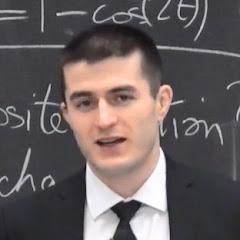
What happens when you play chess against someone who helped build the strongest chess engine ever created? You lose — but you lose slowly, gracefully, and you learn something about what makes machine intelligence genuinely beautiful. That was the experience Lex Fridman had in a five-minute blitz game that turned into a quiet masterclass on positional play, sacrifice, and the strange genius of AlphaZero.
The Game Itself
Lex played White and opened with the English Opening — a solid, positional choice. His opponent, a researcher with deep roots in competitive chess, acknowledged it as a respectable line. The opening phase was clean on both sides, with Lex handling the early moves well enough that no obvious errors appeared. The game transitioned into a middlegame with genuine tension: bishops and knights vying for dominance, both players keeping their kings safe.
The turning point came when the queens were exchanged — a deliberate choice by the more experienced player to steer into an endgame where technique, not tactics, would decide the outcome. With queens off the board, the character of the game shifted completely.
Knight vs. Bishop in the Endgame
One of the most instructive moments came in the endgame, where a well-placed knight outperformed Lex's bishop. The knight sat on a strong central square and exerted pressure throughout, while the bishop struggled to find an active role. This is a classic endgame theme — the knight's ability to control squares of both colors from a fixed post versus the bishop's need for open diagonals — and it played out here in textbook fashion.
"The internet will disagree," the researcher joked, after a few moves that looked unorthodox on the surface but were part of a slow, suffocating plan. Lex's position wasn't lost in a blunder — it was compressed, move by move, until there was simply nowhere left to go. A slow death, as it was called, but a dignified one. No embarrassing early checkmate, just a steady, inevitable squeeze.
Playing Like AlphaZero
At one point, Lex mentioned he was trying to play like AlphaZero — specifically referencing the engine's famous willingness to sacrifice material. It's a quality that distinguishes AlphaZero from nearly every other chess engine ever built. Traditional engines like Stockfish evaluate positions with enormous precision, but they are conservative about sacrifices unless the outcome can be calculated concretely. AlphaZero sacrifices with what looks like intuition — and often that intuition turns out to be deeper than any human calculation.
"Sometimes I lose pieces by mistake," the researcher said. "AlphaZero loses them on purpose." That distinction — intentional sacrifice versus accidental loss — captures something fundamental about the difference between human chess and machine chess at the highest level.
The Immortal Zugzwang Game
After the game concluded, the conversation turned to the single most beautiful thing AlphaZero has ever done. The answer was immediate: the game that has come to be called the Immortal Zugzwang Game, a name coined by chess commentator Agadmator on YouTube.
In that game, AlphaZero played against Stockfish and, through a series of piece sacrifices, managed to seal Stockfish's queen and both rooks in the corner of the board — completely immobilized. The concept at work is zugzwang: a position in which any move a player makes will worsen their situation. It is rare in grandmaster chess. It had never been achieved against Stockfish. AlphaZero did it through deliberate, elegant sacrifice — not brute force, but something closer to art.
The game is documented online with detailed commentary and is considered one of the most striking demonstrations of what neural-network-based chess engines can produce that no human — and no prior engine — would have conceived.
The Book: AlphaZero's Hidden Notebooks
The conversation ended with a signed copy of a book co-authored by British Chess Champion Matthew Sadler and Women's International Master Natasha Regan. The two were given behind-the-scenes access to AlphaZero before its public release and spent time studying its games in depth.
Sadler's description of the experience has become something of a famous quote in chess circles: "It's like discovering the notebooks of a hidden champion that no one knew about." The book covers both the technical story of how AlphaZero was built and a deep analysis of the new chess ideas it introduced — ideas that, according to reports, Magnus Carlsen has since incorporated into his own play.
That last detail is striking. The world's highest-rated human chess player studying the games of a machine not just as curiosities, but as sources of genuine strategic insight. AlphaZero didn't just beat humans at chess. It gave chess new ideas. And those ideas are now part of the game.