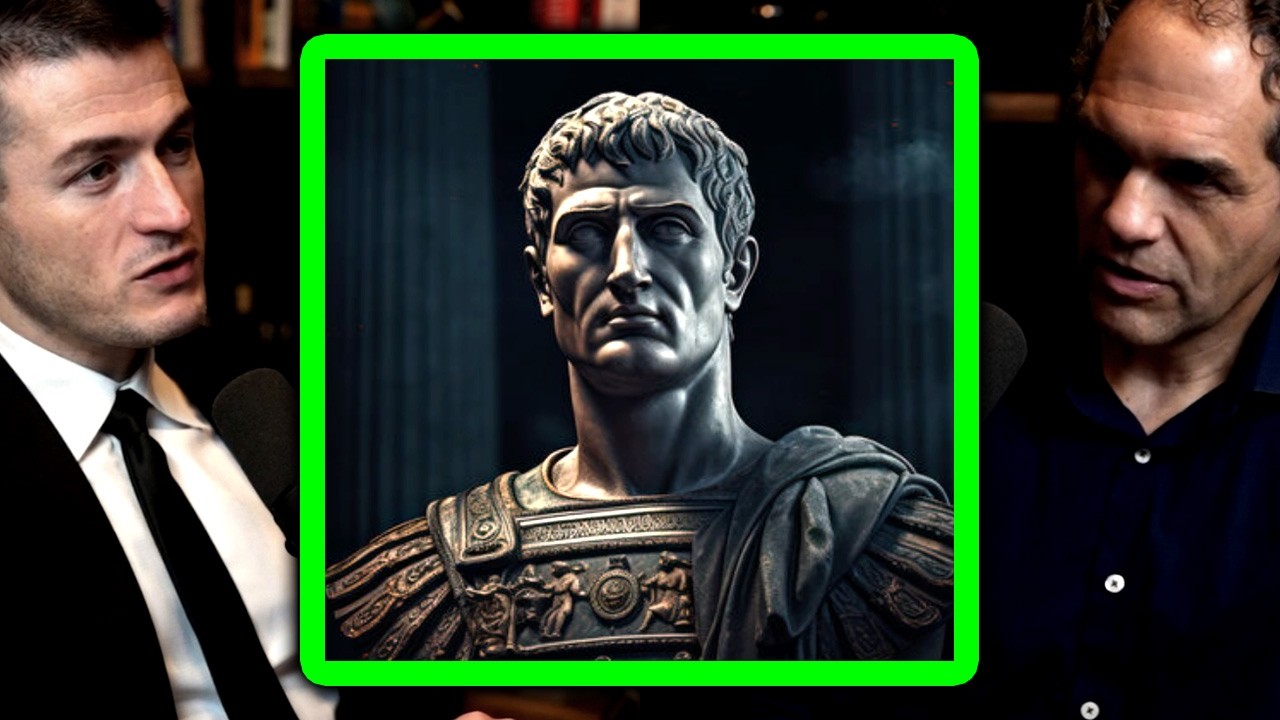

Constantine founded Constantinople in 330 AD on the site of the ancient Greek city of Byzantium — precisely where Europe meets Asia along the Bosphorus strait. He didn't just build a city; he built a second Rome, a deliberate copy-and-paste of the empire's capital transplanted to the strategic heart of the known world. Who was Constantine, and what drove him to make such a world-altering decision? The answer begins with a brutal series of civil wars and ends with one of history's most consequential acts of urban planning.
Who Was Constantine and Why Did He Found Constantinople?
Constantine was the son of one of Emperor Diocletian's colleagues — an insider born into the late Roman imperial system. That system, called the Tetrarchy, was deliberately designed to be non-hereditary. Senior emperors would retire, junior emperors would be promoted, and new junior emperors would be recruited based on merit rather than bloodline. Constantine, as a general's son, was passed over. But the armies liked him, and he was genuinely competent.
What followed was a decades-long tournament of civil wars. At one point, as many as six rival emperors competed simultaneously. Through a series of campaigns — essentially quarterfinals, semifinals, and a final — Constantine eliminated his rivals one by one. In 324 AD, he defeated his last opponent, an emperor named Licinius, and became the sole ruler of the entire Roman Empire.
Licinius had based himself at Byzantium, a city sitting directly on the Bosphorus at the exact point where Europe meets Asia. Constantine recognized the location's extraordinary value immediately. He chose to build his new capital there — naming it Constantinople, or "City of Constantine" — and explicitly modeled it as a New Rome. From the very beginning, the intention was clear: this was a branch office of Rome in the East, and his successors continued that vision with equal commitment.
How Did Constantine Rise to Sole Power Over Rome?
Constantine's rise was far from a straight line. The Tetrarchy that Diocletian had constructed was supposed to prevent exactly the kind of dynastic ambition Constantine embodied. But the system had a fatal flaw: the armies on the ground were loyal to generals and their sons, not to abstract constitutional arrangements.
Constantine leveraged that loyalty masterfully. He fought his way through a complex web of alliances — many of his rivals were also his fathers-in-law or brothers-in-law, since these ruling families had intermarried extensively. When alliances became inconvenient, Constantine broke them. When rivals became threats, he eliminated them. By 324 AD, after defeating Licinius in the East, he stood alone as the undisputed master of Rome.
His movement eastward during this period was not accidental. Each victory pushed him further from Rome and closer to the wealthiest, most urbanized half of the empire. By the time the dust settled, he was already in position to build something entirely new.
Why Was Constantinople So Strategically Important?
To understand why Constantinople mattered so much, it helps to understand why Rome had become a problem. Rome was geographically central to Italy and the Mediterranean — safe, prestigious, but increasingly inconvenient. By the 3rd and 4th centuries, emperors were no longer senators holding court in marble halls. They were military commanders slogging through winter campaigns on distant frontiers. Rome was simply too far from where the action was.
Constantinople solved this in a single stroke. Consider its position:
- North to south: It sits as the node connecting the Black Sea to the Mediterranean, controlling the critical Bosphorus strait.
- East to west: It stands precisely where Europe meets Asia, at the crossroads of the continent.
- Frontier access: It sits roughly halfway between the two most critical Roman frontiers — the Danube in the north and the Euphrates in the east.
This meant an emperor based in Constantinople could respond to threats on either major frontier far more efficiently than one stationed in Rome. Almost every emperor who had a genuine choice between East and West chose the East — with only Valentinian later in the 4th century opting for the West. The strategic logic was simply too compelling to ignore.
How Did Constantinople Hold the Eastern Empire Together?
Beyond pure geography, Constantinople performed a crucial political and social function. During the civil wars of the 3rd century, the Roman Empire had a habit of fracturing right along the Bosphorus — one emperor controlling Asia, another controlling Europe, with the strait as the natural dividing line. This kept happening, over and over.
Constantinople acted as a clamp. By establishing a new Senate there — eventually comprising around 2,500 to 3,000 men — Constantine drew the wealthiest and most influential elites from across the entire Eastern Mediterranean: from the Aegean, Asia Minor, Syria, and beyond. These men were not just politically invested in Constantinople. They were literally financially invested in it, required to spend money in the city as a condition of their senatorial status.
The result was transformative. The empire never broke along the Bosphorus again. Instead, when the East and West eventually split in 395 AD, the fracture point had shifted west to the Adriatic — because Constantinople had successfully unified the entire Eastern world into a coherent political and economic unit. That was its true genius.
Why Is Constantine Considered the Greatest Byzantine Emperor?
Byzantine historian Anthony Kaldellis, a frequent guest on The History of Byzantium podcast, placed Constantine at the very top of his ranking of Byzantine emperors — and he's the first to admit it has nothing to do with personal admiration.
The reasoning is straightforward: the scale and consequence of Constantine's decisions are simply unmatched. Founding Constantinople. Converting to Christianity and setting the entire Roman Empire on a path toward Christianization. These are not administrative achievements or competent military campaigns — they are world-history-level decisions that reshaped civilization. Very few rulers in any era can claim even one such decision. Constantine made at least two.
Most emperors who rank highly in such assessments earn their place by doing their job well — protecting frontiers, administering justly, improving the lives of their subjects. Constantine clears that bar too. But he exists in his own category because of the transformative magnitude of what he chose to do.
Why Did Constantine Murder His Own Son Crispus?
Constantine's greatness came wrapped in ruthlessness. He eliminated rivals without hesitation — fathers-in-law, brothers-in-law, anyone whose alliance had expired or whose ambition had grown threatening. That was, by the brutal standards of late Roman politics, arguably rational.
What is far harder to explain is the execution of his own son, Crispus. By all accounts, Crispus was a capable and popular general, well-regarded by the armies. Shortly after his great victory over Licinius in 324, Constantine had Crispus executed. Then, in rapid succession, he had his own wife — who was not Crispus's mother — killed as well.
What makes this especially strange is the silence. When Roman emperors executed people for legitimate reasons, they made sure everyone knew about it. The propaganda machine would amplify every justification. In this case, there was nothing. No official explanation, no surviving accusation, no whisper of rebellion. Court writers who had spent years praising Crispus simply stopped mentioning him entirely, as if he had never existed.
Historians have speculated for centuries. Some suspect a palace intrigue involving his wife. Others point to a power struggle Constantine may have feared. But the truth is: we simply don't know. And the silence itself is perhaps the most damning detail of all.
The Legacy of One Emperor's Decisions
Constantine was not a man you would want to have dinner with. He was ambitious, ruthless, and capable of eliminating even those closest to him when political necessity — or whatever drove the Crispus affair — demanded it. But the world he shaped outlasted him by more than a thousand years. Constantinople stood as the capital of the Eastern Roman Empire until 1453. The Christianization he set in motion transformed Western civilization. The strategic framework he established held the Eastern Mediterranean together through centuries of pressure that would have broken a lesser system entirely.
By any meaningful measure of historical impact, Constantine earned his place at the top of the list.