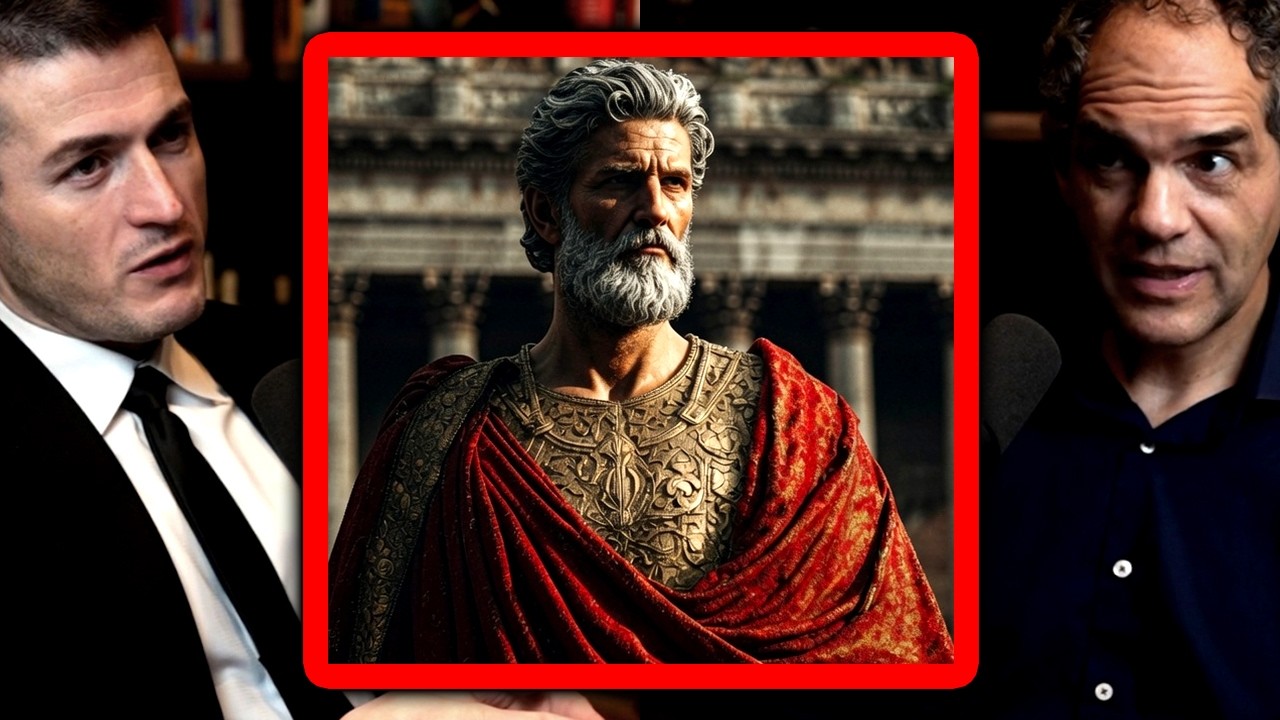

What held the Roman Empire together for over 2,200 years? It's arguably one of the most daunting questions in all of history — and the answer isn't what most people expect. It wasn't military force alone. It wasn't a shared religion or ethnicity. According to historians of the Roman world, the answer lies in something more subtle: a continuous political narrative that no generation ever felt had been broken. The Roman state was never replaced. It simply kept transforming, piece by piece, until it looked almost unrecognizable — yet still called itself Roman, and meant it.
To understand how that's even possible, we need to borrow a metaphor from ancient Greek philosophy.
What Is the Ship of Theseus? And Why Does It Explain Rome?
The Ship of Theseus is a classic philosophical puzzle: imagine a ship at sea whose every plank, rope, and sail is gradually replaced over time. Eventually, none of the original material remains. Is it still the same ship? Philosophers have debated this for centuries, but for historians of Rome, it's not just a thought experiment — it's a description of what actually happened.
Roman history is the story of a political community that transformed so slowly, so incrementally, that no one living through any particular era ever felt that a dramatic rupture had occurred. No citizen woke up one morning and thought, we are no longer Roman. The changes were real — language, religion, geography, culture all shifted — but the narrative thread connecting each generation to the last remained intact. That continuity of story is what made Rome, Rome.
This is what sets Roman history apart from, say, Greek cultural history or the history of Christianity. Greek culture was never bound to a single state — ancient Greeks were famously fragmented into competing city-states, yet the cultural tradition persisted across borders and centuries. Christianity similarly transcends any particular political entity; it can take root anywhere. But Roman history is specifically the history of a political community — the community of the Roman people and Roman citizens — and it lives or dies by the survival of that community's story.
How Did Roman Identity Change Over 2,000 Years?
Here's where things get fascinating — and uncomfortable for tidy historical categories. If you placed a Roman senator from the age of Cicero in a room with a subject of the Eastern Roman Empire in 1400 AD, they would likely seem alien to each other. One speaks Latin, worships the ancient gods, and envisions Rome as a city on seven hills. The other speaks Greek, prays as an Orthodox Christian, and lives in Constantinople. How could they possibly recognize each other as members of the same political tradition?
And yet, if they were given time — told to search for common ground — they could find it. They would discover that Roman soldiers across all these centuries swore recognizable oaths. They would find that Roman law, especially regarding property, inheritance, and commerce, formed a continuous spine running through the entire history. They would find that the idea of being ruled and ruling within a defined political community, with mutual responsibilities between ruler and subject, persisted across every transformation.
Even more striking is the internal diversity of Roman identity at any given moment. Consider a senator from Cicero's Rome standing beside a man from the city's slums — perhaps the son of a slave brought from the East by a conquering general. Both are Roman. But their life experiences, privileges, languages even, might be worlds apart. Roman identity was never monolithic. It was always layered, contested, and complex.
Why Do Historians Separate Rome and Byzantium Artificially?
One of the most thought-provoking arguments in the study of Roman history is the challenge to the very category of "Byzantine." The term itself was invented by later Western scholars — the people of the Eastern Roman Empire never called themselves Byzantine. They called themselves Romans, Romaioi, and they meant it without irony.
Consider Emperor Hadrian, one of Rome's most celebrated rulers — cosmopolitan, bilingual, deeply in love with Greek culture, fond of poetry, sporting a Greek-style beard, and famously traveling the empire with his Greek lover. Now compare him to a rough farmer-warrior from the Middle Republic, four centuries earlier, chasing Samnite cattle through the Italian countryside. By conventional logic, those two men belong to the same story: "Rome." But Hadrian and a similarly cosmopolitan, bilingual, Greek-reading Eastern emperor from several centuries later? We're told to see a rupture there — to label one "Roman" and the other "Byzantine."
The argument historians make is that this rupture is largely artificial, a product of how later Western Europeans chose to organize history, not a reflection of how the people living it experienced it. The transformation from "Roman" to "Byzantine" was no more dramatic than dozens of other transformations within the Roman story that we casually accept as continuous.
Was There Roman National Pride Like Modern Patriotism?
Modern nations invest enormous resources in cultivating patriotism — through education, media, shared symbols, and national holidays. When we see Greeks today fiercely proud of their ancient heritage, part of that pride is the product of modern nation-building, not an unbroken transmission from antiquity. So was there something similar driving Roman cohesion?
The short answer is: yes, but it wasn't the primary engine. There are striking examples in the historical sources. A sixth-century Roman ambassador negotiating with Persia reportedly told his skeptical counterparts: "You're making a deal with the Romans — the name should say it all." That's genuine pride, a sense that bearing the Roman tradition meant something momentous and weighty.
But historians are careful not to over-generalize from such examples. The sources we have are almost always written by literate elites — a tiny fraction of the population. We can't simply assume the farmer, the soldier, or the urban poor felt the same Roman pride as an aristocratic ambassador. What we can measure more reliably are behaviors: Did people pay their taxes? Did they try to rebel and exit the empire? Did they serve in its armies?
The answer, more often than not across more than two millennia, was yes — they participated. And that participation, that consensus to be ruled within this particular political community in exchange for protection, law, and order, may be a more honest explanation for Roman longevity than pride alone.
What Did Roman Soldiers Swear — and Why Did It Matter?
One of the most compelling pieces of evidence for Roman continuity is the military oath. Roman soldiers swore a formal oath throughout the entire history of the empire. We don't have the precise wording from every era, but the structure was consistent: a pledge to protect the republic, the empire, or the emperor, depending on the period. Sometimes a Christian formula was added in later centuries; sometimes not. But the act of swearing, and the essential commitment it represented, was recognized across time.
Imagine soldiers from different centuries comparing their oaths. Despite the centuries between them, despite differences in equipment, language, and religion, they would have understood each other. That's a remarkable form of institutional continuity — invisible to any one generation but unmistakable across the whole sweep of history.
How Did Roman Law Protect Women Across the Centuries?
Perhaps the most concrete and surprising evidence of Roman continuity is the empire's legal system — and nowhere does this show up more vividly than in the rights it afforded women. Roman law around property, inheritance, marriage, and commerce gave women a degree of legal agency that was unusual in the ancient and medieval worlds.
In the tenth and eleventh centuries, Jewish women living within the Eastern Roman Empire discovered that Roman civil courts offered them more rights than rabbinical courts did in matters of property and inheritance. They began taking their disputes to Roman courts instead. For Roman authorities, these were simple property cases. For the rabbis, they were religious matters. But Roman imperial law superseded local custom — and the result was that Jewish women living under Roman law had legal protections that Jewish women elsewhere simply did not.
That is the Roman thread made visible: not in emperors and battles, but in a legal framework that quietly shaped millions of lives across more than two thousand years, adjusting and adapting, but never entirely breaking.
The Thread That Never Broke
So what is the soul of the Roman Empire? It is the story a political community tells about itself — continuously, across centuries of transformation — in which no single change ever feels like a rupture to those living through it. It is the oath a soldier swears. The court a woman turns to for justice. The ambassador who invokes a name as if it carries the weight of the world. Rome lasted not because it stayed the same, but because it never stopped being Rome in the minds of the people who lived inside it. And that, more than any army or emperor, is what made it endure.