Most people won't try an oyster because they've already decided they won't like it. Gary Vaynerchuk uses that analogy to diagnose something far larger: the fear of trying anything unfamiliar is quietly ruining careers, relationships, and financial lives. Across a series of conversations with entrepreneurs, athletes, and aspiring creators, Vaynerchuk returns again and again to a handful of uncomfortable truths — about patience, entitlement, money, and what it actually takes to build a life worth living.
The Entitlement Problem Nobody Wants to Admit
When asked what most people are blind to right now, Vaynerchuk didn't hesitate: entitlement is destroying happiness. The belief that the world owes you something — a shortcut, a break, an audience, a salary — is the single most reliable predictor of misery he's observed. And it isn't limited to any generation or income bracket. It shows up at every level.
This connects directly to how people misread their own financial situations. The formula Vaynerchuk offers is almost brutally simple: if you make $39,000 a year and live a $23,000 lifestyle, you've won. If you make $283,000 and spend $413,000, you are losing every single day regardless of how successful you appear. Living within your means is the only reliable cure for financial anxiety — not a raise, not a better economy, not a side hustle. The anxiety is almost always a spending problem disguised as an income problem.
He points to the current economic moment as an example of collective misperception. Compared to 2008 and 2009, when people were losing jobs en masse, today's inflation-driven complaints are largely a failure of personal financial management. Cutting one streaming service isn't sacrifice — it's basic arithmetic.
Time Is the Asset You Keep Mispricing
A 26-year-old who feels like he's wasted six years gets a reframe that Vaynerchuk delivers with genuine urgency. Six years feels enormous at 26 — it's over 20% of your life so far. But relative to what's ahead, it's almost nothing. The people Vaynerchuk most wants to reach are between 13 and 33, because that's when the illusion of being "too late" does the most damage.
His core argument: you can be miserable at 32 and still die at 92 having lived a profoundly happy life. Sixty years of forward momentum is just sixty years of forward momentum. The tragedy isn't starting late. It's deciding the starting line has already passed.
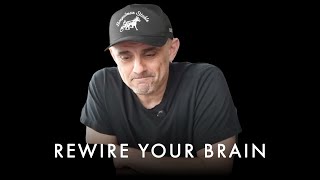
The same logic applies to his own health journey. He didn't start taking his body seriously until 38 and a half — a realization that came on a plane, mid-flight, when he recognized he was telling other people how to build businesses while ignoring the most basic inputs his own body needed. Nine years later, there is still not a single morning he wakes up wanting to work out. The desire never arrived. The discipline did.
 08:45
Gary discussing his health journey and the moment on a plane when he realized he needed to change
Watch at 08:45 →
08:45
Gary discussing his health journey and the moment on a plane when he realized he needed to change
Watch at 08:45 →
Social Media Is Free Advertising That Most People Refuse to Use
For business owners — particularly those in referral-dependent industries like real estate and mortgage lending — Vaynerchuk makes a case that borders on exasperation. Social media, right now, offers organic reach not seen since 2011. TikTok forced every major platform to compete on algorithmic discovery, which means a person with zero followers can post a single video and reach thousands of potential clients at no cost.
He translates this into historical terms: imagine getting a full-page newspaper ad for free. Imagine running local television commercials for free. That is what an unmonetized TikTok or Instagram Reel currently offers — and most professionals in established industries are choosing not to look.
The content strategy he recommends is specific:
- LinkedIn — written posts that position you as a news source in your industry, not a salesperson. Think Bloomberg, not a business card.
- TikTok and Instagram Reels — short videos, including personal interest content like bowling or cooking, that attract human attention and route curious viewers to your professional profile.
- YouTube Shorts — underused for search-based discovery; someone looking up mortgage rates on YouTube is a warm lead.
- Twitter/X — reply directly to people asking questions in your field, even if they're not in your geographic market. Word of mouth travels.
The bowling video insight is counterintuitive but important. Nobody outside the industry wants to watch mortgage content unless they're actively shopping. But a bowling video reaches a small audience of people who love bowling — and one of them, nine miles from your office, might also happen to need a mortgage. That's the actual mechanism behind social media lead generation, and it works precisely because so few professionals in traditional industries are doing it.
47:20
Gary explaining the 'bowling video' strategy for professionals in unsexy industries
Watch at 47:20 →
Build Around What You Actually Like
The career advice Vaynerchuk gives most consistently isn't about tactics — it's about self-knowledge. When a caller describes wanting to help people grow but feeling uncertain about the path forward, Vaynerchuk's answer is immediate: what do you like when you're not working? Build a business around that.
He applies this to himself without sentimentality. If he loved architecture instead of selling, he'd be trying to be the greatest architect in the world, not the greatest entrepreneur. The competitive advantage he has isn't hustle — it's that his work and his nature are pointing in the same direction. When you love what you do across all 19 hours of the day you're awake, you're not competing against people who are forcing themselves through it.
For young entrepreneurs specifically, he identifies two failure modes. The first is obvious: buying things you can't afford to impress people you don't need to impress. The second is subtler: investing in startups because it sounds sophisticated, when 95% of those companies will go to zero. For athletes especially — whose earning windows are short and whose first checks feel larger than they are after taxes and fees — living within your means and reaching a second contract before making high-risk investments is the single smartest financial move available.
Perspective Is a Practice, Not a Feeling
Vaynerchuk has started thinking about gratitude and perspective the way he thinks about physical fitness — as something you have to train deliberately, not something that arrives on its own. Visiting a friend going through a hard time, volunteering with people in genuine need, spending time in a retirement home: these aren't just charitable acts. They are deposits into your own capacity to see your life accurately.
He describes spending more time in the first 23 days of one year doing these things than in the entire previous year — and framing it the same way he eventually framed working out. He used to say he didn't have time to exercise. Now he makes time, because he understands it isn't optional. Perspective training, he argues, is where the next generation of wellness thinking is heading: we already do physical work, business coaching, therapy. The missing practice is regularly exposing yourself to lives different from your own, so that your default reading of your own problems stays calibrated.
The financial parallel runs deep. When a 35-year-old reaches out to say that content Gary made was meaningful to a friend who has since passed away, the response isn't grief performance — it's a recalibration. Worrying about money or reputation becomes genuinely difficult when you know that kind of loss is happening every day, to people younger than you, with no warning.
Offense is always the best defense. That's the operating philosophy underneath all of it. Whether the topic is content creation, financial planning, career building, or personal relationships — the people who spend their energy moving forward rather than protecting what they have are the ones who end up with both. The market doesn't care who got there first, who had more resources, or who was anointed by the right publication. It cares about what you actually built.