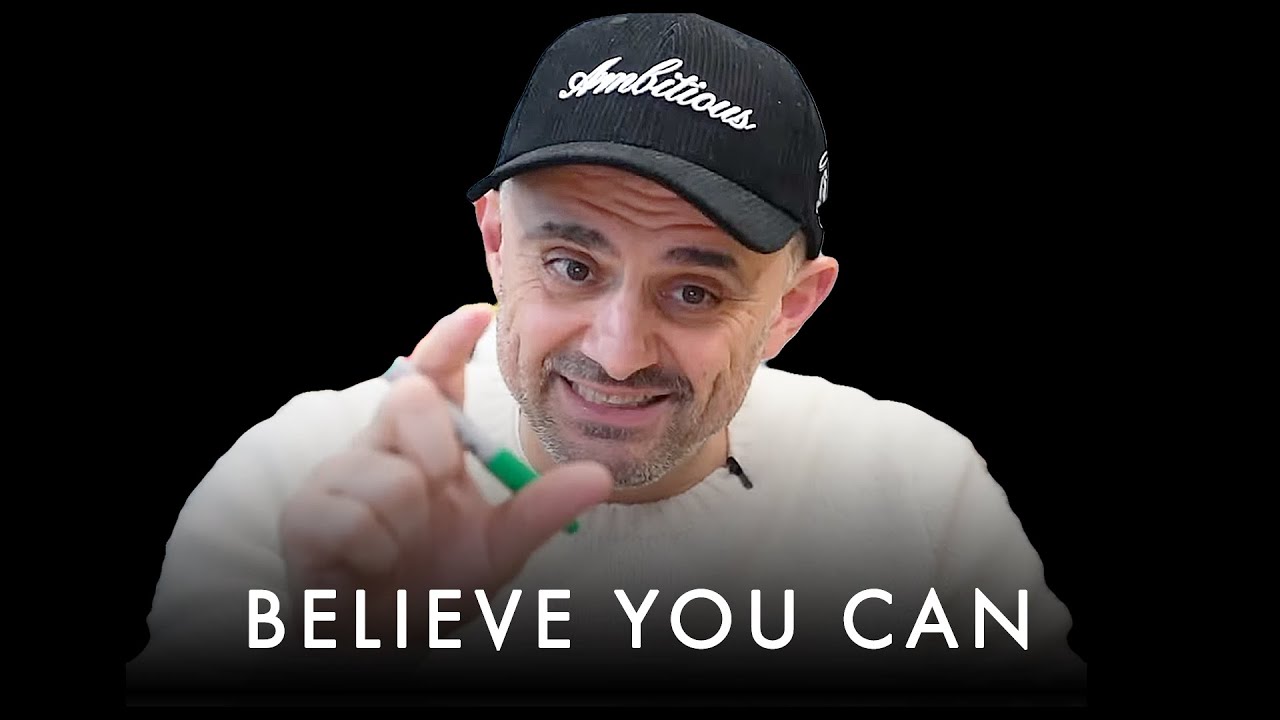

Most people are remarkably skilled at pointing fingers. Biden, Trump, Republicans, Democrats, their boss, their parents, their spouse. Gary Vaynerchuk's antidote to this epidemic is deceptively simple: stay in your own lane, hold yourself accountable, and let self-discipline do the work that most people waste trying to impose on others. In a wide-ranging conversation, Vaynerchuk covers everything from parenting philosophy to content strategy — but the throughline is always the same. The only thing you actually control is you.
Accountability Is the Rarest Virtue
Vaynerchuk describes what he calls the "accountable ant" as the character he most wants to make famous. The concept is simple: instead of cataloguing everyone else's failures, ask what you could have done better. He spends what he describes as an "ungodly amount of time" in that headspace — not out of self-flagellation, but because it puts him in the driver's seat.
"When you think everyone's in control but you, you're finished."
This reframes self-discipline entirely. It isn't a tool you deploy on other people — employees, children, subordinates. It's internal. And paradoxically, that's exactly what makes it contagious. Vaynerchuk recalls a dinner in Singapore where a young woman described resenting her mother, a prominent judge who was never home. Years later, she had a realization: her mother had been showing her how to live, not telling her. That distinction — modeling versus lecturing — is at the heart of how real influence works.
He reinforces the point with a telling observation from an Air Force General he interviewed: even as a general, the man had given perhaps two direct orders in his entire career. The fantasy of the iron-grip CEO or authoritarian coach doesn't survive contact with reality. It's an all-volunteer world. The people consuming Vaynerchuk's content follow his marketing advice more faithfully than his 2,000 employees — and far more than his own kids, who, as he notes with a laugh, are precisely the audience least likely to be impressed by him.
The Middle Is Where the Magic Lives
Vaynerchuk's children's book project — built around two characters called Patient Pig and Eager Eagle — is his attempt to bring Aristotle's golden mean to a younger audience. The concept, rooted in ancient Stoic philosophy, holds that most virtues live at the midpoint between two vices. Courage sits between recklessness and cowardice. Temperance sits between impulsivity and paralysis.
 18:30
Gary Vaynerchuk holds up his children's book featuring Patient Pig and Eager Eagle characters
Watch at 18:30 →
18:30
Gary Vaynerchuk holds up his children's book featuring Patient Pig and Eager Eagle characters
Watch at 18:30 →
Too much patience becomes complacency. Too much eagerness becomes sloppiness. The book is designed to be read from both sides — one character per night — so parents and children can engage with each pole before finding the middle together. Vaynerchuk sees this as a direct response to a parenting crisis he observes constantly: two co-parents with opposing philosophies, each overcorrecting in their own direction, never realizing the answer isn't to win the argument but to meet in the middle.
He's extending this to his broader V Friends universe — a long-term IP play he describes as a 50-year master plan aimed at both children and adults simultaneously, the way Bluey does. The goal is content that doesn't drive parents crazy while still resonating deeply with kids.
Fear Is Being Weaponized Against You
Vaynerchuk is blunt about one of his core obsessions: fear. Not the personal kind — though he addresses that too, sharing stories of being afraid to ride a bike, swim, or ask girls out as a kid — but the systemic, manufactured fear that media and politics pump into daily life. Fear gets ratings. Fear gets clicks. And most people, he argues, don't spend nearly enough time examining how fear is shaping their decisions.
"Why are you scared of your kids getting kidnapped and won't let them go outside? The media pumps it into your head because fear gets ratings."
His prescription is practice. You get more comfortable with fear the same way you get better at basketball — by doing it repeatedly. Every time he faced something he was scared of, doing it dissolved the fear. Not every outcome was what he wanted, but none of them register as losses in any meaningful sense. He's lost constantly throughout his career, from cold-call rejections at age eight to business failures — and that accumulated comfort with loss is itself the competitive advantage.
He connects this to self-worth: too many people place other people's opinions of them above their own. And when the internal voice is the problem — when someone genuinely believes they're not good enough — Vaynerchuk argues that voice isn't theirs. It was installed by someone else, someone who felt the same way about themselves.
Content Strategy: Authenticity as Monopoly
On the business side, Vaynerchuk's thinking on content creation has sharpened into a clear framework. The biggest mistake creators make, in his view, is abandoning what they actually believe in order to seem fresh. They copy others. They chase formats. They curse on camera when they've never cursed in their life.
Your authentic self is your only monopoly. No one has ever been you before. No one will be you again. Your specific combination of experiences, references, voice, and perspective is irreplaceable — and when people lean fully into that rather than trying to approximate someone else's success, the impact is immediate and unmistakable.
The patience point resurfaces here. People try to become Gary Vee because they want to get somewhere faster. But the shortcut is the long way. Vaynerchuk didn't publish his first piece of business content until he was 34, after years building credibility in his family's liquor store. The library you build by being genuinely yourself — consistently, over time — compounds like an investment portfolio. His best-performing video today was made ten years ago. Old content, continuously discovered, is infrastructure.
52:10
Discussion of content pyramid strategy and how long-form content breaks into dozens of smaller assets
Watch at 52:10 →
He also flags the structural shift now underway in search. Algorithm-driven feeds have already replaced follower-based distribution on every major platform. With Meta's new AI-powered search rolling out across Instagram and WhatsApp, the dynamics that made YouTube the world's second-largest search engine are about to hit short-form social — meaning evergreen, interest-based content matters more than ever, and the window to capitalize is open right now.
Compassion Over Resentment
Vaynerchuk closes with what may be his most uncomfortable provocation: the generational blame game has to stop. Many people carry anger toward their parents while giving their grandparents a pass — not realizing the grandparents were often the source of the dysfunction. And tracing it back further doesn't help. Great-grandparents weren't the answer either.
The exit ramp isn't more resentment. It's compassion. Your parents were shaped by their parents, who were shaped by theirs. The people in your life who failed you were themselves failed. That doesn't excuse harm, but it does suggest that the energy spent nursing grievances is energy that could go elsewhere.
"You like resentment as your partner. You like the ability to blame someone else. We need to get off that drug."
For Vaynerchuk, accountability, self-discipline, fear, authenticity, and compassion are not separate topics. They're facets of the same underlying argument: the only lever you can actually pull is yourself, and pulling it — consistently, without performance — is the most powerful thing you can do for everyone around you.