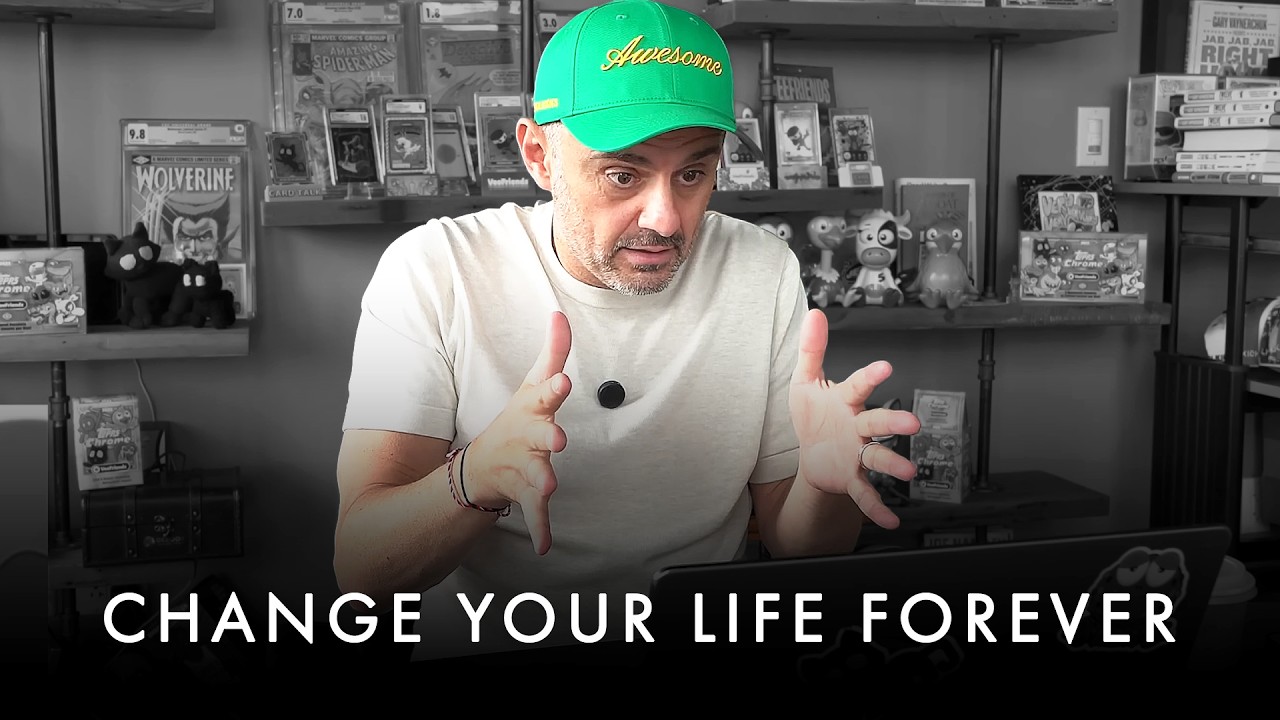

The single highest-correlated variable to business opportunity right now is how consistently you produce content on social platforms. That's not a suggestion—it's the answer. Facebook, Instagram, TikTok, LinkedIn, YouTube, X: these are the channels where your customers' attention already lives. And yet most people aren't doing it. Not because they lack the tools, and not because they can't afford it. They're not doing it because they are more afraid of other people's opinions than they are committed to their own growth.
The Real Reason You're Not Creating Content
The excuse of cost doesn't hold up. If you've ever ordered delivery, taken a rideshare, bought a logo t-shirt, or paid six dollars for a hot drink, you have discretionary money. None of those purchases are inherently wrong—unless you're using them to paper over a deeper problem. The pattern is predictable: the less progress people make, the more they spend on small status signals to manufacture a momentary feeling of success. That's insecurity spending, and it compounds.
The two fuels that actually drive people to build something are insecurity and gratitude. Deep insecurity can produce financial results, but it's unsustainable—people who climb that way often can't hold what they've built. Gratitude, by contrast, is a clean fuel. Most people in developed economies have had it too good for too long to feel genuine gratitude for what they have. The result is a chronic fixation on what's missing rather than what's present. That fixation is the root cause of most business stagnation.
Tactics: How to Actually Start Making Content
Once you've accepted that content is the lever, the next problem is execution. Most people freeze because they don't know what to make. The solution is to stop thinking like a creator and start thinking like a documentarian. Don't manufacture content from thin air—document what you already know.
The most accessible starting point is live streaming. Go live at your desk. Have three people watching. It doesn't matter. Think of it the way you'd think about going to the gym after a decade away: your first workout is eight terrible push-ups. That's not failure—that's the foundation. The people who seem to have overnight success on TikTok or Instagram didn't get lucky. They started when you weren't willing to, and they compounded their reps while you waited for a better moment.
 12:30
Speaker demonstrating the concept of green screen video format used on TikTok and Facebook
Watch at 12:30 →
12:30
Speaker demonstrating the concept of green screen video format used on TikTok and Facebook
Watch at 12:30 →
One specific tactic worth implementing immediately: green screen videos. Find a news article about your industry on Google News. Screenshot the headline. Record yourself talking over it. This format currently receives higher organic reach than standard video on most platforms, and it requires zero production skill. Anyone can do it today.
Longer term, the more sophisticated skill is understanding what Gary calls PACK—Platforms and Culture. Every platform has its own grammar: optimal video length, thumbnail behavior, whether a Reel outperforms a standard post, what the first three seconds need to accomplish. Learning this isn't optional. Spending thirty minutes a night consuming information about platform mechanics is more valuable than three hours of passive entertainment. You know this. The question is whether you'll act on it.
The Psychology of Spending, Risk, and Regret
The same insecurity that keeps people off social media shows up in their finances. There's a well-documented phenomenon—sometimes called the lipstick index—where spending on small luxuries spikes during financial downturns. People who can't afford large purchases still find ways to get small dopamine hits. The problem isn't the occasional indulgence. The problem is when those hits become a substitute for progress, and when daily Ubers, delivery fees, and coffee runs get reclassified from luxuries to necessities.
The more important financial discipline, though, isn't eliminating small expenses—it's negotiating hard on large ones. Getting fifty thousand dollars off the price of a home, or seven thousand more in salary, creates more financial leverage than any number of skipped coffees. Both matter, but the big swings matter more.
On the question of career risk: the window between twenty-two and thirty is the most practical time to take disproportionate risks, yet it's when most people go conservative—trying to prove themselves to parents, employers, and peers. The actual math is simple. If you try something and it fails, you can go back to a job. If you never try, the regret compounds for decades. Talking to people in their eighties about this produces a near-universal answer: the things they regret are not the risks they took. They're the risks they didn't.
Self-Esteem, Accountability, and the Trap of Other People's Opinions
Almost every behavioral pattern that holds people back traces to the same root: overvaluing the opinions of others relative to their own judgment. This is why people don't post content. This is why they don't take career risks. This is why they stay on their parents' payroll while resenting the strings attached. If someone else is paying, they have a say. Wanting independence while accepting financial dependence is a contradiction, not a strategy.
The school system reinforced the wrong lesson here. Memorizing information to pass a test and then forgetting it isn't learning—it's conformity. The A-student framework optimizes for short-term external validation, which is exactly the opposite of what entrepreneurship and creative output require. Eighth-place trophies communicated to children that losing is so dangerous it must be papered over, which produced adults who are terrified of public failure and therefore never attempt anything significant in public.
Indifference—the "it doesn't matter" posture—is more dangerous than losing. A child who cries after losing a fourth-grade volleyball game cares about something. Caring is the prerequisite for winning. The goal isn't to avoid failure; it's to build enough self-esteem that failure doesn't end the game.
58:40
Speaker discussing the self-esteem versus insecurity spectrum as the core framework for understanding human behavior
Watch at 58:40 →
Patience, Gratitude, and Playing a Longer Game
The Facebook investment story is instructive. Early employees who sold shares at nineteen or twenty-five dollars—having joined before the IPO when shares were worth far less—made meaningful money. But the people who held, including outside investors who got in years before the public offering, made far more. The difference wasn't intelligence or access. It was patience. Most financial and business decisions are distorted by a preference for short-term certainty over long-term upside.
The same principle applies to brand and culture building. Driving forty minutes out of your way to hand-deliver a customer's order on your busiest day of the year costs you in the short term. What it creates—a story, a cultural artifact, a demonstration of values—compounds for years. Actions set tone. Tone sets culture. Culture determines outcomes over time horizons that quarterly thinking can't see.
The underlying fuel for all of this, if you want one word, is gratitude. Not as a soft concept but as a practical operating system. When you are genuinely grateful for the opportunity to be alive and to work on something, the small humiliations of early-stage effort—the video with seven views, the pitch that doesn't land, the product that flops—lose their power to stop you. The people who sustain long careers aren't the ones who avoid failure. They're the ones who love the game more than they need the trophy.
You were not born for very long. And when you die, you're dead forever. That's not morbid—it's the most clarifying fact available. The question it raises is simple: what are you waiting for?