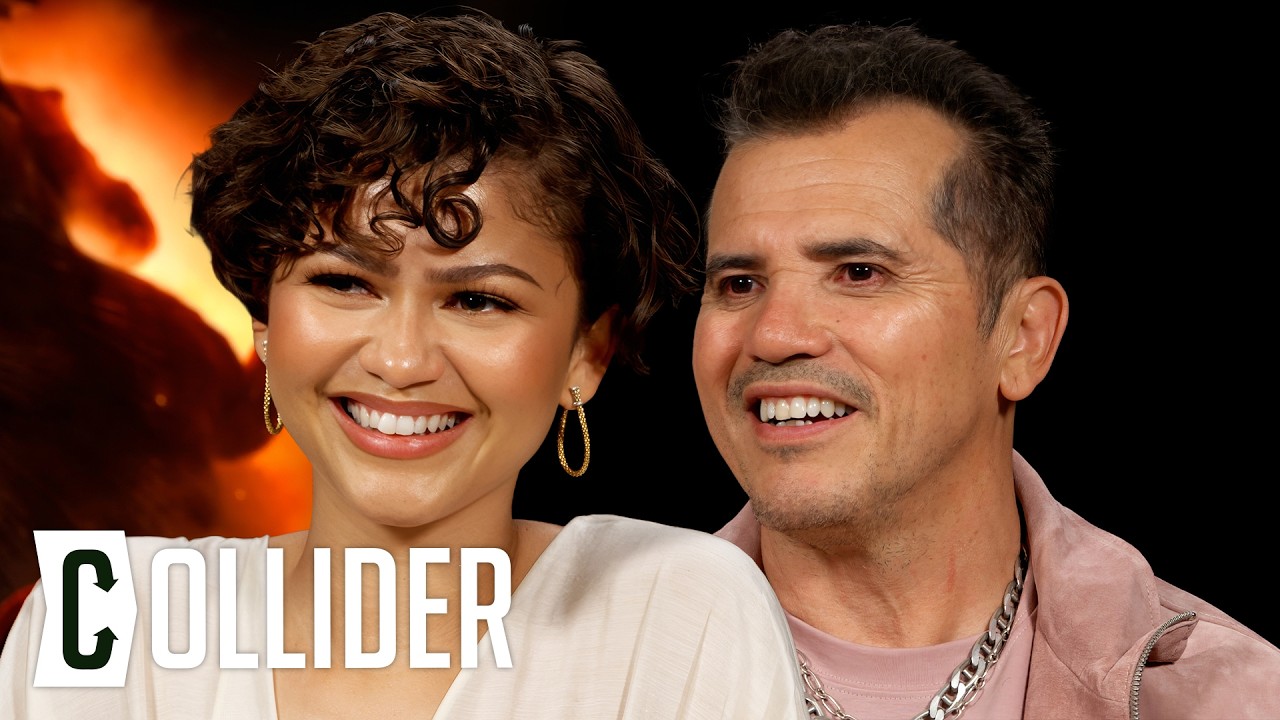

Christopher Nolan filmed The Odyssey almost entirely practically — real locations, real sets, and massive IMAX film cameras — creating an immersive epic that cast members say defies belief even after they watched themselves make it. If you've been wondering how Christopher Nolan filmed The Odyssey and what the experience was like for the actors involved, the cast has finally opened up about the jaw-dropping reality behind one of the most ambitious productions in Hollywood history.
How Did Christopher Nolan Actually Film The Odyssey?
The short answer: practically, painstakingly, and in some of the most spectacular real locations on Earth. Cast members describe a production where almost nothing was left to imagination or digital trickery. Instead, Nolan built real sets, traveled to real places, and committed to capturing everything in-camera in a way that left even the actors stunned.
One cast member recalled getting a rare peek behind the curtain during production: "I got to see things being made that I was like, how is this — how? And even watching it back I still am blown away. The magic is not lost at all having seen it be made in real life and knowing how it was done. It's really extraordinary."
The practical approach extended to everything — the costumes, the sets, the environments. Actors described walking onto locations and immediately feeling transported, with nothing left to imagine. It was all physically, tangibly there in front of them.
Who Is in the Cast of Nolan's The Odyssey?
The ensemble Nolan assembled for The Odyssey is nothing short of staggering. Cast members in the interview name-dropped a lineup that had even the actors themselves doing double-takes on set. The confirmed names mentioned include Tom Holland, Zendaya, Travis Scott, Corey Hawkins, Robert Pattinson, and Lupita Nyong'o — and that's far from a complete list.
As one cast member put it: "You're there with Travis Scott and Corey Hawkins, Robert Pattinson, Zendaya, Tom Holland — you keep naming them — Lupita Nyong'o — and you're like, wait a minute, is this really happening? Is this real life?"
For at least one newer cast member, the nerves were very real. They revealed they were so anxious on their first day that Tom Holland came in on his day off specifically to help ease the tension — a gesture of generosity that clearly made a lasting impression. The cast member had been shooting a night scene for Euphoria the night before their first Odyssey day, leaving almost no time to spiral into full panic mode, which they admitted was probably a blessing.
Where Was The Odyssey Filmed on Location?
This is where things get truly epic. The production traveled to locations that made grown adults stop and question whether they were actually living in a movie. One of the most striking settings described in the interview involved a real castle 900 feet above sea level on a cliff, with a 360-degree view of the Mediterranean stretching out in every direction.
"You can see a 360-degree view of the Mediterranean up there. It's incredible," one cast member said, still visibly awed recounting it.
Beyond that clifftop castle, cast members describe feeling genuinely transported to ancient settings — desert landscapes, mountains, and scenes evoking Hades itself. The locations weren't sets dressed to look like something. They were the real thing, with Nolan building whatever additional elements were needed directly into actual environments.
For those wondering if this is truly a can't-miss theatrical experience: yes. The cast is emphatic that IMAX 70mm is the only way to see The Odyssey. The immersion of being surrounded by these real locations on a massive screen is reportedly unlike anything else currently in cinemas.
What Is It Like Acting With a Giant IMAX Camera?
Here's something most moviegoers never think about: IMAX cameras are enormous, incredibly loud, and shoot on physical film reels that only last about three minutes before they need to be reloaded — a process that takes another five minutes. For actors used to digital shoots where the camera just keeps rolling indefinitely, this creates a completely different psychological rhythm on set.
"Without the blimp, it's like a lawn mower," one cast member explained, referring to the special sound-dampening housing called a blimp that makes the camera quiet enough for dialogue scenes. "You've got three minutes to each reel and then they have five minutes to reload each time. And if you have long scenes, you had to stop in the middle and restart."
That three-minute clock hanging over every take created real pressure. Actors described an acute awareness of not wanting to waste precious film. Unlike digital filmmaking where you can shoot take after take without a second thought, every IMAX frame feels sacred.
"I flubbed a line once and I was mortified," one cast member admitted. "Because I was like, this is IMAX — this is... god."
The preciousness of the medium changed the way the whole cast approached their performances — sharper focus, less margin for error, a genuine sense that every take mattered.
What Is the IMAX Mirror System Actors Use on Set?
One fascinating technical detail that came up: because the IMAX cameras are so physically large, Nolan's team developed a mirror system that allows actors to see their scene partner during close-ups, even when the camera itself is blocking the direct line of sight.
The system essentially reflects the other actor's image into the eyeline of whoever is on camera, preserving the natural connection between performers despite the camera's bulk. One cast member noted they weren't able to use it due to a vision impairment during their scenes, but it was clearly a significant part of how Nolan maintained performance quality across the production.
What Is Christopher Nolan Really Like to Work With?
Both cast members were effusive about Nolan as a director, but the most telling detail is how he handled mistakes. When actors flubbed lines or felt they'd wasted precious IMAX film, Nolan's response was calm and reassuring — "Yeah, it's fine" — even when everyone on set knew how much each roll of film cost.
Beyond his composure, cast members describe Nolan as someone who actively inspires the people around him. "What he inspires in the people that he works with is such a determined work ethic — people who are such masters of their craft," one said.
The consensus is clear: there is no other director who could have pulled this off. Adapting Homer's Odyssey — one of the most foundational and beloved works of Western literature — into a cinematic epic requires a specific combination of ambition, craft, and sheer force of will that the cast believes is essentially unique to Nolan.
"I don't think there's another director who could have done this. I really, honestly believe that."
Should You See The Odyssey in IMAX 70mm?
Every person in this conversation agrees: yes, absolutely, without question. The cast makes clear that the IMAX 70mm format isn't just a premium option — it's genuinely the version the film was made for. The immersion of watching those real locations, real sets, and real performances projected at that scale is described as something that puts you inside the film rather than just watching it.
Whether you're in the desert, in the mountains, or staring into Hades, you feel like you are actually there. That's not marketing language — that's what the people who made it experienced standing in those places, and they say the screen captures it faithfully.
Christopher Nolan's The Odyssey is shaping up to be exactly the kind of film that reminds audiences why going to the cinema still matters.