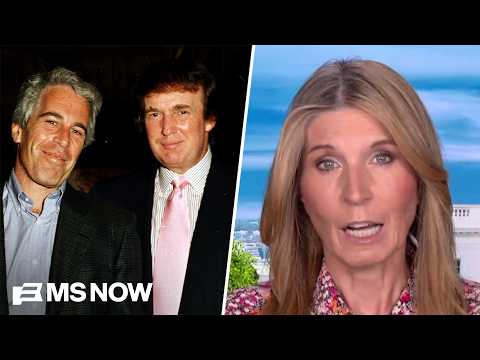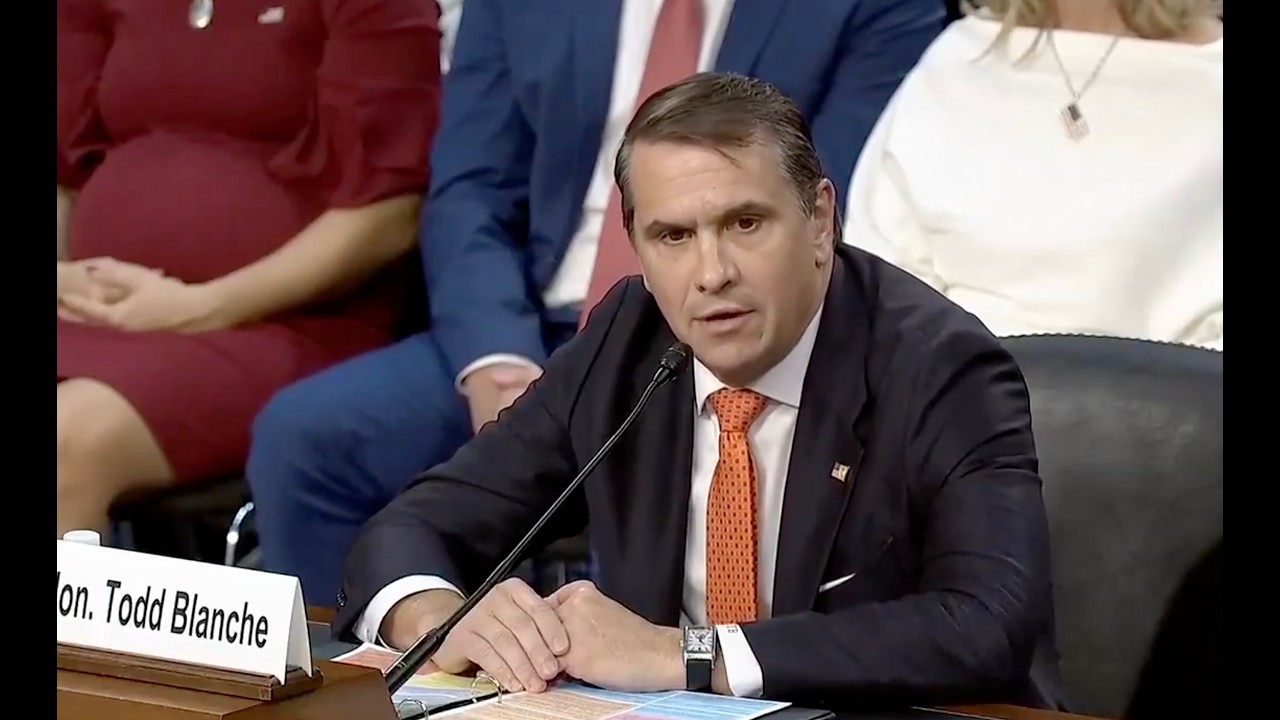
At his Senate confirmation hearing to become Attorney General of the United States, Todd Blanche looked lawmakers in the eye and claimed the Trump administration has been more transparent than any past administration when it comes to the Epstein files. That claim — made under oath, on national television, at what amounts to a job interview for the nation's top law enforcement position — is a lie. A demonstrable, verifiable, fact-checkable lie. What did Todd Blanche say about the Epstein files at his confirmation hearing? He said the DOJ complied with the law. It did not. Here's everything you need to know.
What Did Todd Blanche Say About the Epstein Files?
Blanche opened his testimony on the Epstein matter with a sweeping statement: the Trump administration has complied with the law, released nearly 3 million pages of documents, and has no awareness of any additional responsive pages. He framed everything the DOJ has done as fully legal, fully transparent, and fully complete.
When pressed by senators asking why the department doesn't simply release everything — every document, every file — Blanche responded that doing so would be against the law. He argued that the Epstein Transparency Act was narrow and specific about what could and should be released, and that releasing more would violate other federal statutes governing case files.
There's just one massive problem with that answer: the law says the opposite of what he claimed. The Epstein Files Transparency Act explicitly mandated the full release of the files by December 19th, 2025. The only carve-out in the entire law was for documents or sections that would expose victim information. Everything else was supposed to be released. All of it. Not three-quarters, not a curated selection — all of it. And as of July 2026, more than seven months past that deadline, the full files still have not been released.
What Is the Epstein Files Transparency Act?
The Epstein Files Transparency Act was passed specifically to force the full public disclosure of documents related to Jeffrey Epstein and his network. The law set a hard deadline of December 19th, 2025, for the complete release of those files. The only exception written into the law was to protect the identities and personal information of Epstein's victims — a reasonable and humane carve-out that no one disputes.
What the law did not do was give the DOJ discretion to decide which documents were "responsive" and which weren't. It did not give the administration the authority to hold back millions of pages on the grounds that they weren't directly related to Epstein. The law was sweeping by design. Congress passed it because they didn't trust the executive branch to self-select what the public gets to see. Todd Blanche's testimony essentially confirmed those fears were well-founded.
Why Haven't the Epstein Files Been Fully Released?
This is the central question that Blanche's confirmation hearing was supposed to answer — and didn't. The Trump DOJ released approximately 3 million pages of documents and declared the job done. But independent legal analysts and members of Congress have raised serious concerns that millions of additional pages exist and are being withheld.
When a senator asked point-blank how many additional pages exist that are not being released, Blanche's answer was telling: he said roughly 3 million pages were collected that had nothing to do with Jeffrey Epstein or the case at all. His solution? Don't release them, because the law only allows release of Epstein-specific material.
But that framing completely inverts the spirit and letter of the Transparency Act. The law didn't say "release only pages directly about Epstein." It mandated the release of the files — the entire collection of documents gathered in connection with the case. Blanche's creative reinterpretation of the statute is exactly the kind of legal sleight-of-hand you'd expect from a defense attorney trying to protect a client, not an attorney general serving the public interest.
Is Trump Actually Suppressing the Epstein Files?
Based on everything that has happened since the December 2025 deadline, the evidence points strongly in one direction. The Trump administration has:
- Missed the legally mandated release deadline by more than seven months
- Released only a curated selection of documents while claiming full compliance
- Nominated as Attorney General a man whose entire professional identity is built around loyalty to Donald Trump personally
- Offered legal justifications for withholding documents that directly contradict the plain text of the law
The pattern is clear. And the nomination of Todd Blanche to lead the DOJ is not incidental to this story — it is central to it. Trump doesn't need an impartial attorney general. He needs someone he can trust to keep the files suppressed. Blanche's confirmation hearing was essentially an audition to prove he's that person. By all accounts, he passed.
Did Todd Blanche Really Meet with Ghislaine Maxwell?
Yes. This is one of the most underreported and alarming elements of the entire Blanche nomination. Before being tapped for AG, Blanche — in his capacity as Trump's personal attorney — traveled to speak with Ghislaine Maxwell, who is currently serving a 20-year federal prison sentence for sex trafficking.
The substance of that conversation has never been made public. What is known is that shortly after that meeting, Maxwell was transferred from a federal prison in Florida to a lower-security facility in Texas. Whether those two events are directly connected has not been officially established. But the optics are, to put it generously, deeply troubling for someone now seeking to be the nation's chief law enforcement officer.
When this detail came up during a CNN appearance previewing the confirmation hearing, the question was simple: why is the person who visited Ghislaine Maxwell now being put in charge of the department responsible for the Epstein files? The answer, uncomfortable as it is, appears to be: because of that visit, not in spite of it.
Was Todd Blanche Referred to the New York Bar?
Yes — and Blanche lied about this at his confirmation hearing too. When a senator raised the fact that a federal judge in Florida had referred Blanche's conduct to the New York State Bar for potential disciplinary proceedings, Blanche pushed back hard. He claimed the judge never gave him an opportunity to respond and that she didn't technically "refer" him — she merely sent a copy of the order to the bar.
That is a distinction without a meaningful difference, and it also happens to be false. The federal judge explicitly found misconduct, misrepresentation, and improper purpose in a legal action Blanche was involved in. She referred the matter to the New York Bar — the body that has the power to strip him of his law license — for potential disciplinary action. Blanche's attempt to reframe that as something less serious is itself an act of misrepresentation, performed in real time, in front of the Senate Judiciary Committee.
Will Todd Blanche Be Confirmed as Attorney General?
Almost certainly yes. Not because he is qualified. Not because he was honest. Not because he demonstrated independence, integrity, or the faintest commitment to the rule of law. He will be confirmed because Republican senators have, in this political era, largely abdicated their role as a co-equal branch of government and decided their job is to give Donald Trump what Donald Trump wants.
But that confirmation comes with a price tag. Every Republican senator who votes to confirm Blanche owns what comes next. They own a corrupt attorney general suppressing the Epstein files. They own the fact that this same AG helped negotiate a settlement allowing Trump to sue and win against his own federal government for billions of dollars. They own the protection of a system that has shielded powerful men from accountability for decades.
The American people are watching. They can see the corruption happening in broad daylight. Todd Blanche is not an anomaly in this administration — he is the latest, most brazen example of Donald Trump's consistent practice of hiring the most loyal, the most compromised, and the least independent people he can find to fill the most powerful positions in the country. The Epstein files remain unreleased. The deadline has passed. And the man positioned to ensure they stay buried just got one step closer to the most powerful law enforcement job in the nation.