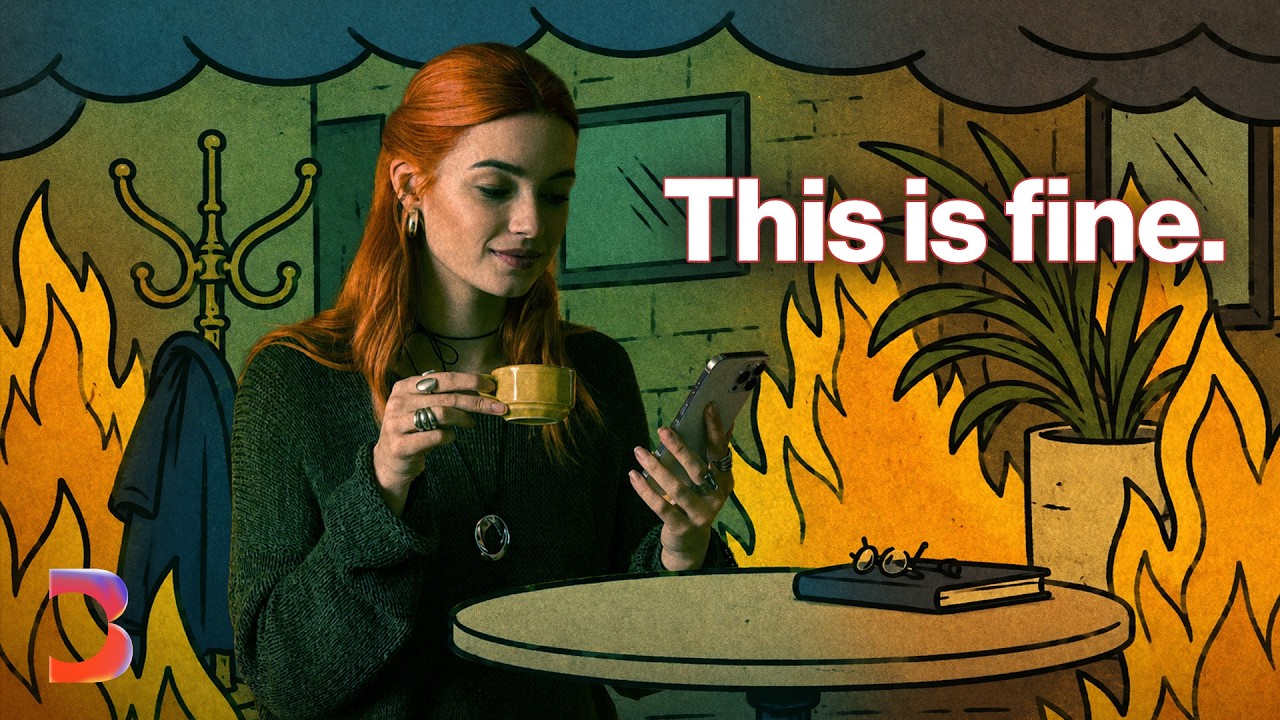

Gen Z is taking extreme financial risks — and it's not just recklessness. Faced with skyrocketing housing costs, stagnant wages, and a job market that feels rigged against them, millions of young people are turning to day trading, crypto, and high-stakes options markets as their best shot at building real wealth. The question isn't whether this is happening. It's why an entire generation has decided that going big — or going home — is the only play left on the board.
Why Is Gen Z Taking Such Extreme Financial Risks?
The answer is rooted in lived economic reality. Gen Z came of age during two massive financial shocks: the Great Financial Crisis, which many witnessed through the eyes of stressed-out parents losing homes and retirement savings, and the COVID-19 pandemic, which disrupted their entry into the workforce entirely. Youth unemployment has hovered around 7% — recession-level numbers — even while the broader economy looks healthy on paper.
Meanwhile, the traditional milestones of adult financial life — buying a home, affording a wedding, having children — have become increasingly out of reach. Rent keeps climbing. Wages have stagnated. And for many Gen Zers, the conventional script of save steadily and invest conservatively simply doesn't compute when you're already priced out of the housing market before you hit 30.
As one Gen Z trader put it: "We seem to be constantly getting priced out of everything. So there's a desire to try and find your own way, because the system doesn't seem to be working for us." That frustration is the engine driving a generation toward the riskiest corners of financial markets.
What Is Financial Nihilism and Why Does It Matter?
There's actually a name for this mindset: financial nihilism. Coined by podcaster Dimitri Kofinas, the term describes the belief that traditional, long-term paths to financial security — saving diligently, owning a home, contributing to a 401(k) — no longer reliably work. And if the system is broken, the logic goes, you might as well go for broke.
This isn't just a vibe. Academic research from economists at Northwestern University and the University of Chicago found that as people give up on home ownership, they tend to consume more, work less, and funnel more money into risky investments. Financial nihilism isn't cynicism for its own sake — it's a rational response to a system that many young people genuinely believe has stopped rewarding them.
Surveys back this up. A higher percentage of Gen Z and millennials report feeling financially behind and say they need to take risks to catch up. Gen X and Boomers, by contrast, tend to feel more secure and continue to trust traditional investment vehicles. The generational gap in financial confidence is wide — and it's driving very different behaviors.
What Are YOLO Bets and Why Are They So Popular?
If financial nihilism is the philosophy, YOLO bets are the action. YOLO — You Only Live Once — has become investing shorthand for high-risk, high-reward trades where the attitude is go big or go home. These aren't careful, diversified portfolio moves. They're concentrated bets: a single options contract, a leveraged ETF, a moonshot crypto position.
And they're everywhere. Options trading volumes have broken record after record in recent years, driven largely by retail investors — many of them young — flooding into markets that were once the exclusive territory of hedge funds and institutional trading desks. The accessibility of these instruments, combined with apps that make placing a complex derivatives trade as easy as ordering food, has completely changed who participates in these markets.
Stories of massive wins spread fast. One trader profiled went from a $13,000 initial investment to $109,000 through retail trading. These wins are real — but they share screen time with the losses that are equally dramatic, like the trader who lost $152,000 in a single session. Both stories go viral. Only one of them is the more common outcome.
How Social Media Is Fueling Gen Z's YOLO Investing
Social media hasn't just reported on this trend — it's actively accelerating it. Platforms like TikTok and Instagram are flooded with traders flashing gains, sharing "plays," and making complex financial instruments look effortless. The FOMO is real and it's engineered. When your feed is full of 22-year-olds claiming to make $16,000 in a single day, sitting on the sidelines feels like leaving money on the table.
Experts note that today's young investors are using trading techniques — options strategies, leveraged products, futures contracts — that no one would have imagined a 20-year-old knowing about just a decade ago. Social media hasn't just democratized access to information about these instruments; it's made fluency in them a form of social currency. Knowing how to trade a 0DTE options contract is, for some communities, as impressive as knowing how to dunk.
But there's a catch. Academic research has been consistently negative about excessive trading for individual investors. Too much trading means too many transaction costs eating into gains. Chasing trends means buying at peaks and selling at valleys. The very behaviors that social media rewards — fast action, bold moves, public wins — are the behaviors that tend to cost individual traders the most money over time.
Is Day Trading Just Gambling in Disguise?
The line between investing and gambling has never been thinner — and some would argue it was never very clear to begin with. The key distinction economists tend to draw is this: long-term investing has positive externalities. When you buy and hold a stock, that company might hire people, invest in technology, grow the economy. When you bet on a football game's outcome, no such economic value is created — it's a pure transfer between a winner and a loser.
Day trading and short-term options plays sit somewhere uncomfortable in between. They provide market liquidity, which has value. But the behavior patterns — the dopamine hits from wins, the urge to recoup losses, the social validation of sharing gains online — mirror problem gambling in ways that researchers are only beginning to fully study.
Gamification has made this blurry line even harder to see. Modern trading apps are designed to feel rewarding, with visual feedback, streak bonuses, and interfaces that borrow heavily from mobile gaming. You're not just managing a portfolio — you're playing a game. And the house, as always, has the edge.
Why Gen Z Prefers Crypto Over Traditional Investments
It's not just stocks and options. Gen Z and millennials hold significantly more cryptocurrency in their portfolios than older generations, and it fits the same psychological and economic pattern. Crypto is volatile, high-risk, and potentially high-reward. It exists entirely outside the traditional financial system that many young people have lost faith in. And it has its own social media ecosystem that amplifies wins and cultivates community.
Interestingly, the picture varies globally. In South Korea, young investors are famous for trading leveraged ETFs. In Europe, the trend has been more muted, with more conservative saving habits prevailing — though governments there are now actively trying to encourage more stock market participation. In China, Gen Z investors tend to be more risk-averse than their global counterparts, preferring gold.
Is Gamified Investing Dangerous for Young Traders?
The honest answer is: it depends on who you ask and how you define dangerous. The danger of being patronizing toward Gen Z is real — this is a generation that grew up with smartphones, learned to research anything instantly, and has demonstrated genuine financial sophistication in many cases. They are not naive. Many of them understand the risks they're taking and are making deliberate, if unconventional, choices.
But the structural incentives of gamified apps, social media validation loops, and a financial system that makes conventional wealth-building increasingly inaccessible to young people — that combination is genuinely worrying. The risk isn't just financial loss. It's that an entire generation is being shaped by a cultural moment where extreme risk-taking feels not just acceptable, but necessary.
The affordability crisis and the cultural normalization of financial risk-taking have collided to create the moment Gen Z is living in right now. Whether that moment ends in a new wave of self-made wealth or a generation-wide cautionary tale remains very much to be seen.