What Is Litter, the AI Social Network in Latent Space?
Litter — short for Latent Twitter — is a fully functioning AI-powered social network that does something no other platform does: it refuses to transmit what you actually post. Instead of sending your exact words or images to other users, Litter extracts only the essence of your message, passing it through a chain of AI models before anyone else sees it. The result is a social network operating entirely in latent space — a place where meaning lives without the noise of specific word choices or pixel-perfect photos. If you've ever wondered whether AI could fundamentally change how humans share ideas, Litter is the wildest proof of concept you'll find.
The platform is open source, runs on real infrastructure, supports GitHub login, and even has working likes. It's not a demo or a mockup — it's a live experiment in AI-mediated communication, built by one developer who went, by their own admission, way too deep into the rabbit hole.
How Does AI Convert Your Posts Into Images and Back?
The magic of Litter happens in a multi-step pipeline that would look insane on a whiteboard. Here's exactly what happens every time someone hits post:
- Step 1 — You post something. Text, image, or both. Something like: "Went for a nice run this morning."
- Step 2 — Your post hits a database. A background worker picks it up and sends it to OpenAI's image generation API, DALL-E 3, with a very specific prompt: create an image that visually transmits this message as a pictogram, with no text.
- Step 3 — DALL-E 3 generates a pictogram. Not a literal illustration — a visual distillation of the idea. For a morning run, you might get a sun rising over a park with an animated figure jogging through it.
- Step 4 — GPT-4 Vision describes the image. The generated image is immediately sent back to OpenAI, this time to the vision model, with a prompt asking it to describe the image concisely for someone with impaired vision.
- Step 5 — GPT-3.5 Turbo decrypts the chain. The final model receives the image caption and is told: this is a post that was encrypted through an AI image pipeline — your job is to decrypt it and reconstruct the original social media message.
The output for that morning run post? "Feeling so alive and energized — nothing beats a morning jog in the park, especially when it's beautiful out. #MorningVibes." Is it the same post? No. Is it arguably more poetic and emotionally resonant? Absolutely yes.
How Do DALL-E 3 and GPT-4 Vision Work Together Here?
This is where the engineering gets genuinely clever. DALL-E 3 and GPT-4 Vision aren't just used sequentially — they're used as two halves of a lossy compression algorithm for meaning. DALL-E 3 compresses your message into visual form, deliberately stripping away the literal words. GPT-4 Vision then decompresses the image back into language, but it can only reconstruct what survived the visual encoding.
What survives? The emotional core. The key action. The dominant feeling. What gets lost? Specific arguments, technical jargon, exact phrasing. This is why when Yann LeCun's detailed post about AI not being a natural phenomenon was run through Litter, it came out as: "I am fascinated by the intersection of technology and humanity, where innovation thrives and connects us all." Stripped of the debate, what remained was the wonder underneath it.
The pipeline also works in reverse for images. Upload a photo of deer in a field, and Litter first captions the image with GPT-4 Vision, then feeds that caption into DALL-E 3 to regenerate it. You're traversing two latent spaces simultaneously — and the result is something that looks like a dreamlike reinterpretation of your original photo, not a copy of it.
What Is Latent Space and Why Does It Matter for AI?
Latent space is one of those AI concepts that sounds intimidating but is actually intuitive once you see it in action. When an AI model processes an image or a sentence, it doesn't store it as raw pixels or words. Instead, it encodes it as a point in a high-dimensional mathematical space — a compressed representation that captures the meaningful features of the input without preserving every literal detail.
Think of it like this: the words "happy," "joyful," and "elated" occupy nearby points in a language model's latent space, because they share meaning. A sunrise and the concept of optimism might be neighbors in an image model's latent space. Litter exploits this by making latent space the actual medium of communication. Your post doesn't travel as text — it travels as meaning, encoded and decoded by AI at both ends.
This is a genuinely novel idea for a social platform. Every other network transmits your artifacts — your pixels, your characters, your formatting choices. Litter transmits your intent, or at least the AI's best guess at it.
How Was This AI Social Media App Actually Built?
The tech stack is refreshingly practical for something this conceptually wild. The app is a real website with user authentication via GitHub. Posts are stored in an online database. A background worker process handles the AI pipeline asynchronously, which is why there's a processing delay after you post — the chain of API calls to OpenAI takes a few seconds to complete.
All three OpenAI endpoints are in play: DALL-E 3 for image generation, GPT-4 Vision for image captioning, and GPT-3.5 Turbo for the final message reconstruction. The prompts are carefully engineered at each step — the image generation prompt specifically instructs the model to create a pictogram without text (though as demonstrated live, DALL-E doesn't always listen), and the reconstruction prompt frames the whole thing as a decryption task to prime the model for creative interpretation.
The code is fully open source. The prompts are visible. Anyone can fork it, improve the pipeline, or swap in different models. The creator is keeping it live for a while but has been transparent that it may go down at some point — which honestly makes it feel more like a genuine experiment than a product.
What Happens When You Pass an Image Through AI Twice?
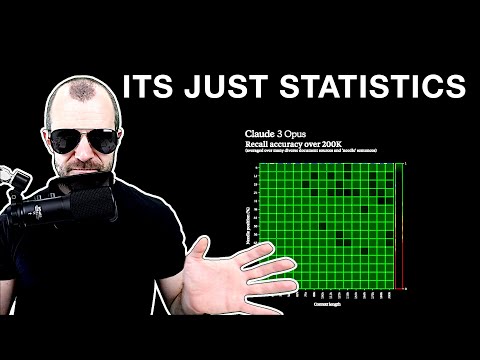
One of the most visually striking demonstrations in Litter is what happens to images. Take a specific, detailed photo — say, the thumbnail from a Christmas Minecraft livestream featuring a bearded guy with sunglasses, a cap, a Christmas tree, and a dog on his shirt — and run it through the image-to-caption-to-image pipeline.
The result is surreal and oddly faithful at the same time. The output image captured the beard, the sunglasses, the cap, the Christmas tree, and — remarkably — even the small dog on the shirt appeared as a dog in the regenerated scene. Not because DALL-E saw the original photo, but because GPT-4 Vision described it in enough detail for DALL-E to reconstruct those elements independently.
Even more impressive: an abstract diagram of Andrej Karpathy's LLM Operating System concept — dense with technical boxes and arrows — was transformed into something that looked like a genuinely compelling visual metaphor for the same idea. The structure was lost. The concept survived.
Could AI Actually Improve How Humans Communicate?
Here's where the creator steps back from the joke and makes a real point. Litter is absurd and funny on purpose, but the underlying idea isn't entirely silly. Language is lossy. The words you choose are an imperfect encoding of what you actually mean. Misunderstandings happen not because people disagree, but because the transmission medium — language — introduces noise.
If AI can extract the core emotional and conceptual content of a message and re-encode it in a way that's clearer, warmer, or more universally understandable, that has real applications. Cross-cultural communication, conflict de-escalation, accessibility tools — there are genuine use cases hiding inside this goofy latent space Twitter clone.
The creator is careful to note that real words still matter. Precision matters. Context matters. But as a thought experiment made functional, Litter asks a question worth taking seriously: what if the best version of what you meant to say is one AI translation away?