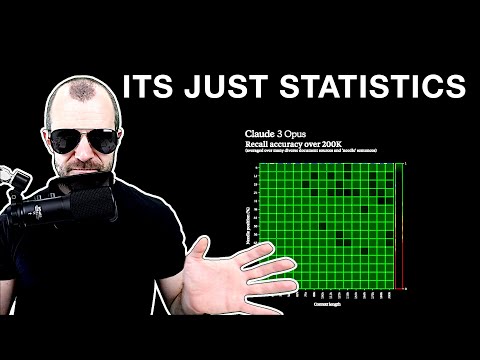
Is AGI still coming? After OpenAI's latest model launches — GPT-5 and a new open-source variant called GPT OSS — the honest answer is: probably not anytime soon, and maybe not at all in the way we imagined. Rather than signaling another leap toward artificial general intelligence, these releases feel more like a turning point — the moment AI moved firmly from a research moonshot into a product business. And that changes everything about how we should think about where this technology is headed.
Is AGI Still Coming? What GPT-5 Really Tells Us
The short answer is no — or at least, not on the timeline the hype machine has been promising. OpenAI's GPT-5 launch is genuinely impressive in certain ways, but it doesn't feel like a boundary-breaking moment. It feels like a refinement. And that distinction matters enormously.
Think about the smartphone industry. Early iPhone and Android releases were genuinely revolutionary — every generation unlocked entirely new capabilities that changed how people lived. Today, we're at Samsung Galaxy S25 Ultra or whatever the current iteration is, and the big selling point is a slightly better camera sensor and improved night-mode software. That's not a criticism — it's just where maturing technology lands. And it increasingly looks like large language models are arriving at that same destination.
The big players — not just OpenAI, but across the frontier model landscape — appear to have hit a wall on foundational research gains. The era of scaling laws doing all the heavy lifting (more data, more compute, better model) seems to be flattening out. What's left is optimization, product focus, and smarter training strategies. AGI, in any meaningful sense, does not appear to be the next stop on this train.
What Is GPT-5 and How Does It Compare to Other Models?
GPT-5 is OpenAI's new frontier model, and by most accounts from benchmarks and early user impressions, it sits competitively with other leading models in the space. But here's what makes it genuinely interesting from a market perspective: it's priced notably cheaper than you'd expect for a model at this capability level.
That pricing strategy is telling. OpenAI isn't positioning GPT-5 as a research marvel — they're positioning it as a product. It's particularly strong at coding tasks and tool calling, two areas where LLMs are generating real commercial value right now. The message to developers and enterprises is clear: this is a cost-effective, capable workhorse for building applications, not a showcase of theoretical intelligence limits.
In terms of raw benchmark performance, GPT-5 holds its own against other frontier models. But the community has noted that this benchmark parity may come with a trade-off — something we'll get into in the next section.
What Is OpenAI's New Open-Source Model (GPT OSS)?
Alongside GPT-5, OpenAI released GPT OSS — an open-source model available in multiple variants. This is a significant move, as OpenAI has historically been reluctant to open-source its most capable models. The release signals a competitive response to models like Meta's LLaMA series and Mistral, which have built strong communities and enterprise adoption through open availability.
GPT OSS has drawn particular attention from researchers who have been digging into its embedding distributions and behavior patterns. The findings suggest that the model was trained with a very specific data composition — likely leaning heavily on synthetic datasets and reinforcement learning shaped toward particular use cases. This makes it highly capable in narrow, targeted tasks, but potentially weaker in areas that require broad world knowledge.
Why Do Newer LLMs Hallucinate More Despite Better Benchmarks?
This is one of the most important — and underreported — dynamics in the current LLM landscape. Multiple people in the AI community have observed that the newer OpenAI open-source models, despite strong benchmark numbers, appear to hallucinate at higher rates and demonstrate less general world knowledge than some competing models.
How does a model score well on benchmarks while knowing less about the world? The answer likely lies in how it was trained. If a model is extensively trained on synthetic data and fine-tuned with reinforcement learning specifically aimed at benchmark-style tasks, it can become very good at those tasks without developing the deeper, broader knowledge base that comes from training on diverse real-world text.
Think of it like teaching to the test. A student who drills exam questions may outperform peers on that specific test while actually understanding the subject less deeply. The model excels at instruction following and structured tasks — exactly what benchmarks tend to measure — but may struggle when questions require genuine reasoning from world knowledge.
Researcher Jack Morris has published a particularly compelling thread on this, analyzing the embedding data from OpenAI's open-source models and demonstrating that they show a very particular distribution — consistent with a highly curated, targeted training composition rather than broad internet-scale data.
What Is Tool Calling in LLMs and Why Does It Matter Now?
Tool calling is the ability of an LLM to interface with external tools — APIs, databases, code interpreters, search engines — and route information between them to complete a task. Rather than trying to answer everything from internal knowledge, a tool-calling model acts more like an intelligent router: it receives a goal, figures out which tools are needed, calls them in the right sequence, and assembles the results.
This is where the current generation of models is genuinely excellent, and it's clearly where the commercial energy is focused. Agentic AI behaviors — where models autonomously take multi-step actions to complete complex goals — are already available from virtually every major LLM provider. If you see a demo of a model autonomously browsing the web, writing and running code, or managing files, that capability is largely table stakes at this point. The differentiation is in how reliably and efficiently a model does it.
The future of LLM value creation probably looks less like "smarter AI brain" and more like "better AI plumbing" — models that are exceptionally good at understanding instructions, calling the right tools, and handling edge cases gracefully. The tools themselves, and who controls access to them, may matter more than raw model intelligence.
That said, there's a real risk buried in this framing: a lot of what looks like pure tool calling still quietly depends on world knowledge. A model that doesn't understand context, nuance, or cause-and-effect will make bad routing decisions even with perfect tools available. The right balance between world knowledge and tool-calling optimization is an open and genuinely important research question.
Are AI Benchmarks Reliable, or Are Companies Gaming Them?
Nobody is openly accusing OpenAI of fabricating benchmark results — but the community is rightly asking harder questions about what benchmarks actually measure. When a model is trained on synthetic data specifically curated around benchmark-style tasks, and then fine-tuned with reinforcement learning using those benchmarks as signal, strong benchmark performance becomes a much less reliable indicator of general capability.
This isn't unique to OpenAI. It's a structural problem with how the industry evaluates models. As benchmarks become public and widely used, they inevitably become training targets — either directly or indirectly. The result is that benchmark scores and real-world usefulness can diverge significantly, which is frustrating for anyone trying to make informed decisions about which models to build on.
What Happens to AI Research When Scaling Laws Run Out?
For years, the dominant strategy in AI was brutally simple: get more data, get more compute, get a better model. Scaling laws made this predictable and reliable. But there's growing consensus that we're approaching the practical limits of this approach — not necessarily because the math stops working, but because the cost-benefit ratio starts to collapse. Running another order-of-magnitude scaling experiment costs millions or tens of millions of dollars, and the gains are no longer proportional.
So what comes next? The field is heading back to something that looks more like the pre-LLM era of machine learning — where the interesting work is in being clever about how you train, not just how much. Synthetic data generation, reward shaping in reinforcement learning, and smarter curriculum design are all back on the research agenda in a serious way.
One particularly promising research direction: learning to predict where a training run will end up based on early trajectories and small-scale experiments. Given that each large training run costs millions, the ability to course-correct early — to detect that a model is drifting in the wrong direction and adjust before it's too late — would be enormously valuable. That feels like genuinely exciting, important work that the research community can sink its teeth into.
The product era of AI is here. The science experiment era isn't over, but it's no longer the main event. For developers, builders, and businesses, that's actually good news — it means more stable, more affordable, more predictable tools. For anyone who was hoping AGI would arrive and solve everything? The wait just got a lot longer.