
The radical plasticity theory of consciousness proposes something that sounds almost impossible at first: we are not born fully conscious. Instead, consciousness is something our brains actively learn — and keep relearning — throughout our entire lives. First proposed in 2011, this theory reframes one of the oldest mysteries in neuroscience and offers a compelling explanation for why people who suffer significant brain damage can still remain fully aware of themselves and the world around them.
What Causes Consciousness in the Brain?
Before we dive into radical plasticity, it helps to understand why scientists are so stumped by consciousness in the first place. Consciousness here doesn't just mean being awake. It refers to our subjective awareness — the rich inner experience of seeing colors, feeling emotions, and knowing that we are the ones doing the experiencing.
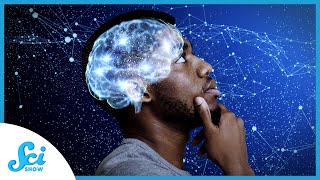 01:15
Overview of competing neuroscience theories on what brain activity generates consciousness
Watch at 01:15 →
01:15
Overview of competing neuroscience theories on what brain activity generates consciousness
Watch at 01:15 →
Researchers have proposed dozens of competing theories about what generates that experience inside the brain. Some point to specific regions like the prefrontal cortex, the thalamus, or the anterior insula as the seat of conscious experience. Others focus on the rhythms of neural firing — which neurons activate together, and how large networks of neurons coordinate their activity. Still others implicate chemical messengers like dopamine and GABA, arguing that the brain's neurochemical environment shapes the quality of consciousness itself.
The frustrating reality? None of these theories fully explains consciousness on its own, and none has won a scientific consensus. Every model seems to break down when confronted with the wild diversity of human brains.
Why Can't Scientists Agree on What Consciousness Is?
Here's the core problem: not all brains are built the same way, and brains change dramatically over a person's lifetime. Some babies are born with entire brain regions missing. Some people survive strokes or traumatic injuries that obliterate massive portions of brain tissue. And yet many of these individuals remain completely conscious — aware, emotional, present.
02:40
Example of brain plasticity: blind individuals using visual cortex to process sound
Watch at 02:40 →
If consciousness depended on one specific brain area or one precise pattern of neural firing, any significant deviation from that pattern should wipe it out. But it doesn't. This forces scientists to ask a deeper question: if consciousness can survive the loss of so much brain architecture, maybe it doesn't live in any fixed location at all.
What Is Brain Plasticity and Why Does It Matter?
The answer might lie in one of neuroscience's most celebrated discoveries: brain plasticity. Plasticity refers to the brain's remarkable ability to rewire and reorganize itself in response to experience, learning, or injury. When a critical brain region gets damaged, neighboring areas can sometimes take over its functions — sometimes imperfectly, sometimes surprisingly well.
A striking example: many people who are blind from birth or early childhood actually process certain sounds using the parts of the brain normally dedicated to vision. The brain doesn't wait around for instructions. It adapts. It finds a way.
04:10
Step-by-step illustration of how a neural representation of 'dog' builds up through experience and emotion
Watch at 04:10 →
This raises an electrifying possibility. What if consciousness is plastic too? What if it isn't a fixed property wired into specific circuits, but something the brain builds — and rebuilds — through learning?
Is Consciousness Learned or Are We Born With It?
This is exactly the question that radical plasticity theory answers head-on. According to this framework, consciousness is not hardwired. It is learned. And learning, at its most fundamental level, comes down to the strengthening and weakening of connections between neurons.
Neuroscientists often summarize this with a catchy phrase: neurons that fire together, wire together. Every experience you have is encoded in your brain as a pattern of firing neurons. The more consistently those neurons activate together, the stronger their connection becomes.
Consider how this plays out with something as simple as seeing a dog:
- The first time you see a dog, neurons in your visual system fire to represent its shape and movement.
- Someone tells you it's a dog. Now the visual pattern is linked to the concept of "dog."
- If a dog bites you, fear signals fire alongside that visual and conceptual pattern, fusing them together.
- From that point on, seeing a dog activates not just a visual image, but a concept, an emotion, and a survival response — all woven into a single, rich neural representation.
That layered, emotionally charged representation is a tiny piece of what radical plasticity theory calls consciousness.
How Do Neurons Fire Together to Build Consciousness?
The radical plasticity model argues that two specific ingredients are essential for consciousness to emerge:
1. Knowing What's Happening Inside You
It's not enough to simply register information the way a thermostat registers temperature. A thermostat detects that the room is too cold and turns on the heat — but it doesn't know it's cold. Consciousness requires an extra layer: an awareness that you are the one having the experience. You don't just sense the cold. You know that you are sensing it.
2. Having an Emotional Response to That Information
Think about what happens when you see the color green. The experience isn't just wavelengths hitting your retina. It might trigger a memory of your first car, a flash of jealousy, or the anticipation of a traffic light turning go. Emotion is inseparable from experience. It's baked into how we perceive everything.
Both of these ingredients — self-awareness and emotional response — require learning. They develop as your brain builds increasingly complex maps of itself and the world. And that ongoing learning process is, according to radical plasticity theory, consciousness itself.
What Is the Radical Plasticity Theory of Consciousness?
Putting it all together: radical plasticity theory proposes that consciousness emerges when the brain does two things simultaneously. First, it builds neural representations of the world — patterns of firing that stand for objects, events, and concepts. Second, it builds representations of those representations — it learns that it has knowledge, and it learns that that knowledge is tied to feeling and experience.
In other words, the brain doesn't just model the world. It models itself modeling the world. And that recursive, self-referential process — constantly updated through learning and emotion — is what we experience as being conscious.
This is why consciousness can survive devastating brain damage. If part of the system is destroyed, what remains doesn't simply shut down. It relearns. It reorganizes. It finds a new way to generate that loop of self-aware, emotionally grounded experience. Consciousness, in this view, is not a finished product. It's an ongoing project.
Can Brain Damage Actually Destroy Your Consciousness?
According to radical plasticity theory, full loss of consciousness from brain damage alone is far less likely than you might think — at least in cases where significant brain tissue survives. Because consciousness is distributed and learned rather than localized, the remaining brain architecture has the potential to compensate. This aligns with real-world clinical observations of patients who recover awareness after severe injuries, or who maintain rich inner lives despite dramatic structural abnormalities present from birth.
That said, sufficiently catastrophic damage — or damage to the structures most essential for neural communication — can and does impair or eliminate conscious experience. The theory doesn't promise invincibility. It simply reframes consciousness as fundamentally adaptive rather than rigidly fixed.
Why This Changes How We Think About the Mind
The implications of radical plasticity theory reach far beyond neuroscience labs. If consciousness is learned, then it exists on a spectrum. It develops. It deepens. It can, in principle, be cultivated. The self you experience right now is not the self you were born as — it is a living, changing construction that your brain has built through every experience, every emotion, and every moment of self-reflection you've ever had.
Consciousness may not be something we simply have. It may be something we are always, quietly, becoming.