What does psilocybin do to the brain? The short answer: it rewires how different brain networks talk to each other, potentially in ways that can last for months. Psilocybin — the active compound in so-called "magic" mushrooms — strengthens connections between brain regions that don't normally communicate, and weakens others. The result is an altered state of consciousness that scientists are only beginning to understand, and a growing body of evidence suggesting it could be one of the most powerful therapeutic tools in psychiatry. Humans have used these mushrooms ritually since at least 3,000 BCE, but serious scientific research is only just getting started.
Here's everything science currently knows — and doesn't know — about psilocybin and how it affects the brain and body.
How Do Magic Mushrooms Work in the Body?
There are over 200 species of fungi that produce psilocybin, making them hallucinogenic. But here's the twist: psilocybin itself isn't what sends you on a trip. When you consume magic mushrooms, your body strips a phosphate molecule off the psilocybin to create a different compound called psilocin. It's psilocin that actually does the heavy lifting.
Psilocin works by binding to a serotonin receptor called 5HT2A — the same receptor targeted by other psychedelics like LSD, MDMA, and mescaline. Serotonin itself is involved in a remarkably wide range of functions: sleep, blood pressure, mood regulation, and depression, among others. When psilocin hijacks that receptor, things get interesting — and scientists are still working out exactly why.
What Does Psilocybin Actually Do to Your Brain?
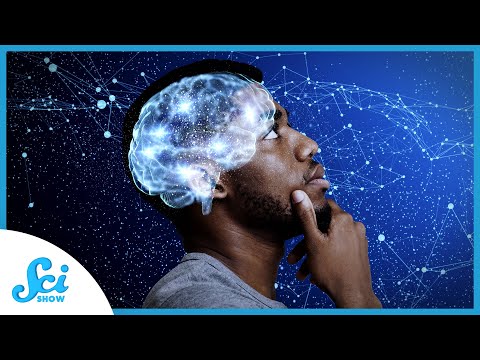
Researchers believe psilocybin's effects come down to how it changes communication between brain networks. Specifically, it appears to strengthen connections between brain regions that weren't strongly linked before, while disrupting some of the brain's more established signaling pathways.
In mice, psilocybin may go even further — potentially creating entirely new neural connections. In humans, the compound increases the strength of connections related to sensory perception (how you experience the world around you), while simultaneously decreasing the connections responsible for interpreting and making meaning out of those signals. Scientists think this scrambling of the sense-and-interpret cycle is what produces an altered state of consciousness.
Think of it like this: your brain normally runs a tight, well-rehearsed operation — certain regions handle certain tasks, and they stick to their lanes. Psilocybin essentially throws open the doors between departments, letting signals flow where they wouldn't normally go. The result? A fundamentally different experience of reality.
That said, it's worth being honest: this research is still fuzzy and sometimes contradictory. Because of drug laws that have long restricted access to psilocybin for research purposes, scientists are working with relatively small studies and limited data. Policy changes over the last 10 to 15 years have finally started opening the door to more rigorous investigation.
Can Psilocybin Really Treat Depression?
One of the most exciting areas of psilocybin research is its potential to treat treatment-resistant depression — a condition that affects roughly 10 to 30 percent of people with depression. These are people whose depression either doesn't respond to antidepressants or keeps coming back despite treatment. Standard medications simply don't cut it for them.
Early clinical results are striking. In one study, researchers gave psilocybin to participants with treatment-resistant depression. About two-thirds responded positively just one week after treatment, and 60 percent still showed improved depression scores three months later. Multiple studies have shown large improvements compared to placebo.
What makes this especially remarkable is the dosing model. Traditional antidepressants require a daily pill — indefinitely. Psilocybin-assisted therapy, by contrast, typically involves just one or two moderate-to-high doses administered in the presence of a psychiatrist, followed by additional therapy sessions in the days after. The therapeutic goal is for the patient to have a meaningful, immersive experience — one where the boundary between self and the outside world begins to dissolve, creating a profound sense of connection.
Months of benefit from a single session. For people who've been struggling for years, that's a potentially life-changing proposition.
Can Psilocybin Help With Addiction?
Depression isn't the only area where psilocybin is showing promise. When combined with therapy, it also appears to be surprisingly effective at treating addiction — including alcohol dependence and cigarette smoking.
- Alcohol addiction: In one study, participants with alcohol dependence drank less frequently and had fewer heavy drinking days for up to two months after psilocybin treatment — better outcomes than traditional weekly therapy alone.
- Smoking cessation: The numbers here are genuinely jaw-dropping. One study found that 80 percent of participants were smoke-free after six months following just two or three doses of psilocybin. Even more remarkably, 60 percent were still smoke-free nearly five years later — up to 57 months after treatment.
To put that in context, smoking cessation is notoriously difficult. Most quit-smoking interventions have long-term success rates well below 30 percent. A 60 percent success rate at five years, after two or three doses of a compound, is extraordinary — if the results hold up at scale.
All of these studies are still preliminary and involve relatively small sample sizes. But the consistency of the findings across different conditions is hard to ignore.
What Is Microdosing and Does It Actually Work?
Not everyone wants to take a full psychedelic dose and spend hours in an altered state of consciousness. That's sparked huge interest in microdosing — taking tiny, sub-perceptual amounts of a psychedelic regularly, just enough to feel a subtle mood boost without actually tripping.
Scientists are actively investigating whether microdosing can deliver therapeutic benefits. Some researchers are going even further, exploring the possibility of developing a non-hallucinogenic psilocybin-like molecule that binds to the 5HT2A receptor and delivers antidepressant effects without any psychedelic experience at all.
It sounds ideal. But not everyone is convinced it will work as well. Here's the complication: there's growing evidence that the intensity of the trip correlates with the strength of the therapeutic benefit. People who report more powerful, immersive psychedelic experiences tend to have better outcomes. If that's true, stripping out the trip might also strip out a significant chunk of the medicine.
The jury is still very much out on this one, and it's one of the most actively debated questions in psychedelic research right now.
What Are the Side Effects of Magic Mushrooms?
Psilocybin isn't without risks. During a trip, users can experience paranoia, anxiety, and disorientation — and in the wrong setting, these reactions can lead to physical harm or, in some cases, longer-term psychological problems. This is precisely why clinical trials always involve a trained therapist present for the entire duration of the experience, followed by structured therapy sessions afterward.
The good news is that psilocybin is considered relatively safe in controlled settings. It's non-addictive, and it's extremely difficult to reach a lethal dose — far more so than many common substances, including alcohol. But "safe" doesn't mean risk-free, and the key word is controlled. The outcomes in clinical settings, with professional supervision and therapeutic support, look very different from uncontrolled recreational use.
Is Psilocybin Addictive or Easy to Overdose On?
One of the more surprising facts about psilocybin is just how non-addictive it is. Unlike opioids, alcohol, nicotine, or even caffeine, psilocybin doesn't appear to create dependency. Users don't typically develop cravings or compulsive use patterns. In fact, it's been used therapeutically to help break exactly those kinds of patterns in people with substance dependencies.
Overdose is also extremely difficult. The lethal dose of psilocybin is so high that reaching it through normal consumption is essentially impossible. That doesn't mean taking large quantities is a good idea — a psychologically overwhelming experience carries its own risks — but from a pure toxicology standpoint, psilocybin sits on the safer end of the spectrum.
Where Is Psilocybin Research Headed?
Psilocybin research is at an inflection point. After decades of restriction, scientists are finally able to study it properly, and the early results are genuinely exciting. Treatment-resistant depression, addiction, end-of-life anxiety — the list of potential applications keeps growing.
The big open questions are: Can the benefits be achieved without the trip? How large are the effects when studied at scale? And will regulators eventually allow psilocybin-assisted therapy to go mainstream? The answers are still being written. But for the first time in a long time, the science of magic mushrooms looks like it might actually live up to the hype.