
Why do people gamble even when they keep losing? It seems irrational on the surface — but according to 17th-century philosopher Blaise Pascal, losing was never really the problem. In fact, winning might be the worst thing that can happen to a gambler. Pascal argued that human beings don't gamble to win. They gamble to escape themselves — to avoid the unbearable silence of sitting alone with their own thoughts. And if that sounds extreme, consider this: more than 1.6 billion people gamble regularly today, and over 4 billion — more than half the global population — place at least one bet every year. Something deeper than entertainment is going on.
Why Do People Gamble Even When They Keep Losing?
Pascal illustrated his answer with a deceptively simple thought experiment. Imagine a man who visits a racecourse every week, gambling obsessively in hopes of one life-changing win. A wealthy aristocrat, observing his losing habit for years, finally approaches him with a stunning offer: here is the exact sum you've been gambling for — take it, but never gamble again.
The man agrees, elated. But within weeks, he is miserable. He got everything he wanted — and it destroyed him. Desperate, he returns to the racecourse and asks to place a fake bet, with no money at stake and no possibility of winning. He watches the horses thunder past and feels nothing. No excitement. No hope. No life. Eventually, he returns the money to the aristocrat and walks straight back to the betting window.
What this reveals is striking: it was never about the money. It was about the uncertainty, the potential, the electric sensation of something being possible but not guaranteed. The gamble itself — not the prize — is what people are really after. Pascal called this phenomenon the fundamental human drive to escape boredom through distraction, and he believed it was the source of most human activity.
What Did Pascal Say About Boredom and Human Nature?
In his book Pensées, Pascal wrote one of history's most quietly devastating observations: "All of humanity's problems stem from man's inability to sit quietly in a room alone."
For Pascal, boredom isn't just an inconvenience. It's a confrontation. When we stop moving, stop doing, and stop chasing, we are forced to sit with the full weight of our own existence — our mortality, our uncertainty, our unresolved questions. And according to Pascal, we find that experience so unbearable that we will do almost anything to avoid it.
So we create problems, set goals, chase prizes — not necessarily because we want the outcome, but because the pursuit keeps us safely distracted from ourselves. The gambler doesn't really want the jackpot. The entrepreneur doesn't really want the exit. What both want is something possible but uncertain to keep moving toward. The moment the goal is achieved, the existential emptiness rushes back in — and a new game must begin.
Why Is Gambling More Popular Than Ever Before?
If Pascal's theory is correct, we'd expect gambling to grow in proportion to how much modern life accelerates our desire for distraction — and that is exactly what we see. The rise of the internet and smartphones created unprecedented access to betting of every kind, and gambling rates have surged to historic highs as a result.
But it's not just traditional gambling — casinos, sports betting, and poker — that has exploded. As a culture, we've begun constructing gambling markets out of everything. On prediction market platforms, you can now place bets on:
- Whether a political figure will wear a certain color tie in a speech
- How many times a world leader mentions a specific country
- Whether a nuclear weapon will detonate by a certain date
- Whether a celebrity will do something notable on social media
Prediction markets originally launched in 1988 at the University of Iowa for a legitimate purpose: researchers wanted to test whether financial incentives could produce more accurate political forecasts than traditional polling. The answer was largely yes — when people bet real money on outcomes, bias and wishful thinking are stripped away, and predictions improve. But what the researchers likely didn't anticipate is what happens when you remove any meaningful constraint on what people can bet on. It turns out: people will bet on everything.
What Are Prediction Markets and Why Are We Betting on Everything?
Prediction markets sit at the intersection of financial speculation and entertainment — and that hybrid nature makes them a fascinating mirror for modern culture. On one hand, they can serve as a genuine information aggregation tool. On the other, they transform every event in the world — wars, elections, natural disasters, celebrity scandals — into a kind of spectator sport with a scoreboard.
This is where something philosophically troubling begins to emerge. Author Neil Postman described a version of this phenomenon decades ago in Amusing Ourselves to Death, warning: "When a population becomes distracted by trivia, when cultural life is redefined as a perpetual round of entertainments, when serious public conversation becomes a form of baby talk... then a nation finds itself at risk. Culture death is a clear possibility."
When every tragedy, every geopolitical event, every moment of genuine human suffering can be reduced to a betting line — something changes in how we relate to reality. We can engage with the world without actually feeling it. We know what happens, but we don't have to hold the weight of it. It's just a number on a screen. A bet we can scroll past.
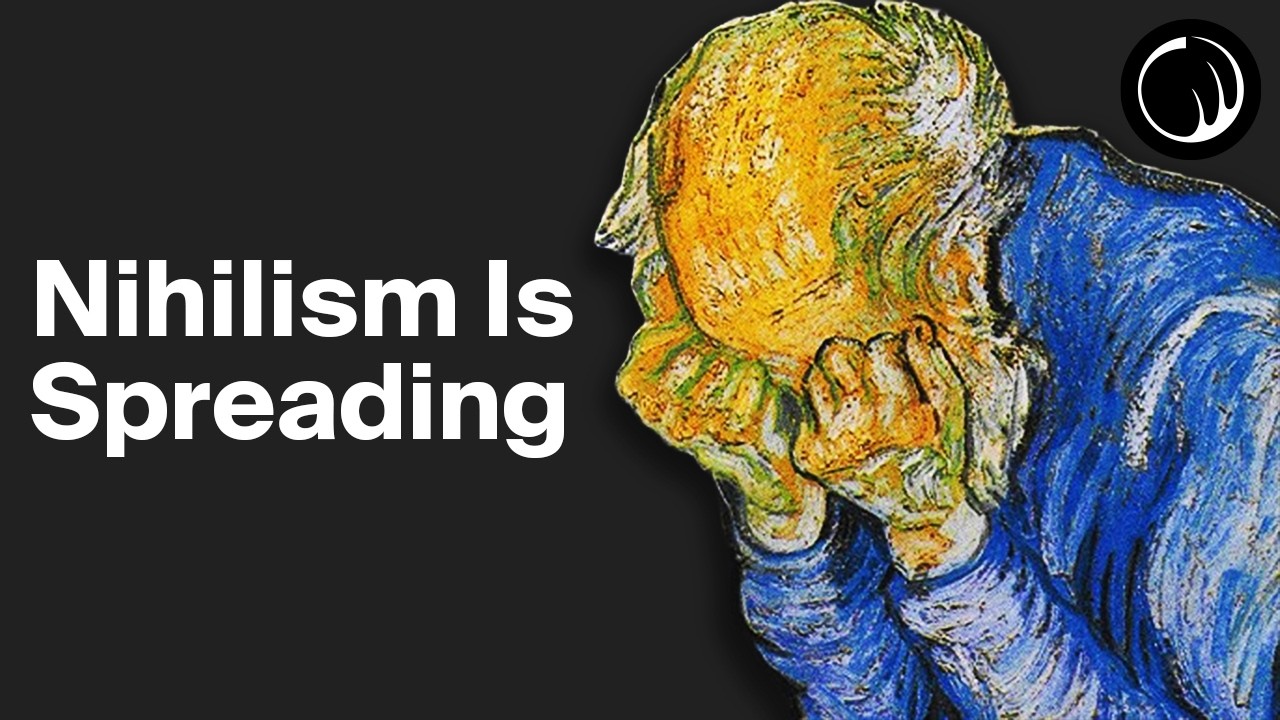
What Is Financial Nihilism and Why Is It Spreading?
There's another layer to why gambling culture has exploded — and it's economic. In many countries today, wealth inequality is at or near historic highs. The top 10% of Americans own roughly 70% of the nation's total wealth. The top 1% own around 30%. Meanwhile, the cost of housing, healthcare, and basic goods continues to outpace wage growth for the majority of people.
When individuals feel structurally locked out of the systems that are supposed to provide opportunity and upward mobility, something predictable happens: they stop believing in those systems. Why save diligently for decades when the math doesn't work? Why invest carefully and patiently when the market seems designed to reward those who already have wealth? This is what's sometimes called financial nihilism — a creeping sense that the game is rigged, the rules don't apply equally, and the only rational response is to treat everything with ironic detachment.
In this environment, a lottery ticket or a sports bet doesn't feel irrational — it feels like the same odds as everything else, but at least it's honest about being a gamble. If the system itself feels like a casino, why not just go to the casino?
How Does Wealth Inequality Push People Toward Gambling?
The link between economic hopelessness and gambling isn't just philosophical — it's psychological. When people feel disconnected from a shared cultural narrative, when they can't see a clear path between effort and reward, they disengage from sincere investment in long-term goals. Everything becomes performative, ironic, detached.
This creates what might be called a nihilism loop: boredom and dissatisfaction drive us toward distraction; distraction fails to resolve the underlying tension; we become more numb and tolerant to stimulation; we seek bigger, more trivial, more extreme distractions; and the cycle repeats — each iteration leaving us slightly more hollow than the last.
The prediction market for whether Jesus Christ will return by 2027 is not an anomaly. It's the logical endpoint of a culture that has run out of sincere things to bet on and has decided to bet on everything instead.
How Do You Find Meaning Instead of Escaping Into Games?
Dostoevsky — himself a notorious gambler — wrote in The Gambler: "Can I not rise again? Yes. All it would take is just once in my life to be careful and patient... All it would take is to stand firm just once and I can change my whole destiny in a single hour."
The escape from the nihilism loop doesn't come from winning bigger or finding a better game. It comes from something much harder: sitting with boredom. Letting the discomfort arrive without immediately reaching for a screen or a bet. Allowing yourself to feel the weight of your own condition — not as a problem to be solved, but as a reality to be understood.
From that stillness, something more honest tends to emerge — a clearer sense of what actually matters, what kind of risks are worth taking, and what kind of games deserve to be played with full sincerity. The real gamble isn't a bet on Jesus or on a politician's tie color. It's betting on something genuinely difficult and genuinely yours — a relationship, a craft, a cause — despite uncertainty, despite the odds, and despite the system you find yourself inside.
Perhaps the greatest wager any of us can make is simply this: that something in life is worth caring about deeply enough to risk losing.