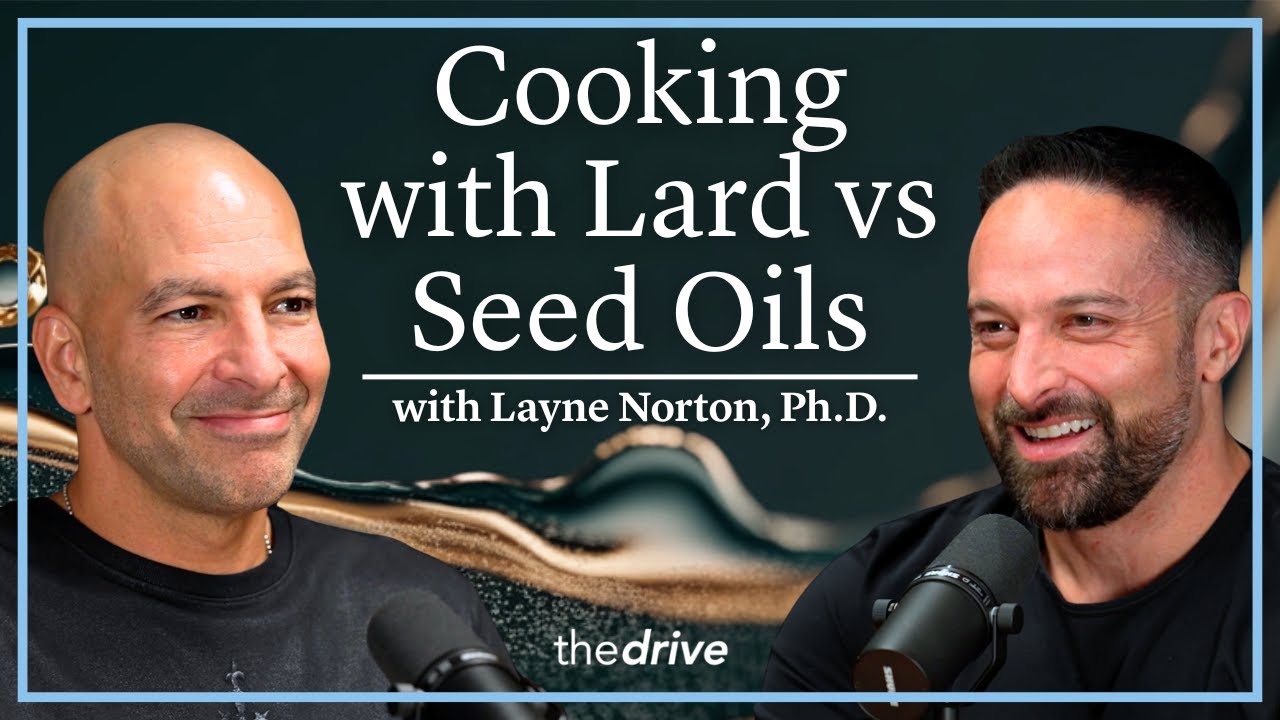

If you've spent time worrying about whether your French fries are cooked in seed oils or beef tallow, you may be optimizing the wrong variable entirely. Nutrition researcher Layne Norton makes a nuanced case: seed oil concerns aren't baseless, but they exist in a context that most viral health content deliberately strips away — and fixating on cooking fats while ignoring energy balance and physical activity is like stepping over hundred-dollar bills to pick up pennies.
The Precautionary Case Against Seed Oils (And Its Limits)
For those who remain unconvinced by the evidence supporting seed oils and simply don't want to consume them, Norton offers a pragmatic path: don't just eliminate seed oils — replace the saturated fat they displace with something. Leaner protein sources help, and while monounsaturated fats like olive oil and avocado oil don't lower LDL cholesterol as effectively as polyunsaturated fats, they do appear cardioprotective compared to saturated fat. They're not a wash; they're a reasonable middle ground.
The logic here matters: the concern isn't really seed oils in isolation. It's what you eat instead. Cutting seed oils and replacing them with saturated fat doesn't represent a health upgrade by any well-supported metric.
When Heating Oil Actually Does Become a Problem
One area where seed oil skeptics have a legitimate point is high-heat, repeated frying — particularly in restaurants. During industrial processing, seed oils are heated under vacuum, meaning no oxygen is present and oxidation is negligible. The situation changes dramatically in a commercial kitchen.
Research shows that frying in a thin layer of oil — say, one centimeter versus five centimeters — produces significantly more oxidized byproducts. When oil is reused repeatedly in a shallow pan and heated for extended periods, harmful oxidized compounds including trans fats can accumulate within 20 to 30 minutes. A deep vat of oil heated all day in a restaurant is a different product than the oil that left the bottle.
 08:45
Comparison of oxidation rates in thin versus deep frying oil layers
Watch at 08:45 →
08:45
Comparison of oxidation rates in thin versus deep frying oil layers
Watch at 08:45 →
This is a real concern — but it's a concern about frying practice, not about seed oils sitting in your pantry.
Should McDonald's Go Back to Lard? The Frying Oil Dilemma
The question of whether saturated fats like lard are safer for high-heat frying than polyunsaturated seed oils is genuinely difficult. Saturated fats are more chemically stable and less prone to oxidation at high temperatures. Seed oils, when repeatedly heated, generate more reactive oxidative byproducts. So it might seem like lard wins for frying.
But Norton is careful not to let that logic run too far. Lard raises LDL cholesterol more than polyunsaturated oils do, and there is no human randomized controlled trial directly comparing cardiovascular outcomes from frying in one versus the other. You're left with competing mechanisms and no clean answer. His bottom line: if you're going to have French fries occasionally, just have them. Choose your frying medium if you want. But don't interpret that choice as making the meal healthy.
This is where food marketing becomes dangerous. Companies don't have a loyalty to your health — they have a loyalty to sales. When tallow or lard becomes associated with wellness culture, food companies will pivot to tallow and market it accordingly. When a product switches from seed oil to beef fat and positions that as a health improvement, the predictable consumer response is to eat more of it. That's not a win.
Why Scientific Headlines Seem to Contradict Each Other
A common frustration Norton hears is that nutrition research seems to reverse itself constantly — one study says this, another says that. His response is direct: most people aren't reading studies, they're reading social media hot takes. And those are very different things.
In his experience, nearly every time a headline or viral post describes a study result that seems counterintuitive or contradictory, reading the actual paper resolves the confusion. The control group was poorly designed. The difference between groups was too small to be meaningful. The measurement methodology introduced noise. As his PhD advisor put it: if you wanted to design a study to show an effect or show no effect, that's the easiest thing in the world.
This is why scientific consensus is built on converging lines of evidence — not individual studies — and why the most rigorously controlled research gets weighted more heavily. On the specific question of apolipoprotein-containing lipoproteins and cardiovascular disease, Norton says he holds a high degree of confidence in the causal relationship, grounded in Mendelian randomization studies and statin trial data. That confidence could shift with substantial new evidence, but it would take a lot of it over a long time.
The Actual Levers Worth Pulling
The broader point Norton returns to is one of proportion. The average American consumes around 3,500 calories per day and gets less than 20 minutes of physical activity. In that context, the oil your fries are cooked in is a rounding error.
That doesn't mean dietary quality is irrelevant. Limiting saturated fat, eating adequate fiber, and choosing whole foods over hyper-processed ones all matter. But they matter within a hierarchy of health behaviors — and the hierarchy is not flat. Energy balance, physical activity, sleep, and smoking status are dramatically larger contributors to chronic disease burden than the specific cooking fat a restaurant uses.
Much of what drives disease in developed countries, Norton argues, is fundamentally an energy toxicity problem: too many calories, too little movement. Seed oils may be one small thread in that tapestry, but treating them as the defining issue — while the broader pattern goes unaddressed — is a significant misallocation of concern. Understand the nuance, apply it proportionally, and don't let a 30-second viral video substitute for that larger picture.