What Is a Planck Star and Why Does It Matter?
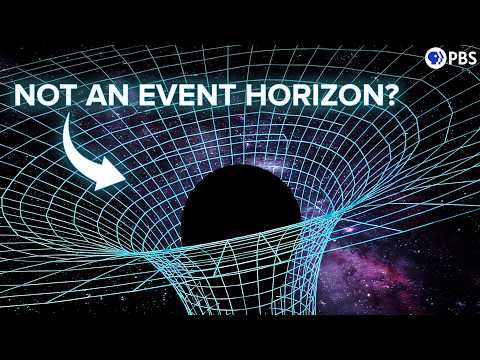
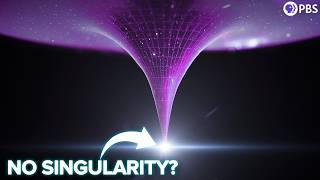
A Planck star is a theoretical object predicted by loop quantum gravity (LQG) that forms at the core of a black hole when collapsing matter reaches extreme density. Rather than compressing into a pointlike singularity of infinite density — which breaks the laws of physics as we know them — the quantum structure of spacetime itself pushes back, halting the collapse. The result is an ultra-compressed ball of energy roughly one trillionth of a meter across for a sun-mass black hole. It's not a singularity. It's not even close to the Planck scale. And it might be the universe's way of saving physics from its own worst nightmares.
The idea was first proposed in 2014 by physicists Carlo Rovelli and Francesco Vidotto, and updated with new findings in 2024. If Planck stars are real, they could resolve the black hole information paradox, eliminate the singularity problem, and even offer a candidate for dark matter. That's a lot of heavy lifting for something smaller than an atomic nucleus.
 02:15
The historical sequence of physicists battling gravitational collapse, from dark stars to white dwarfs to neutron stars
Watch at 02:15 →
02:15
The historical sequence of physicists battling gravitational collapse, from dark stars to white dwarfs to neutron stars
Watch at 02:15 →
What Really Happens Inside a Black Hole Singularity?
To appreciate what a Planck star solves, you need to understand what it's solving. The classical picture of a black hole, derived from Einstein's general relativity, predicts that once matter crosses the event horizon, nothing can stop it from collapsing into a singularity — a point of infinite density at the center. Infinite density is a red flag in physics. It means your equations have broken down and are no longer describing reality.
The deeper problem is that at the conditions inside a singularity, both of our best theories — quantum mechanics and general relativity — are simultaneously required and simultaneously incompatible. They contradict each other. This isn't just an inconvenience; it signals a fundamental gap in our understanding of nature. Physicists have spent decades looking for a way out.
Previous escape routes worked beautifully up to a point. Electron degeneracy pressure halts collapse in white dwarfs. Neutron degeneracy pressure does it for neutron stars. But beyond a certain mass threshold, even neutron stars succumb, and an event horizon forms. The singularity seems inevitable — unless quantum gravity has something to say about it.
What Is Loop Quantum Gravity and How Does It Work?
Loop quantum gravity is one of the leading candidates for a theory of quantum gravity, often described as the main competitor to string theory. Its core idea is that space itself is not smooth and continuous at the smallest scales. Instead, it's granular — built from quantized two-dimensional area elements that interlock to produce the three-dimensional space we experience on larger scales.
07:40
Visualization of loop quantum gravity's granular spacetime structure at the Planck scale
Watch at 07:40 →
The fundamental unit of this graininess is the Planck length, approximately 10-35 meters. Below this scale, the concept of smooth spacetime breaks down entirely. On scales much larger than the Planck length — which includes basically everything we can observe — LQG reproduces the same spacetime described by general relativity. But near the Planck scale, it predicts radical corrections to the standard equations.
One powerful application is loop quantum cosmology, which applies these ideas to the entire universe. Instead of a Big Bang singularity at the beginning of time, LQG predicts a quantum bounce — where an earlier collapsing universe reached maximum density and rebounded outward. Critically, physicists Rovelli and Vidotto realized this same bounce mechanism could apply to collapsing matter inside a black hole.
How Does a Planck Star Actually Stop the Collapse?
Here's where it gets elegant. As a collapsing stellar core approaches Planck-scale densities, LQG predicts a semiclassical correction to the equations of general relativity — essentially an anti-gravity-like repulsive effect that emerges from the quantum structure of spacetime. This isn't a force in the conventional sense. It's the fabric of space itself resisting compression beyond a certain limit.
11:20
The Planck star bounce mechanism — collapse arrested by quantum spacetime pressure and rebound into a white hole
Watch at 11:20 →
The collapsing matter bounces. The resulting Planck star for a sun-mass black hole would be about one trillionth of a meter across — tiny beyond comprehension, but critically, not a singularity. It sits 23 orders of magnitude above the Planck scale. In relative terms, that's enormous. And unlike the infinite-density singularity of classical general relativity, it doesn't break physics.
The analogy to white dwarfs and neutron stars is instructive. In those cases, quantum particles resist being crammed into the same energy states — degeneracy pressure. In a Planck star, it's the quantum elements of spacetime itself doing the pushing back. Different mechanism, same lifesaving result.
What Is a White Hole and Could One Form From a Black Hole?
If loop quantum gravity is correct, the Planck star doesn't just sit there quietly. The same spacetime pressure that arrests the collapse also triggers a catastrophic rebound — and that rebound would manifest as a white hole. A white hole is essentially the time-reverse of a black hole: instead of everything falling in and nothing getting out, everything rushes outward and nothing can enter. Space and the energy it contains surge away from the center, and the event horizon reverses direction.
From the Planck star's perspective, this entire process — collapse, bounce, and explosive rebound — happens in a tiny fraction of a second. So why don't we see these violent white hole explosions happening all around us? Why do black holes appear stable and long-lived?
16:05
The Planck relic: a Planck-scale event horizon containing a Planck star trillions of times larger, flickering between black hole and white hole states
Watch at 16:05 →
The answer is gravitational time dilation. Time near a black hole's event horizon slows dramatically compared to a distant observer — think of the famous scene in Interstellar where hours near the black hole translate to years on Earth. Deep below the event horizon, this effect becomes almost incomprehensibly strong. From our perspective outside, the rebounding Planck star appears completely frozen in time, locked in that near-exploding state for billions upon billions of years. The black hole looks stable. The Planck star is still there, suspended in the last instant before its white hole explosion.
Why Do Black Holes Destroy Quantum Information?
The information paradox is one of the most serious unsolved problems in theoretical physics. Stephen Hawking showed in the 1970s that black holes slowly radiate energy — now called Hawking radiation — and gradually shrink. Eventually, a black hole evaporates completely and vanishes. The problem is that quantum mechanics insists information can never be truly destroyed. Everything that ever fell into the black hole — the detailed quantum states of every particle — should still exist in some form. But if the black hole disappears, where does it go?
The Planck star model offers a potential resolution. As the event horizon shrinks due to Hawking radiation, loop quantum gravity predicts that the horizon's surface area becomes quantized and reaches a minimum — a Planck relic. The event horizon stops evaporating. It's stuck at Planck-scale dimensions, essentially forever. Inside this near-pointlike relic, the enormous Planck star — remember, trillions of times larger than its container — still exists, preserved by the extreme stretching of spacetime within the relic. And with it, the information is preserved too.
What Is Hawking Radiation and Why Is It a Problem?
Hawking radiation arises from quantum effects near the event horizon. Virtual particle-antiparticle pairs constantly pop into existence throughout space. Normally they annihilate almost immediately. But near an event horizon, one partner can fall in while the other escapes, carrying away a tiny amount of energy. Over vast timescales, this slowly drains the black hole's mass. For stellar-mass black holes, the timescale is longer than the current age of the universe — but it's finite.
The problem isn't the radiation itself. It's that Hawking radiation appears to be purely thermal — it carries no information about what originally fell into the black hole. If the black hole fully evaporates, all that quantum information vanishes. This directly violates the principle of unitarity in quantum mechanics, which states that information is always conserved. The Planck relic solution sidesteps this by ensuring the black hole never fully evaporates.
Could Planck Stars Actually Explain Dark Matter?
Here's the most speculative — and wildly exciting — application. If every black hole that ever formed eventually becomes a Planck relic, and if there were enormous numbers of primordial black holes in the early universe that have since shrunk to Planck-relic size through Hawking evaporation, these relics could make up some or all of the universe's dark matter. They would be extraordinarily small, extraordinarily massive for their size, and completely invisible to electromagnetic observation — interacting only gravitationally. That's a pretty good description of dark matter.
It would require a staggering number of these relics, each one a quantum superposition of black hole and white hole simultaneously — flickering eternally between two states at the boundary of our known physics. Genies in bottles of frozen spacetime, as one might put it. We haven't confirmed Planck stars exist. Loop quantum gravity itself hasn't been fully worked out. But the universe seems to have a deep interest in avoiding singularities — and if it's taking the loop quantum gravity route to do it, Planck stars are the fascinating result.