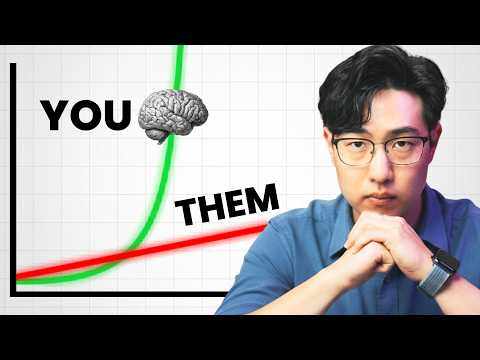
If you want to know how to be productive when you feel lazy or tired, the answer is surprisingly counterintuitive: stop relying on motivation. Over 11 years of working 60 to 100 hours a week — studying medicine, running a business, and coaching learners — the biggest productivity lesson wasn't about hustle or willpower. It was about a four-step cognitive method called DEFUSE that lets you take action even when every part of you wants to do absolutely nothing.
How to Be Productive Even When You Feel Lazy or Tired
Most people assume that to get things done, you need to feel like doing them. But that assumption is exactly what keeps people stuck. Productivity doesn't have to depend on how you feel on any given day. The DEFUSE method is built on a psychological concept called thought action defusion — the ability to separate what you feel from what you do. Once you master it, you no longer need a wave of motivation to start working. You just start.
Here's the honest truth: most highly productive people aren't more motivated than you. They've simply built systems that don't require motivation to function. The DEFUSE method is one of those systems, and virtually anyone can learn it.
Why Being Motivation Dependent Ruins Your Productivity
Before diving into the steps, it's critical to understand the trap most people fall into: motivation dependence. This is when your ability to get things done is entirely tied to how motivated you feel in the moment.
Here's the problem. Motivation — whether it comes from external rewards like money and status, or internal sources like enjoyment and purpose — always fluctuates. Your sleep quality, your mood, your physical health, the opinions of others — all of these push your motivation up and down constantly. If your productivity depends on your motivation, then your productivity is just as unstable.
There's also research on willpower depletion suggesting that constantly forcing yourself to overcome barriers drains a finite reserve of mental energy. Many researchers believe this is the root cause of burnout — the cycle of pushing harder and harder until there's simply nothing left to give.
The alternative is being motivation enhanced: you can use motivation when it's available, but you don't need it to function. You keep it in reserve for when you truly need a boost, rather than burning it just to get through a Tuesday afternoon.
What Is the DEFUSE Method? A Step-by-Step Breakdown
DEFUSE is a four-step framework. Each letter stands for a specific action that, together, activate thought action defusion and make consistent productivity possible regardless of how you feel.
D — Distinguish: Separate Feelings from Actions
The first step is to distinguish between a feeling, a thought, and an action. These three things feel fused together — but they don't have to be.
Think about hunger. When you feel hungry, your brain immediately jumps to I must eat, and then you eat. Feeling → thought → action, all in one automatic chain. But you can actually notice the feeling of hunger the same way you'd notice a breeze on your arm — just observe it without reacting. That breaks the chain.
The same applies to laziness or tiredness. When you feel tired, your brain says I must rest. But feeling tired is just a physical sensation. You can notice it, acknowledge it, and choose not to let it dictate what you do next. That's the core of thought action defusion.
This technique is widely used in anxiety therapy. Anxiety symptoms — racing heart, sweaty palms, shallow breathing — are the same physical sensations as excitement. The difference is the thought you attach to them. Reframe the thought, and you change the experience entirely.
F — Fake: Act Like Someone Who Isn't Lazy
Step two is to fake it. Not in a dishonest way — but in the way an actor performs a role even when they're not feeling it personally. If an actor shows up on set exhausted, they don't get to skip their scene. They act the part anyway.
You can do the same. You feel lazy? Fine. Keep feeling lazy. But start doing the actions of someone who isn't lazy — sit at your desk, open your laptop, write the first sentence. You don't have to change how you feel. You just have to do the actions regardless.
Here's the powerful part: this relationship runs in both directions. Feelings lead to thoughts which lead to actions — but actions also lead to thoughts which lead to feelings. When your brain observes you working, it starts to think hey, maybe I'm not so lazy after all. And that shift in thought actually makes you feel less lazy. You've generated motivation by acting first, not the other way around.
As one powerlifting coach put it perfectly when asked how to stop feeling tired at the gym: "Just train tired." Simple. Brutal. Effective.
How to Stay Productive Without Burning Out
U — Uptime: Gradually Extend Your Focus Window
The third step is uptime — gradually increasing how long you can maintain the defused state before feelings take over again.
At first, you might only manage 10 focused minutes. That's completely fine. The next day, try 12. Then 15. Then 20. Small, consistent increments over time. Thanks to neuroplasticity — the brain's ability to rewire itself through repeated experience — your brain will literally get better at activating thought action defusion the more you practice it. What feels like an effortful override today becomes a natural default pattern over time.
This is also what prevents burnout. Instead of white-knuckling through marathon sessions on willpower alone, you're building a sustainable cognitive skill. You're not depleting a reserve — you're expanding your capacity.
How to Eliminate Distractions and Create a Zone of Focus
Z — Zone: Build an Environment That Works for You
The final step is zone — creating a physical and digital environment that reduces friction and removes procrastination triggers before they even appear.
A useful tool here is the distraction cheat sheet. While working, every time something pulls your attention away, write it down specifically. Was it an app icon on your phone? A game controller on the desk? A notification sound? Once you have a clear list, you can systematically remove those triggers: pack away the controller, delete apps from your home screen, use app blockers like Focused Work, and set up a dedicated workspace with everything you need already in place.
The goal is an environment where distractions simply have fewer entry points. The less energy you spend resisting temptation, the more you have for actual work. Your zone of focus becomes a space your brain learns to associate with deep, undistracted work — and over time, sitting down in that space becomes its own productivity cue.
How Faking It Actually Makes You More Motivated
It might feel strange at first — acting productive when you don't feel like it, pretending you're not tired when you clearly are. Some people worry it sounds like training yourself to be a robot. But consider this: most of our modern goals and pressures are entirely artificial constructs. Cave-dwelling humans didn't sit exams or worry about quarterly deadlines. We've created artificial demands, and we need deliberate frameworks to meet them without destroying our wellbeing.
DEFUSE isn't about suppressing how you feel or grinding yourself into the ground. It's about giving yourself the freedom to act in alignment with your goals — even on the days when your feelings are pulling you in the opposite direction. Motivation becomes a bonus, not a requirement.
Start Small, and Let the System Do the Work
The DEFUSE method isn't a magic pill. It takes practice. But it's grounded in established cognitive psychology, it scales with consistent use, and it works for virtually anyone willing to apply it. The next time you feel tired or lazy, try this: notice the feeling without judgment, act like someone who doesn't feel that way, stick with it for just 10 minutes, and make sure your environment isn't working against you.
That's it. Four steps. And over time, those four steps compound into something that looks, from the outside, like extraordinary discipline — but from the inside, feels like freedom.