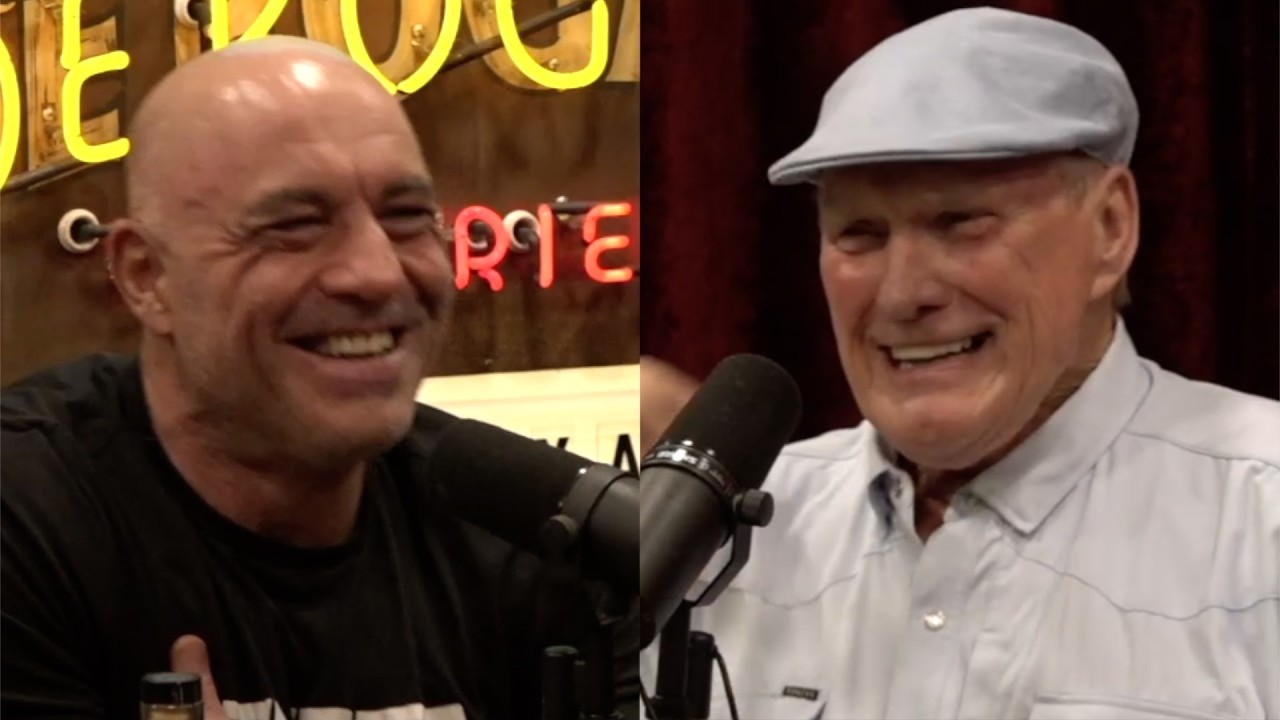

Jim Hart played professional quarterback from 1970 onward, competing in an era when pain management meant a syringe of unknown substances and the unspoken expectation that you suited up regardless. In a conversation with Joe Rogan, the 77-year-old former quarterback described a football culture so normalized around injury that getting knocked unconscious and returning in the fourth quarter felt unremarkable — until decades later, when the consequences started adding up.
Shoot Me Up With Stuff
Hart doesn't mince words about the medical practices of his era, mostly because he genuinely doesn't know the details. When Rogan pressed him on what was being injected before games, Hart's answer was simple: "Stuff. I don't know, Joe. I'm not a doctor."
He described tearing his oblique — what he called his stomach muscles — and receiving injections before kickoff and again at halftime to get through the game. Nobody asked questions. Nobody was expected to. The night before one game against Cincinnati, he recalled a lineup of players filing into a room to be shot up. It was, he said, completely normal.
"It was the unspoken bravado," Hart told Rogan. "You play. Coach has to know he can rely on his quarterback to be out there no matter what." One coach told Hart directly: "You always play hurt." Hart's response was essentially, yes — so keep the needle ready.
Getting Knocked Out and Called a Great Performance
The most striking moment Hart described involved a playoff game against the Miami Dolphins. He was knocked unconscious in the first quarter, regained awareness somewhere around the fourth quarter, and went back in. The team lost, but by his own assessment, he played well after coming to.
That wasn't even the first time. In high school, playing against Minden High School, Hart fumbled chasing a loose ball, took a hit, and blacked out. He has no memory of what followed — but it was, he says, the best game he ever played in high school.
 18:30
Jim Hart recounting the high school concussion game against Minden High School
Watch at 18:30 →
18:30
Jim Hart recounting the high school concussion game against Minden High School
Watch at 18:30 →
"That's serious," Rogan said. Hart agreed, but added that at the time, nobody thought anything of it.
Modern Concussion Protocol Versus Then
The contrast with today's NFL is stark. Rogan described the current system: a dedicated concussion evaluator in the booth with authority to pull players, sideline tents for evaluation, and a graded return-to-play protocol requiring players to progress through stages — rest, light stretching, monitored aerobic exercise — without any symptom recurrence. Athletic commissions in combat sports impose mandatory suspensions of up to 90 days after a knockout, with 60-day no-contact periods before a fighter can even spar.
In Hart's day, the protocol was: are you awake? Then get back in there.
The Steroids Question and Long-Term Damage
The conversation turned to performance-enhancing drugs, which Hart approached with the same combination of awareness and deliberate ignorance he applied to the mystery injections. He remembered a teammate, Larry Brown, whose physique was extraordinary — 22-inch waist, massive legs, every muscle visible. Howie Long, lining up against Brown as a rookie, reportedly couldn't believe what he was seeing.
Hart was careful not to accuse anyone directly, but acknowledged that steroids were present in the sport, that he simply didn't understand what he was looking at in the 1970s. Rogan noted the same was true of early UFC and Pride Fighting in Japan, where steroid use was widespread. Hart pointed to what came next: the discovery that steroids soften tendons and ligaments, contributing to the wave of injuries that followed athletes into retirement.
Hart himself was diagnosed with rheumatoid arthritis, concentrated in his knees with no family history to explain it. His hips and ankles have also become painful over the years. He manages with anti-inflammatories in the morning — no Celebrex, just something that takes about 80 percent of the pain away. He takes no other medication.
The Brain Questions That Came Later
Years after his playing career ended, Hart started noticing memory problems — not dramatic losses, but the kind of looping uncertainty that unsettled him. He would push the gate button six times, watch it cycle through colors, and still not be sure the gate was open. He sought out neurological evaluation at a clinic, went through extensive cognitive testing, and came away with a diagnosis of ADD — not a shock, he said, but a confirmation that something was off.
Nothing definitive emerged from the testing to explain the memory issues, and Hart was philosophical about it. Rogan suggested ADD is essentially universal among creative and highly focused people. Hart agreed. But the subtext of the conversation was harder to dismiss: fourteen years of football, unknown injections, multiple concussions with no recovery time, and a body now managing daily pain in his late seventies. The game gave him a career. It also kept a running tab.