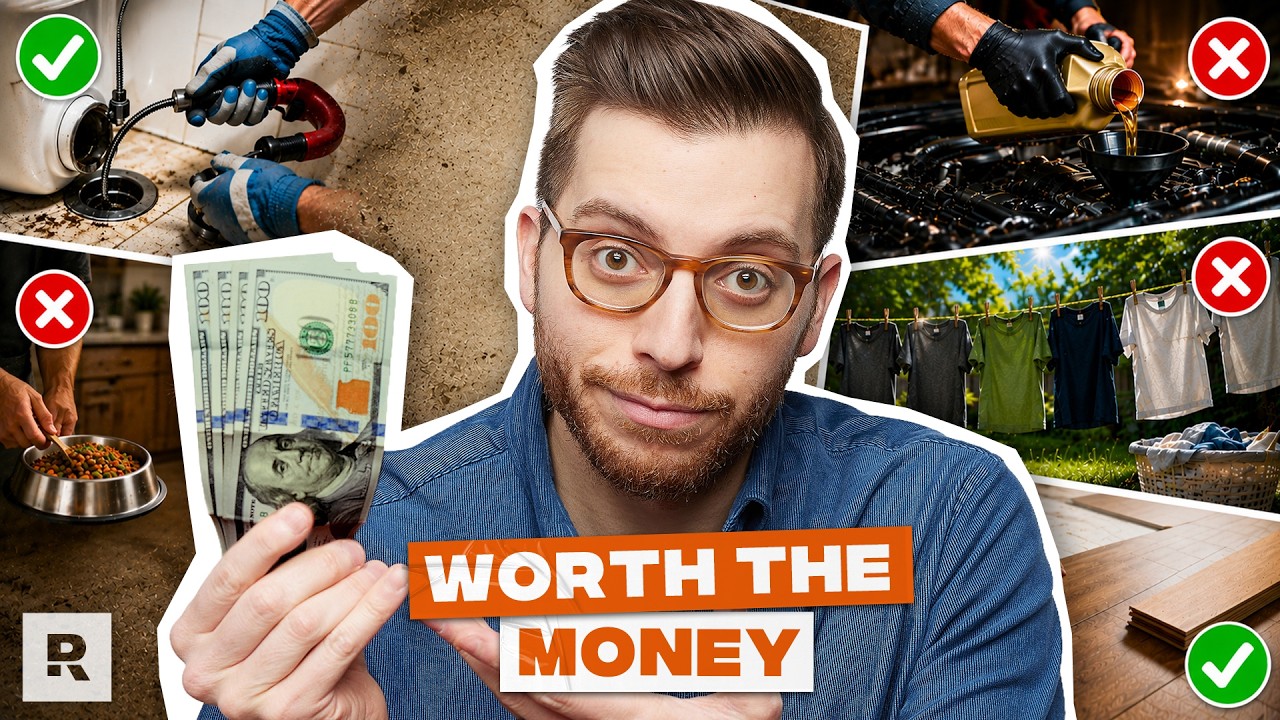

What's a DIY project that saved you more money than you expected? That question, posed to an audience of nearly a million people on Facebook, generated 749 comments spanning oil changes, home births, pantry shelves, and debt snowballs. Here's an honest breakdown of which DIY hacks are worth pursuing — and which ones should stay in the comments section.
Car and Home Maintenance: Big Savings, Real Risks
Oil Changes
Ryan reported changing his own oil for under $40 versus paying $110 at a shop — a $70 saving per visit. At three to four oil changes per year, that's potentially $280 annually. The case against doing it yourself, however, is compelling: you need the right equipment to safely get under the car, there's real risk of threading damage if anything goes wrong, and you're responsible for properly recycling used oil. Unless you're genuinely a car person who enjoys the process, finding a reputable fast-lube shop is probably the better trade-off for most people.
Drain Snaking
Ben learned to snake his own drains rather than calling a plumber — and this one holds up. Basic drain-clearing tools are inexpensive and widely available. The lesson here: always attempt a DIY fix before calling a professional. When a plumber cleared a clogged toilet in three minutes and charged $125 for the visit, the right response is to buy the tool (called an auger) yourself. One service call pays for the equipment, and every future use is money back in your pocket.
Flooring Installation
Hannah's builder quoted $24,000 to install flooring in their fixer-upper. She and her husband bought the materials and did it themselves for $3,000 — a $21,000 difference. Flooring is labor-intensive: ripping out existing material, prepping the subfloor, and laying everything correctly takes significant time. Newer click-and-lock systems have made it more accessible for beginners, but expect to invest a full weekend and possibly enlist help. Still, at that level of savings, the math is hard to argue with.
Pantry Shelves
Erica's husband declined an $8,000 builder quote for custom pantry shelves and built them for $750 instead. If you can find studs and follow basic carpentry instructions — much of it available free on YouTube — this is a very achievable project with an extraordinary return. The $7,250 savings makes this one of the clearest wins on the list.
Painting the Exterior and Building a Deck
Grit's husband tackled exterior house painting (saving around $6,000) and installed a deck himself (saving $10,000). These are serious projects requiring time, physical effort, and some skill — but the savings reflect exactly why the trades are so well compensated right now. If you have the capability and the patience, the financial upside is enormous.
Food and Household Hacks That Actually Work
Cooking for Pets
Dana cooks homemade meals for her 105-pound German Shepherd instead of buying commercial dog food. Ground chicken, ground beef, vegetables — simple ingredients that are often cheaper per pound than premium kibble, and arguably healthier. If you have a large dog with a large appetite, this is worth the extra prep time.
Buying Meat in Bulk
Monica buys a full chuck roll from a warehouse club, slices it into individual portions, and freezes what she doesn't use immediately. Buying wholesale cuts the price per pound significantly. Portion it yourself, bag it, freeze it, and you can stretch one purchase across months of meals. The upfront cost and preparation time are the only real barriers.
Meal Planning and Baking
Grit rounds out her household's DIY approach with weekly meal planning, baking bread, and making Greek yogurt from scratch. Each habit on its own produces modest savings; combined consistently over months, they add up to a meaningful reduction in grocery spending. This is unglamorous, sustained frugality — and it works.
Breastfeeding
Angela asked whether breastfeeding counts as a money-saving DIY. It absolutely does. Infant formula costs are one of the most jarring line items for new parents, and if breastfeeding is a viable option, the savings are substantial. It requires time and physical effort, and it's not the right choice for every family — but from a pure cost standpoint, it's one of the most impactful items on this entire list.
Subscription Hacks and Free Resources
The Library (and the Libby App)
One commenter pointed out that putting items on hold at the library online delivers the same dopamine satisfaction as adding something to a shopping cart — except it's free and you get books. More practically, the Libby app lets you borrow ebooks and audiobooks at no cost through your local library. If you're spending $15 to $20 a month on Audible or Kindle Unlimited, this is a direct, free substitute worth setting up today.
Panera Sip Club
Amanda pays $12 a month for unlimited coffee during a daily one-hour commute. If you're regularly buying coffee out — especially at Starbucks prices — a subscription like this can make financial sense. Two Starbucks visits in a month already exceeds the monthly cost. The key, as with any subscription, is honest accounting of how often you'll actually use it.
A Few DIYs Worth Skipping
Not every comment was a winner. Cutting hair at home can work well for simple buzz cuts, but attempting anything more complex risks an outcome that takes months to grow out. Hanging a clothesline to avoid dryer costs might save a small amount on electricity, but the time investment and practical inconvenience — particularly for families with HOA restrictions — rarely justifies it for most households. And at-home births, while chosen deliberately by some families with proper medical support, carry risks that make them a poor fit for a casual money-saving framework.
Therapy also came up as a suggested skip. That take deserves a direct rebuttal: a good therapist provides tools and perspective that a walk around the block genuinely cannot replace. The two aren't mutually exclusive, and treating mental health support as an optional luxury is a false economy.
The Bigger Principle
The debt snowball — listing debts smallest to largest, knocking them out one at a time, and rolling freed-up payments into the next balance — was the final entry on the list. It's not a traditional DIY, but it captures the same spirit: taking direct control of a problem rather than waiting for someone else to solve it. The average person who follows this method becomes completely consumer-debt-free in 18 to 24 months.
The throughline across all these comments is straightforward. You have more control over your financial margin than you probably think. Some of that control comes from learning a skill. Some comes from changing a habit. Some comes from simply getting a quote, being outraged by the number, and deciding to figure it out yourself. Start with the projects where the savings are largest and the risk of a costly mistake is lowest — and build from there.