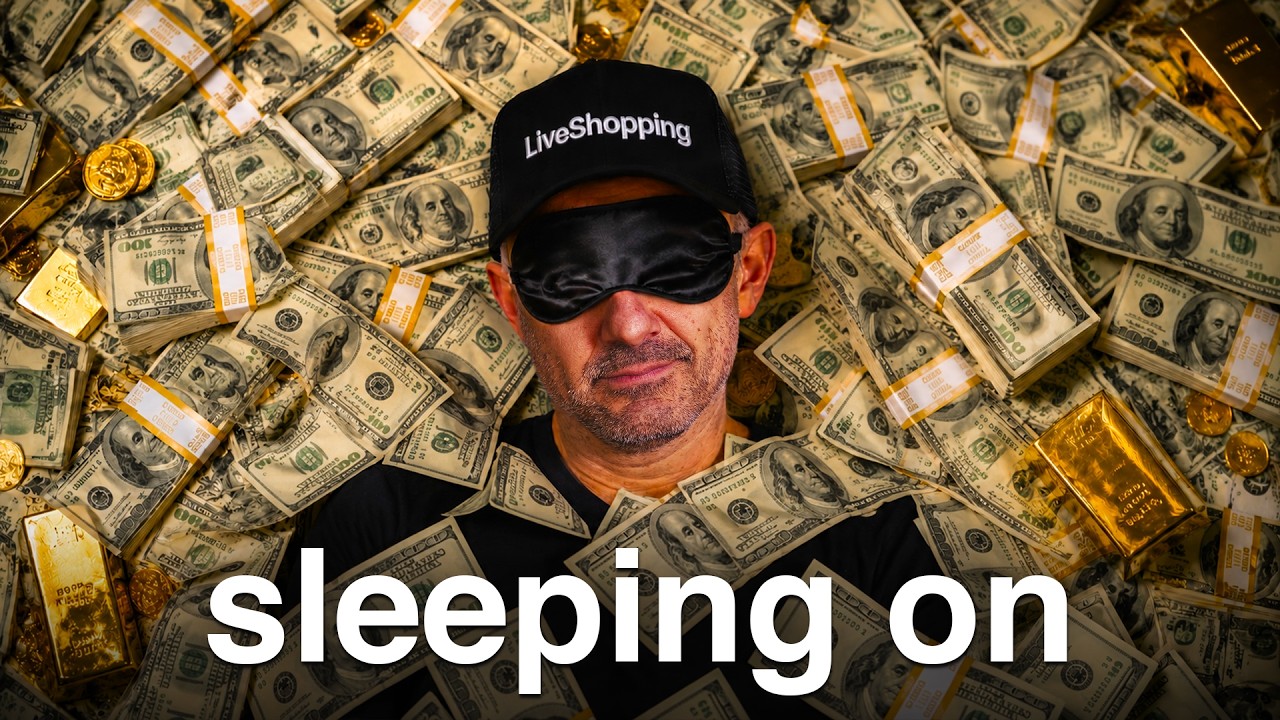

The next major shift in retail is not augmented reality glasses or some distant metaverse experiment. According to marketing strategist Gary Vaynerchuk, the technology that will most visibly affect brand P&Ls in 2026 is already running on your phone — and most companies are still ignoring it. Live social shopping, a format that has generated roughly $800 billion in gross merchandise value in China this year alone, is arriving in the U.S. faster than the industry is ready for.
What Live Shopping Actually Is
The simplest definition: QVC, but inside social media. When you scroll through TikTok's For You page, a live broadcast can surface mid-feed — a host selling products in real time, taking questions, demonstrating goods, and driving immediate purchases. These aren't niche streams. Individual shows are generating billions in GMV. The format is native, interruptive in the way a good ad should be, and increasingly difficult to distinguish from entertainment.
Vaynerchuk has been tracking live shopping in China for over a decade but only began discussing it publicly in the last two years — once it reached a scale in the U.S. that made it operationally relevant for brands here. At Expo West, he observed a staggering number of brands scaling from zero to $100 million in top-line revenue built entirely on TikTok live shopping and creator affiliate infrastructure.
 03:20
Audience raise-of-hands showing most attendees are not on TikTok
Watch at 03:20 →
03:20
Audience raise-of-hands showing most attendees are not on TikTok
Watch at 03:20 →
The Numbers Brands Are Underestimating
Two data points stand out. First, TikTok Shop's live commerce ecosystem is producing tens of billions in GMV domestically — and growing. Second, Whatnot, a standalone live shopping app that most of the room at this conference had never heard of, did $12 billion in gross merchandise value last year. The app has a dedicated category for confections and candy, where sellers move product in bulk formats that echo the Costco model — a format this industry actually lived through when big-box retail first emerged.
The China comparison is instructive. An $800 billion GMV live shopping market means consumers are buying homes, cars, and luxury goods through livestreams. The U.S. is following the same curve, just years behind. CPG and confectionery brands that dismiss the channel as a novelty are making the same mistake retailers made when they dismissed e-commerce in 1999.
This Is an Addition, Not a Replacement
The instinct many legacy brands have — to frame new channels as threats to existing ones — is the wrong lens. Live shopping will not empty the candy aisle at Albertsons. People will still stop for gas and grab something off the counter. Costco will still move pallets. But live shopping will steadily take share, and brands that aren't present will lose ground they won't easily recover.
The smarter reframe is to treat live shopping as an additive production asset. A two-hour live selling session is also a content shoot. One moment — a host's reaction, a product reveal, an unexpected demonstration — can be clipped into a 40-second video that outperforms anything a brand has ever run in paid social. The economics are radically different from traditional media production. Creative agency retainers, million-dollar ideation fees, and bloated production budgets made sense in a broadcast world. They are deeply misaligned with a world where a single organic post can move more product than a national campaign.
What One Viral TikTok Did for Walgreens
Vaynerchuk points to a case that should be required reading for every CPG brand manager. A single organic TikTok post about Walgreens' mango gummy candy sold out the product in every Walgreens location across the United States. Demand was so acute that the candy was relisted on eBay at four to fifteen times the retail price.
No traditional marketing vehicle — television, display, out-of-home, even a Super Bowl spot — can reliably produce that outcome. One piece of content, no paid amplification, national sell-through, and secondary market price premiums. That is the ceiling of what this medium can do. Most brands have not even walked through the door.
What Legacy Brands Should Do Now
The ask is not to abandon existing channels or restructure the entire business around TikTok overnight. The ask is to stop treating live social shopping as someone else's problem. Legacy companies — those with 30 or 40 years of distribution relationships and brand equity — have real advantages in this format: product depth, brand recognition, and the inventory to support demand spikes.
The practical starting points are straightforward: get the brand active on TikTok Shop, explore Whatnot's confections category, identify creator affiliates already selling adjacent products, and run a live session as a test. Treat the session as a dual-purpose asset — revenue event and content library. The brands doing this today are not startup disruptors. Many of them are small to mid-sized operators who simply decided to show up. The window to be an early mover in this space is closing, but it has not closed yet.