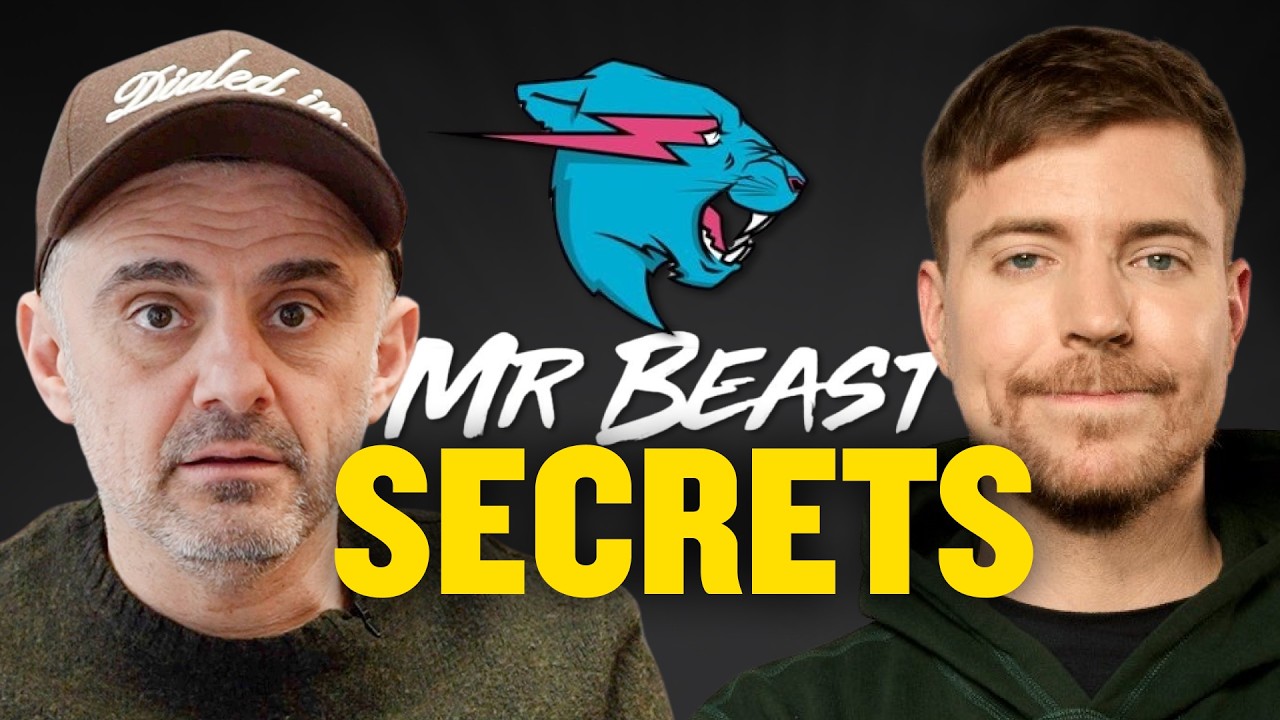

MrBeast is not an anomaly. He is a preview — proof that a single human being can build an empire from scratch, piece of content by piece of content, starting with nothing but a camera, a bedroom, and consistency. That's the argument Gary Vaynerchuk makes, and it's one with significant implications for anyone creating on the internet today.
The Receipts Are Real
What makes Jimmy Donaldson's story so instructive isn't the scale he's reached — it's the paper trail he left getting there. There are early videos of him sitting in his room in South Carolina with almost no views. Clean-cut, earnest, unknown. You can watch the entire progression. That transparency of process is the same reason Vaynerchuk points to his own origins: the first episode of Wine Library TV, shot on a $300 camera with no mic and no lighting, a 31-year-old working in a liquor store.
 03:45
Clip from the first episode of Wine Library TV, Gary Vaynerchuk at the wine store
Watch at 03:45 →
03:45
Clip from the first episode of Wine Library TV, Gary Vaynerchuk at the wine store
Watch at 03:45 →
Both stories share the same architecture: start in public, stay consistent, improve with every repetition. Beast did it bigger and better than anyone — but the method is replicable. The receipts exist precisely so no one can claim it happened by magic.
All the Platforms Are Still Underpriced
One of the sharpest points in this conversation is about attention economics. Every major platform — YouTube, YouTube Shorts, TikTok, Instagram, Facebook, Snapchat, X — is still underpriced relative to the attention it commands. That means the opportunity hasn't closed. What changes over time is the threshold for success.
When a platform is new and underutilized, being good is enough to break through. As the platform matures and competition floods in, you have to be great. On Instagram today, remarkable content is the minimum viable product. That's supply and demand applied to attention. The window is never fully shut, but the entry bar rises continuously — which means the best time to start is always now, and the cost of waiting is real.
Live streaming, in particular, is flagged as currently underpriced. The ecosystem around Twitch, Kick, TikTok Live, and YouTube Live represents a meaningful attention opportunity that hasn't yet been saturated. MrBeast, characteristically, already knows this — he's been spending time with streamers precisely because he tracks where attention flows before the crowd arrives.
The Algorithm Is Just a Report Card
There's a framing debate in creator circles about whether to optimize for the algorithm or for the audience. Vaynerchuk's answer is that the distinction is false. The algorithm is the report card. It scores how well your content served real people. Saying "make it for the algorithm" and "make it for the audience" are descriptions of the same action — the algorithm simply makes the grade visible.
MrBeast talks about audience obsession, and that instinct is genuine. But he was also savant-level skilled at the thumbnail — a deeply algorithmic craft. Both things are true simultaneously. Audience empathy and platform mechanics aren't opposing forces; they're the same pursuit measured differently.
The Creator Is the Studio
The deeper shift MrBeast represents isn't about YouTube fame — it's about ownership structure. The creator is now the studio. MrBeast has a production infrastructure. Vaynerchuk's operation is a production company. The trajectory for serious creators runs through consumer packaged goods, supply chains, original IP, and direct distribution — not licensing deals with traditional gatekeepers.
Vaynerchuk's book, The Individual Empire, frames this explicitly. He points to MrBeast, Steven Bartlett, Alex Cooper, and others as early instances of a pattern that will repeat at scale. His own comic book project — a character he invented, a story his team created, a physical product sold via live streaming — is a small version of the same model.
11:20
Gary Vaynerchuk holding his self-published comic book, created and sold independently
Watch at 11:20 →
In 2009, Vaynerchuk wrote Crush It with a single claim: you can make a living creating content on the internet. That was the radical idea at the time. The new claim is bigger — you can build an empire on the back of a single human being's creative vision. Beast is the proof of concept.
Beast Games and What Hollywood Finally Learned
Beast Games — MrBeast's large-scale competition series produced with Amazon — matters beyond its viewership numbers. It was a cultural lightning rod, but more specifically it was a message to Hollywood: the translation from internet-native creator to prestige screen is not only possible, it was always possible. The industry simply hadn't believed it.
The significance is systemic. When a creator of MrBeast's scale succeeds in a traditional entertainment format while retaining creative control, it clears a path for others. It signals to platforms and studios that internet-native creators can lead projects — not just appear in them. Amazon, by all appearances, gave Jimmy the infrastructure and creative latitude he needed. That model, if it becomes a template, changes the negotiating position of every large creator working toward the same goal.
The longest-term impact may be cultural rather than commercial. There are 13, 14, and 15-year-olds watching right now who are dreaming differently because of what Jimmy Donaldson built. That's not a small thing. Scaled ambition is contagious, and MrBeast made the ceiling visible — and then blew through it.