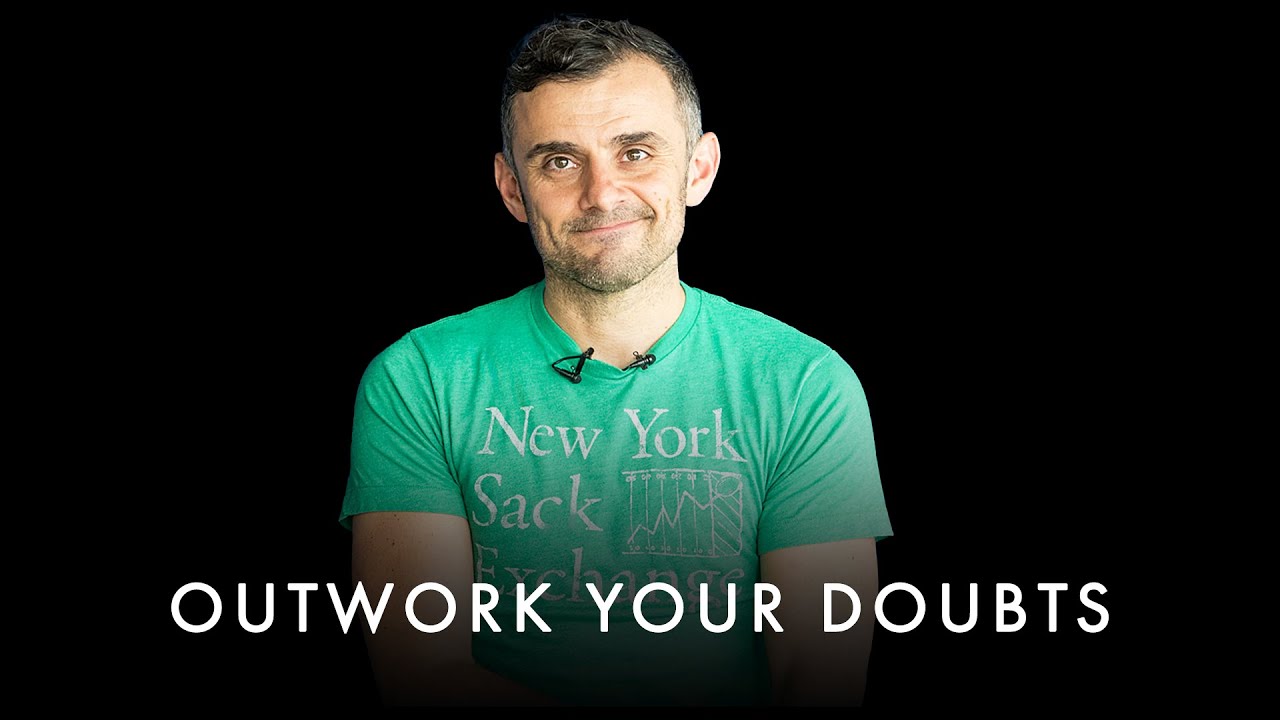

Most people who dream of building something meaningful are not stopped by lack of resources, bad luck, or the wrong market. They are stopped by the noise in their own heads—by comparing themselves to others, waiting for the perfect moment, and mistaking hesitation for strategy. Gary Vaynerchuk has been making this argument for decades, and the core of it has not changed: you have more time than you think, you are more capable than you believe, and the tools available to you right now are the most powerful in the history of commerce. The only question is whether you will use them.
You Have Far More Time Than You Think
Speaking to a 19-year-old in the audience, Vaynerchuk made a point that cuts against nearly every anxiety young people carry about falling behind. At 19, he said, you could spend the next 19 years making every wrong decision of your life and still be young enough to start over and win. The math is simply not as punishing as it feels.
He spent ages 22 to 34 working six days a week, twelve hours a day, building his father's liquor store from $3 million to $60 million in revenue—and left owning none of it. He started his own life at 34. That context shapes everything about how he talks to people in their twenties and thirties who worry they are already behind. The game is not over at halftime. People in their fifties who think they are winding down may be forty years from the end.
The real enemy is not failure. It is the endless internal debate about whether to start. There are eighty-year-olds still having that debate. You are not wrong until you are dead—and even then, you could spend forty years being wrong, figure it out at fifty-nine, and have a decade that makes the whole arc worthwhile.
FOMO Is a Symptom of Low Self-Esteem
When the 19-year-old admitted he looked around at peers who seemed to be further along, Vaynerchuk did not offer comfort. He challenged the premise entirely. The friends flashing diamonds on Instagram are better at performing confidence than they are at actually having it. Their lives have nothing to do with yours.
He offered his own version of this story: at 26, he was bagging bottles of champagne at the liquor store and carrying them to the cars of friends heading to parties he was not attending. In that scene, everyone would have assumed he was losing. They would have been wrong.
FOMO, he argued, is a structural problem of self-esteem. You want what someone else has without understanding what it cost them. Or you feel resentment—toward the person whose parents fund their lifestyle, for instance—without recognizing that person carries their own insecurities about whether anything they accomplish will ever be truly theirs. The fix is not to stop caring about success. It is to stop measuring your progress against anyone else's highlight reel and start playing an inside game.
Dreams Require Sacrifice—and Nobody Is Entitled to Their Dream
Vaynerchuk is relentless on this point and refuses to soften it. You are not entitled to your dream. Nobody is born deserving to tour the world as a dancer or earn $200,000 giving a speech. Those outcomes require bleeding for them—not occasionally, but consistently, over years, in ways that require real sacrifice.
This means selling your car if your car payment is eating your margin. It means moving if your city is too expensive. It means doing side hustles—flipping clothes on eBay, picking up extra work—to fund the thing you actually want to build. People who say they want extraordinary outcomes while refusing to sacrifice ordinary comforts are not in a real pursuit. They are in a fantasy.
He draws a sharp line between patience and complacency. Patience is actively building something over a long time horizon without needing external validation at every step. Complacency is using patience as cover for not starting. They are not the same word, and conflating them is one of the most common ways talented people rationalize inaction.
Accountability Is the Shortest Path to Happiness
The thread running through every exchange in this conversation is accountability—the decision to locate the cause of your outcomes inside yourself rather than outside. Vaynerchuk frames the absence of accountability as the real pandemic: a culture in which everything is someone else's fault, from politicians to parents to spouses, and in which people seek affirmation for their excuses rather than honest feedback about what to change.
He is careful to distinguish this from dismissing real hardship. When someone shares genuine trauma, the right response is compassion first—sometimes hours of it. But at some point, compassion without accountability becomes a trap. Other people have gone through the same trauma and, through therapy, discipline, and time, reached a functional and even happy place. That fact does not invalidate the pain. It proves the pain is survivable.
His framework is stark: complaining gives people a short-term identity. It provides an endorphin hit, a temporary excuse, a band-aid over insecurity. But it does not move anything. The moment you accept that your situation is your responsibility—even the parts that genuinely were not your fault—you gain actual agency over what happens next. That is when things start to shift.
He applies this logic to parenting too. Parents who financially support adult children are often trying to express love, but the unintended message received by the child is: I do not think you are capable. The result is not gratitude. It is subconscious insecurity that compounds over time. Grit, he argues, is teachable—but it cannot be taught while someone else is absorbing every consequence of your decisions.
Organic Social Media Is the Greatest Free Opportunity in Business History
The second half of Vaynerchuk's argument shifts from mindset to mechanics, and it centers on a single observation: organic social media is free, and almost no one is treating it with the seriousness that fact deserves.
For the first fifteen years of social media, the game was about accumulating followers and then pushing content to a percentage of them—essentially email marketing with a different interface. That model changed. The TikTokification of every major platform means that a single piece of content is now judged entirely on its own merits. A person with no followers and no history on a platform can post something resonant today and reach more people than someone with fifteen million followers who posts something mediocre. Creative finds its audience. That has never been true before in the history of marketing.
For a hundred years, reach required money. You paid the newspaper, the billboard company, the television network. The creative was always subordinate to the distribution spend. Now the creative is the distribution. A well-made video on Instagram or TikTok or YouTube Shorts does not need a media budget behind it to reach a meaningful audience. The algorithm's entire purpose is to keep people watching, so it actively works to put good content in front of people who will engage with it.
This is why Vaynerchuk is so impatient with excuses. Not having time for social media content is, in his translation, not having time to get customers. People who are too busy selling to do marketing have it backwards: strong branding means customers come to you, which frees up time for operations. The brands that are outflanking established players right now—Prime Energy, MrBeast's chocolate, Poppy—are doing it because they mastered organic content before traditional competitors took it seriously.
His tactical prescription is specific: post across multiple platforms every day, adjust the first second of every video obsessively (because that is when most people decide whether to keep watching), match the tone and format to each platform's audience, and treat every post as data. When something performs well, extract the insight and amplify it. When something fails, treat that as free market research.
He also addresses the agency model directly. Most large advertising agencies are structurally misaligned with their clients' actual interests. They profit from television production, programmatic buying, and award-chasing—none of which necessarily drives business results. Fortune 500 CMOs are often so removed from the platforms where their customers actually spend attention that they do not even have the apps on their phones. This is not a small gap. It is an existential vulnerability for companies that have not yet felt the pressure from smaller, more agile competitors who are winning on organic reach.
The Mental Game Is the Whole Game
Vaynerchuk returns, again and again, to the same foundation: self-esteem. Not the performed confidence of someone who buys status symbols to manage insecurity, but the genuine, quiet security of someone who does not need external validation to know their own worth.
This is what allows him to post content that gets sixty thousand views on a day when he has fifteen million followers, without interpreting it as failure. It is what allowed him to spend his twenties carrying bottles to other people's parties without losing faith in where he was headed. It is what keeps him from taking negative comments personally—because he understands that people who spend their evenings leaving cruel messages on strangers' profiles are not doing so from a place of strength. They are doing it from pain.
The practical implication is this: most people do not post on social media, do not start the business, do not ask for the meeting, and do not try the new platform because they are afraid of being judged. They are valuing a stranger's opinion of them above their own opinion of themselves. That inversion is the source of most stagnation.
The antidote is not to stop caring about quality or feedback. It is to build a foundation stable enough that feedback becomes data rather than verdict. You can hold two things at once: deep competitive hunger and genuine ease with losing. Ambition and patience. Drive and generosity. These are not contradictions. The superpower, Vaynerchuk says, comes precisely from holding both at the same time.