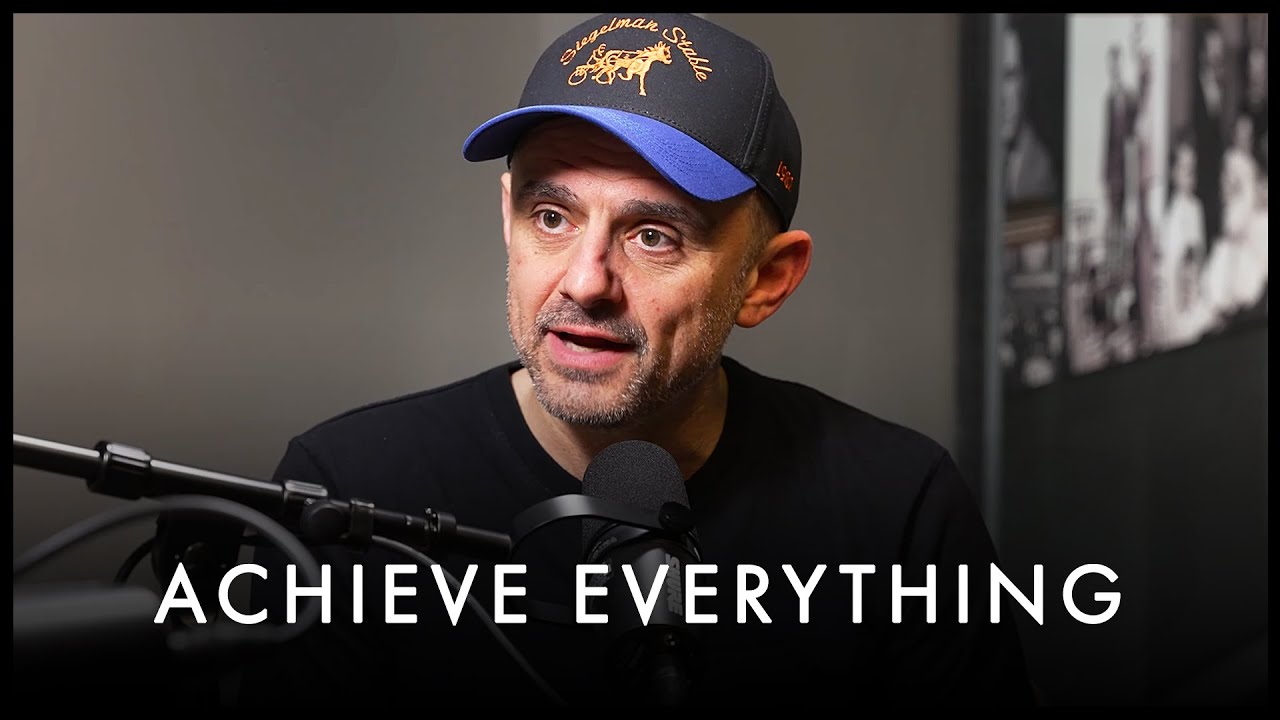

Most people already know what they need to do. They've thought about it on the plane ride over, rehearsed the question in line, and by the time they reach the front, they realize they had the answer all along. That gap — between knowing and doing — is almost never about information. It's about fear. And according to Gary Vaynerchuk, fear is the defining poison of modern society, weaponized by politicians, media companies, employers, and even well-meaning parents to keep people compliant, cautious, and stuck.
Fear Is a Weapon Being Used Against You
Fear drives ratings. Fear drives clicks. Fear is how authority gets maintained and how bad news gets amplified into panic. Vaynerchuk argues that once you recognize fear as a deliberate tool — not a neutral emotional signal — you can start treating it differently.
The practical instruction is blunt: stop listening to they. When someone tells you something won't work, the first question to ask is whether you actually want to live their life. If the answer is no, their opinion is irrelevant. "If you don't want to be like them, they should be the last people you're listening to," he says. Misery loves company, and most unsolicited warnings come from people who need you to fail so their own failure feels less lonely.
The antidote isn't positive thinking — it's consuming information and surrounding yourself with people who are actively fighting fear rather than surrendering to it. What goes into your eyes and ears shapes who you become. This is not metaphor; Vaynerchuk treats it as a practical content strategy for your own mind.
Humility Is Strength, Not Softness
One of the more counterintuitive arguments Vaynerchuk makes is that humility and ambition are not in conflict — they are partners. The failure mode he sees most often at conferences and in business settings is ego masquerading as confidence. When you posture and perform, you may fool 60 or even 90 percent of the room. But you expose yourself to the exact people whose respect actually matters: the 5 to 10 percent of winners who can see straight through it.
"You are not tricking winners. You are losing credibility with winners," he says. The goal is what he calls deep confidence with overwhelming humility — the ability to be completely sure of your capability while remaining genuinely open to others. A person running on pure ego is brittle. A person running on humility backed by real conviction is nearly unbreakable.
The same logic applies to accountability. Vaynerchuk is direct that the habit of blaming — the government, the boss, the economy, the customer — is a trap. Customers always vote with their wallets. If the product isn't working, the responsibility belongs to the builder. Pointing outward is comfortable; pointing the thumb back at yourself is where growth actually starts.
The Courage to Jump — and the Adaptability to Land
Vaynerchuk draws a distinction between things that are scary but safe and things that feel safe but carry real risk. He calls this the hippo-shark problem: people are terrified of sharks because of a movie, while hippos — which kill far more people annually — seem harmless because of a children's toy. In career terms, this plays out constantly. People fear making a move that is genuinely low-risk and recoverable, while remaining comfortable in situations that are quietly destroying them.
The moment of jumping — whether off a cliff in Jamaica or into a new career — is rarely as dangerous as the brain insists. And the regret pattern is consistent: when Vaynerchuk talks to older people who have actually lived full lives, their regrets cluster around the moments they didn't act, not the moments they did. Acts of courage, even ones that don't pan out, do not generate lasting regret. Inaction does.
Closely connected to courage is adaptability. Vaynerchuk considers it one of the foundational elements of his career. The inability to change your mind or adjust course is almost always rooted in fear of judgment — fear that people will notice you shifted, that they'll hold your earlier position against you. But this fear costs more than the embarrassment it's trying to prevent. People who can't adapt get stuck. People who can adapt keep moving, even when things go sideways.
 42:10
Gary Vaynerchuk on stage at VCon referencing the Capable Caterpillar character and VFriends brand logos
Watch at 42:10 →
42:10
Gary Vaynerchuk on stage at VCon referencing the Capable Caterpillar character and VFriends brand logos
Watch at 42:10 →
What You're Teaching Children About Losing
A significant portion of Vaynerchuk's argument connects back to how fear is installed in people early. He is particularly critical of modern parenting's tendency to overprotect children from failure — eighth-place trophies, parents fighting teachers over bad grades, removing any experience of consequence or defeat. The result, he argues, is adults who are genuinely terrified of losing because they were never allowed to practice it.
His own childhood gave him something more useful: losing constantly in sports and school while getting consistent positive reinforcement from his mother about his character and capability. The market — customers at lemonade stands, buyers of baseball cards — provided additional honest feedback. He learned that losing was survivable, that it was in fact the normal texture of any meaningful pursuit.
"I believe your relationship with losing is the greatest indicator of how you're going to navigate life," he says. The goal isn't to stop caring whether you win — caring deeply is part of what makes the process worth anything. The goal is to stop treating losing as a catastrophe, and to start treating it as information and fuel.
The same principle applies to resilience in business. When something goes badly wrong in a company, Vaynerchuk resets his perspective by imagining a phone call that someone he loves has died. Against that frame, almost every business setback becomes manageable. Stress in entrepreneurship is low when your identity isn't wrapped up in the outcome — when you love the process more than the trophy it might produce.
Passion, Practicality, and the Cost of Chasing the Wrong Thing
Vaynerchuk has been making the same argument about passion since his first book in 2009: run toward what you actually care about. Sixteen years later, he says he is more convinced of it than ever. The reason isn't romantic — it's functional. Entrepreneurship is a constant game of losing with occasional wins. The only people who can sustain it long enough to win are people who enjoy the grind itself, not just the imagined destination.
Chasing whatever is currently hot — crypto, cannabis, real estate, AI — without genuine interest is the single most reliable way to fail. The person who hops from trend to trend is always behind and always burned out, because they're doing it for money rather than out of any real engagement with the work.
That said, passion without practicality is delusion. Vaynerchuk is explicit about this. Someone with a week of financial runway announcing they're going to build an augmented reality company is not courageous — they're reckless. The cliff jump in Jamaica was terrifying but physically safe. Many career decisions people frame as bold leaps are structurally unsound. Knowing the difference — between fear of something harmless and genuine caution about something genuinely risky — is a skill worth developing.
The current window for social media content creation is one example of a genuinely low-risk opportunity that fear is causing people to ignore. Distribution is free. The cost of posting content about your passion, your opinions, your craft, is essentially zero. That window will not stay open forever — the internet will evolve the way radio gave way to television gave way to the web. The people who look back in ten years and realize they didn't participate when participation was free will feel the weight of that choice.
The answer to almost every fear, in Vaynerchuk's telling, is the same: practice. You were scared to ride a bike until you rode it. You were scared to swim until you swam. The only way through is through. And the thing you were afraid of almost never looks the same from the other side.