
Everyone who has ever built something worth having started with work that was genuinely embarrassing. The gap between your first attempt and your best work isn't a sign you don't belong — it's the entire point. Alex Hormozi went from a shaky fitness ad filmed in a gym office to breaking the Guinness World Record for fastest-selling non-fiction with $16 million in sales in a single weekend, and owning a portfolio of companies generating over $250 million in aggregate annual revenue. The through-line was simple and uncomfortable: he was willing to be bad for a very long time.
What "Cringe" Actually Means
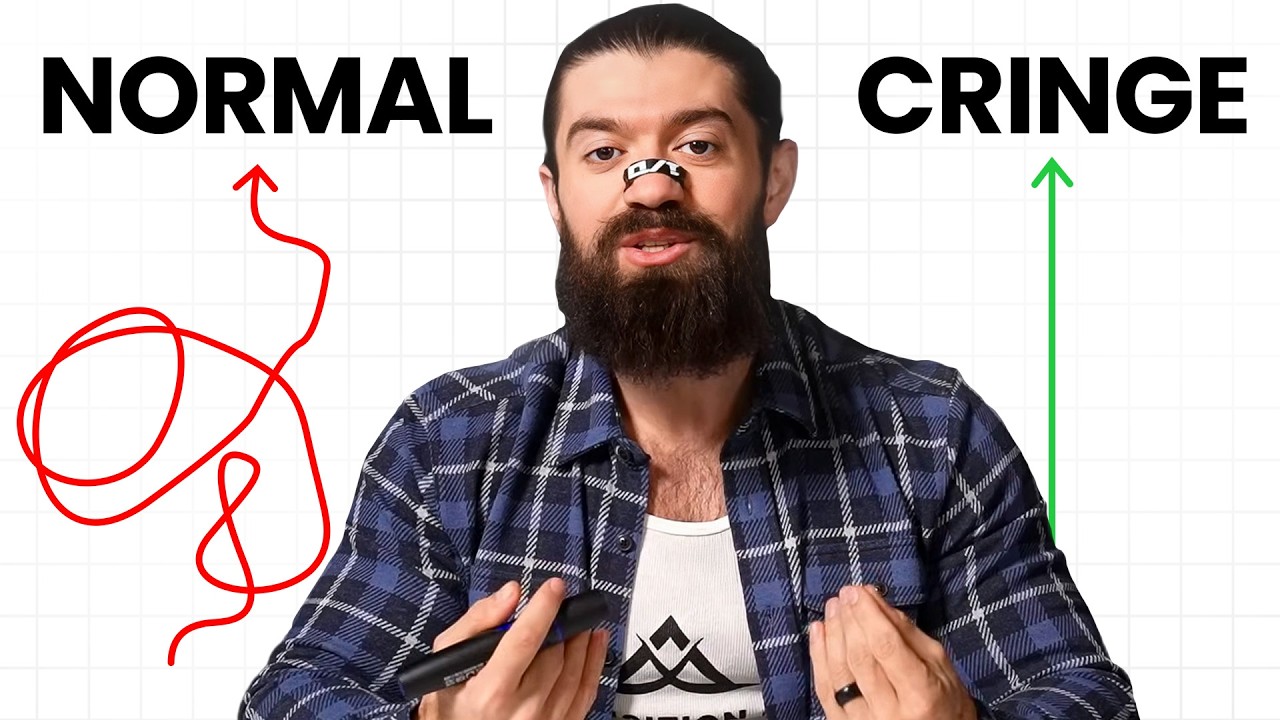
Before dismissing the word as a throwaway insult, it's worth understanding what it actually signals. Shame is breaking someone else's rules. Guilt is breaking your own. Cringe is something different — it's supposed secondhand embarrassment, someone saying I'm embarrassed for you. But that framing is a defensive status play. When someone calls what you're doing cringe, they're announcing that your movement is threatening their relative position. Translated honestly, it means you're beginning to change your status, and therefore you're on the right path.
The more useful question is: whose rules are you breaking, and did you ever agree to them? A rule is just an if-then statement. Is it actually true? How do we know? And why does it matter?
Caring Is Always Cringe — That's the Point
You can make literally anything sound cringe by describing it with the right tone. Bodybuilding: obsessing over muscles, oiling up, and posing in tiny trunks on a stage for strangers. Competitive chess: staring at a board in dead silence, obsessing over wooden pieces like your life depends on it. Making YouTube videos: setting up lights to talk to a camera like an idiot while no one's watching, editing for hours for a handful of views. Writing a book: locking yourself away for months pouring your soul into words most people will never read.
Anyone who cares about anything is cringe. The only people who genuinely believe caring isn't cool are people still in high school — or people who got older but never grew up. People who mock you for trying hard have usually never taken anything seriously in their own lives. And it shows.
The worst version of this trap, though, is being scared of looking cringe. Because when you mock someone else's passion or commitment, the honest question is: do you hate them for committing to something, or do you hate yourself for lacking the guts to commit to anything?
The Archive: What the Beginning Actually Looks Like
To make this concrete rather than theoretical, here is what the early work actually looked like.
 04:45
Alex's very first fitness advertisement, filmed at his gym United Fitness
Watch at 04:45 →
05:10
Alex's first 'professional' ad, shown for comparison to the original
Watch at 05:10 →
05:30
First social media post asking for customers, described as 'hey please give me money'
Watch at 05:30 →
05:45
First YouTube video and first Instagram post from early in Alex's content career
Watch at 05:45 →
04:45
Alex's very first fitness advertisement, filmed at his gym United Fitness
Watch at 04:45 →
05:10
Alex's first 'professional' ad, shown for comparison to the original
Watch at 05:10 →
05:30
First social media post asking for customers, described as 'hey please give me money'
Watch at 05:30 →
05:45
First YouTube video and first Instagram post from early in Alex's content career
Watch at 05:45 →
Ninety days after that first ad, he lost everything for the second time. That's when he started his first podcast — not to build an audience, but to document lessons so he'd have something to look back on as his career progressed. The thinking was simple: if Buffett, Bezos, or Musk had kept video diaries of the come-up rather than only the peak, those would be invaluable artifacts to learn from. Most people don't document the struggle because they're ashamed of it — the same way someone who's overweight avoids photos. But if you actually believe you're going to win, the struggle becomes part of the story you'll want to tell.
Document the Journey You're Ashamed Of
One of the few genuine regrets in this story is not documenting more of the early struggle. The moment that changed was the day the bank account hit $1,000 after losing everything. That became the conscious start of the comeback story — documented on purpose, because belief in the outcome demands evidence of the beginning.
The advice is direct: document more. Not when things are polished. Now. Kanye was documenting in the very early days because he believed so completely that he was going to win. The documentation wasn't vanity — it was conviction made visible.
The Only Path Through Is Willingness to Be Bad
Charlie Munger put it plainly: the world is too rational a place to reward the undeserving. To get what you want, you must deserve what you want. And the only way to get good is to be willing to be bad for a very long time.
Your first product will be cringe. Your first content will be cringe. Your first pitch, your first ad, your first attempt at anything will be cringe. That's not a disqualification — it's the entry fee. The people who make it are not the ones who avoided embarrassment. They're the ones who accumulated enough bad reps to eventually produce something good.
The formula is not complicated: start, take feedback, get better, don't stop. The only people who never produce cringe are people who never produce anything at all.