
JavaScript became the most popular programming language in the world largely because of three open-source projects built by a single, largely forgotten developer: Jeremy Ashkenas. Between 2009 and 2012, Ashkenas released Underscore.js, CoffeeScript, and Backbone.js — each one solving a critical flaw in JavaScript at the exact moment the web needed it most. Without his work, the modern frontend ecosystem might look completely unrecognizable today.
How Did JavaScript Go From Joke to World Domination?
To understand how JavaScript became the dominant language of the web, you have to understand how genuinely terrible it was in 2009. Famously designed in 10 days by Brendan Eich, JavaScript had no standard library, no modules, no classes, and bizarre scoping rules that could silently ruin your code. Every browser interpreted it differently. If you wrote JavaScript professionally, the broader developer community made sure you knew how they felt about that.
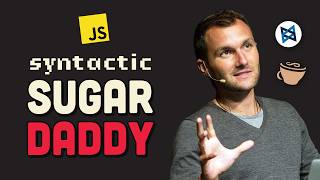 0:45
The state of JavaScript development in 2009 — before modern tooling existed
Watch at 0:45 →
0:45
The state of JavaScript development in 2009 — before modern tooling existed
Watch at 0:45 →
But over the next decade, something shifted. JavaScript went from a language no serious developer touched without a jQuery hazmat suit to arguably the most widely used programming language on the planet. There are many reasons for this transformation — Node.js, the rise of single-page applications, massive investment from Google and Facebook — but one of the most underrated threads runs through the work of a single developer most people have never heard of.
Who Is Jeremy Ashkenas and Why Has Everyone Forgotten Him?
In 2009, Jeremy Ashkenas was a developer at Document Cloud, tasked with building a heavy client-side JavaScript application. That was unusual for the time. Most serious web development still happened on the server. Client-side JS was for form validation and dropdown menus, not real applications.
Coming from a Ruby background and being forced into JavaScript every day, most developers in his position developed a kind of Stockholm syndrome — they accepted the pain and moved on. Jeremy did not. Instead, he decided to fix it. And then he fixed it again. And then he fixed it one more time.
Over roughly three years, Ashkenas released three separate projects that collectively solved the three biggest problems holding JavaScript back. Each one became enormously influential. Each one was eventually made obsolete as the language absorbed its best ideas. And today, most developers building on those ideas have no idea where they came from.
2:10
Underscore.js filling the gap left by inconsistent browser support for array methods
Watch at 2:10 →
What Was Underscore.js and Why Did Everyone Use It?
Jeremy's first move was to address JavaScript's complete lack of a standard library. In 2009, even basic utility functions that developers took for granted in other languages simply did not exist reliably in JavaScript. Firefox had shipped some array helper methods — map, reduce, forEach — but Internet Explorer hadn't, which meant you couldn't use them safely in production without polyfilling them yourself.
Underscore.js was his answer: a utility belt library containing roughly 60 helper functions for working with arrays, objects, and collections. It let you write cleaner, more expressive code without worrying about cross-browser inconsistencies. It doesn't sound revolutionary by today's standards, but in 2009, it was the difference between readable code and chaos.
Underscore became so widely adopted that many of its functions were eventually incorporated directly into the JavaScript language specification — making the library itself largely obsolete. That pattern, a third-party library proving an idea is good enough to become a language feature, would repeat itself with everything Jeremy touched.
3:30
CoffeeScript syntax compared to the verbose JavaScript it replaced
Watch at 3:30 →
What Was CoffeeScript and Why Did It Die?
After giving JavaScript a utility library, Jeremy decided the language's syntax itself was too broken to paper over with helpers. So he built an entirely new language that compiled down to JavaScript — a transpiler, before that word was part of most developers' vocabulary.
The problems CoffeeScript was solving were real. JavaScript in 2009 had no classes, so inheritance required manually manipulating a hidden object called prototype in ways that were confusing and error-prone. The only way to declare a variable used hoisting behavior that silently moved declarations to the top of a function, creating subtle bugs. Type coercion from the loose equality operator caused behavior most developers didn't even realize was happening. And every single function required typing out the full word function, leading to deeply nested, ugly callback code.
CoffeeScript fixed all of it with cleaner syntax, meaningful whitespace, implicit returns, and a much more readable way to write classes and functions. The Ruby and Python communities immediately recognized what they were looking at. DHH, creator of Rails, adopted it almost overnight. In 2011, CoffeeScript shipped as the default JavaScript preprocessor in Rails 3.1, meaning every new Rails application in the world was suddenly being written in CoffeeScript on the front end. GitHub, Dropbox, and dozens of major early-2010s startups followed.
For a few years, CoffeeScript was the serious developer's choice for front-end work. Then ECMAScript 2015 — ES6 — landed, and it brought with it classes, arrow functions, template literals, destructuring, default parameters, and spread operators. Sound familiar? They should. Almost every feature that made CoffeeScript appealing was absorbed into JavaScript proper. CoffeeScript had won the argument so completely that it argued itself out of existence.
5:15
Backbone.js MVC structure applied to a real client-side application
Watch at 5:15 →
Every time you write an arrow function, destructure a value, or use template literals in modern JavaScript, you're using ideas that CoffeeScript proved were worth having.
What Did Backbone.js Actually Solve?
By 2010, Jeremy had given JavaScript a utility library and a better syntax. But there was still a third, arguably larger problem: no one knew how to structure a client-side JavaScript application.
If you were building a large front-end-heavy app in 2010, you'd eventually end up with thousands of lines of spaghetti code where your data, your DOM manipulation, and your event handlers were all tangled together with no clear separation. Adding a feature meant hunting through unrelated code. Debugging meant following a thread through a maze.
Backbone.js was Jeremy's solution. At less than 2,000 lines of code, it was a tiny library that introduced a lightweight MVC-style structure to front-end JavaScript. It gave developers Models to represent data, Collections to group models, Views to handle rendering, and an event system that kept everything in sync automatically. For the first time, you could build a serious client-side application with a logical architecture that wouldn't collapse under its own weight.
The adoption was immediate. Backbone powered the early versions of Trello, Airbnb, Hulu, Pinterest, and practically every other startup that needed a real front end between 2011 and 2014. If you were writing JavaScript professionally during that window, you almost certainly wrote Backbone, and you probably thought it was the permanent future of front-end development.
It wasn't. Angular, Ember, and eventually React took Backbone's core ideas and pushed them much further — adding two-way data binding, component-based architecture, and virtual DOM diffing that made Backbone feel primitive by comparison. But Backbone was the library that proved the concept. It demonstrated, for the first time, that you could build serious, maintainable, complex applications entirely on the client side. Every modern front-end framework owes something to that proof of concept.
How Bad Was JavaScript in 2009, Really?
It's easy to look back and underestimate how broken the JavaScript ecosystem actually was before these tools existed. There was no npm. There were no modules. Inheritance required understanding prototypal delegation. Variable declarations hoisted in ways that created unpredictable behavior. The loose equality operator caused type coercion that surprised even experienced developers. Every browser had its own interpretation of the spec, so code that worked in Firefox might silently fail in Internet Explorer.
Writing a large client-side application in this environment wasn't just difficult — it was widely considered impossible to do well. The fact that we now build entire operating systems' worth of functionality in the browser is a direct consequence of the tooling and patterns that emerged from this era, many of which trace back to one developer at a document management company who decided the status quo wasn't acceptable.
Why the History of JavaScript Matters Today
The story of how JavaScript went from industry punchline to the world's most popular programming language is also the story of how open-source software can move faster than language committees and browser vendors. Jeremy Ashkenas didn't wait for the ECMAScript standards body to fix JavaScript's problems. He fixed them himself, proved they were worth fixing, and the language eventually caught up.
That pattern — a library proving an idea, the language absorbing it, the library becoming obsolete — is actually a sign of success, not failure. Underscore, CoffeeScript, and Backbone all "died" because they won. The ideas they championed became so obviously correct that they were baked into the foundations of the modern web.
Next time you write an arrow function, use Array.map(), or reach for a front-end framework with clearly separated concerns, there's a straight line from that moment back to a developer at Document Cloud in 2009 who just wanted to build something without losing his mind. Most people have never heard of Jeremy Ashkenas. That's probably worth fixing.