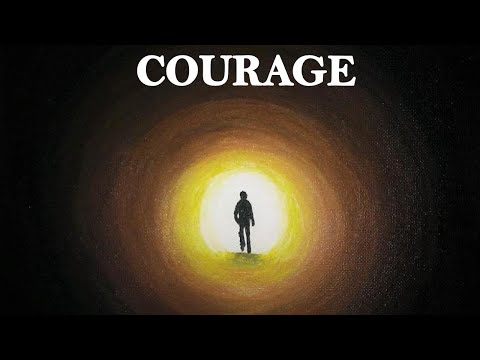
What is nihilism, and how do you actually overcome it? Most answers tell you to find purpose, build resilience, or simply distract yourself. Japanese philosopher Keiji Nishitani thought all of those strategies were doomed to fail. His radical answer: you don't overcome nihilism by fighting it — you overcome it by going all the way through it, until nothingness itself dissolves into something far greater. As he put it, "The fundamental problem of my life has always been the overcoming of nihilism through nihilism."
What Is Nihilism and Can It Actually Be Overcome?
Nihilism is the experience that life has no inherent meaning — that beneath everything we value, there is a void. But Nishitani refused to treat this as merely an intellectual puzzle. For him, nihilism was a deeply personal, existential crisis. When his father died and he fell gravely ill at just fourteen years old, the ordinary scaffolding of life collapsed. Questions like What should I do today? transformed into the unbearable: Who am I? Why do I exist at all?
This is what makes nihilism so dangerous and so important. It is not an external problem you can philosophize your way around. It erupts from within the self. And most of us, Nishitani observed, spend our lives running from that eruption — burying ourselves in work, entertainment, and routine to avoid staring into the abyss beneath our feet.
The problem is that avoidance only makes it worse. When we try to wall nihility out, we become self-enclosed and brittle. Like struggling in quicksand, the harder we resist nothingness, the faster we sink. Nishitani's key insight was that nihilism has not been taken seriously enough. We have not stared into the abyss long enough for it to stare back — and transform.
Who Was Keiji Nishitani and What Did He Believe?
Born in 1900 in Japan, Keiji Nishitani was a central figure of the Kyoto School — a philosophical movement that brought Western and Eastern traditions into genuine dialogue rather than simply comparing them from the outside. He studied under Martin Heidegger in Germany from 1937 to 1939, carried Nietzsche's Thus Spoke Zarathustra like a personal bible, and practiced Zen meditation for over two decades under the influence of Zen master Dōgen.
His two most important works are The Self-Overcoming of Nihilism — the first major introduction of Nietzsche's ideas to a Japanese audience — and his masterpiece, Religion and Nothingness. Together, they trace a philosophical journey from European existentialism into the depths of Zen Buddhist insight, arriving at a vision of reality that is simultaneously rigorous and deeply liberating.
Nishitani died in Kyoto at the age of 90, leaving behind a 26-volume collected works, a personal library of over 5,000 books, and a philosophy that remains startlingly relevant to anyone asking what makes life worth living.
What Is the Kyoto School and How Does It Bridge East and West?
The Kyoto School does not simply borrow Western concepts and dress them in Eastern clothing. It engages Western philosophy on its own terms — Hegel, Nietzsche, Heidegger, Kierkegaard, Sartre — and then asks: what would these thinkers look like if they had also stared into the Zen abyss? What questions do they raise that Buddhist philosophy has already, quietly, been answering for centuries?
For Nishitani, this was not an academic exercise. It was philosophy as a way of life, in which the goal is wisdom and transformation, not merely correct argumentation. The Kyoto School treats philosophy the way Socrates originally intended it: as a practice of living well in the face of death.
What Is the Great Doubt in Zen and Why Does It Lead to Awakening?
In Zen, the Great Doubt is not skepticism about God or science. It is a visceral, consuming uncertainty about one's own existence — a psychological pressure that arises when life stops making sense and the self becomes a question to itself. Nishitani identified this Great Doubt with the nihilistic crisis that drove him to philosophy in the first place.
The Zen tradition holds a striking promise: at the bottom of great doubt lies great awakening. If you doubt fully, you will awaken fully. This is not optimism. It is a description of what happens when someone stops running and allows the full weight of nothingness to land. The Great Doubt, when fully experienced rather than suppressed, exhausts itself. And in that exhaustion, something new opens up.
What Is Śūnyatā (Emptiness) and Why Does It Matter?
Nishitani maps human existence across three fields: consciousness, nihility, and emptiness (Śūnyatā). Each is deeper and more encompassing than the last.
- The field of consciousness is where most of us live all our lives. We experience the world through our subjective representations — our concepts, memories, and projections. As Nishitani puts it, invoking Plato, we sit in the cave of the self, watching shadows on the wall and calling them reality.
- The field of nihility opens when we encounter meaninglessness directly — the terror that nothing is solid, that death is not distant but present at every moment. This is a "death perspective," and most people retreat from it immediately.
- The field of emptiness is what lies beyond nihility when nihility is not fled from but fully inhabited. Śūnyatā is not a grim void. It is absolute nothingness in the sense that it contains no fixed, separate things — and therefore allows all things to arise interdependently, freely, and fully.
On the field of emptiness, the desolate abyss that once separated you from everything else becomes the very ground of intimate connection with all things. Nihility was relative nothingness — a frightening hole in being. Emptiness is absolute nothingness — the negation of negation, which paradoxically becomes the great affirmation of life.
What Does Buddhism Say About the Meaning of Life?
For Nishitani, the religious question is not What is the purpose of religion for me? That framing is already a trap. It treats religion as a tool for the ego, something to be evaluated for its usefulness. The real question religion poses is: For what purpose do I exist?
This shift — from asking what the world offers us to asking what we owe the world — is the conversion at the heart of Buddhist (and genuinely religious) life. It moves us from a self-centered mode of being to one that recognizes our deep interdependence with all of reality. The meaning of life, in this framework, is not a proposition to be discovered. It is a mode of being to be inhabited — one in which the self stops hoarding itself and opens outward.
This is the Buddhist concept of interdependent co-arising and Indra's Net: every thing that exists is linked to every other thing. Not a single being comes into existence without some relationship to every other being. When the ego loosens its grip, this truth — always already present — becomes visible.
What Is the Non-Self and How Does It Free You From Suffering?
The non-self is one of Buddhism's most misunderstood concepts. It does not mean that you disappear or that you don't matter. It means that the rigid, defended, self-obsessed ego is not your truest identity. When you let go of that ego — through the Great Death that follows the Great Doubt — a new self emerges that is paradoxically more alive, more present, and more connected than before.
Nishitani calls this becoming a cosmic individual. Like Kierkegaard's knight of faith, this person looks entirely ordinary from the outside. No special aura, no visible superiority. But every step is charged with invisible cosmic significance, because the individual and the cosmos have ceased to be separate. If you forget yourself, you become the universe.
This is not mystical escapism. It has practical, therapeutic consequences. The acceptance of things as they are — rather than fleeing into fantasy or drowning in ego — is actively used in Japanese psychotherapy to treat anxiety and depression. Presence, not productivity, is the cure.
How Does Zen Practice Dissolve Existential Anxiety?
Nishitani practiced zazen — seated Zen meditation — for more than two decades. He was not doing this for relaxation. He was doing it because he understood something that purely conceptual philosophy misses: you cannot think your way to emptiness. You have to inhabit it bodily, through practice.
Influenced by philosopher and cognitive scientist John Vervaeke's framework, we might say that Nishitani demanded not just propositional knowledge (knowing about things) but participatory knowledge — knowing your place in reality and how to move within it as an agent. Sitting in zazen without trying to accomplish anything is, for a productivity-obsessed culture, radical. It is the practice of being present with existence rather than fighting time, filling it, or killing it.
Having received a human life, do not waste the passing moments. Human life is like a flash of lightning, transient and illusory, gone in a moment.
Nishitani's philosophy is ultimately an invitation: stop running from the void, step into it fully, and discover — on the other side — that you were never alone in the dark. The abyss, gazed into long enough, gazes back with the face of everything that is.