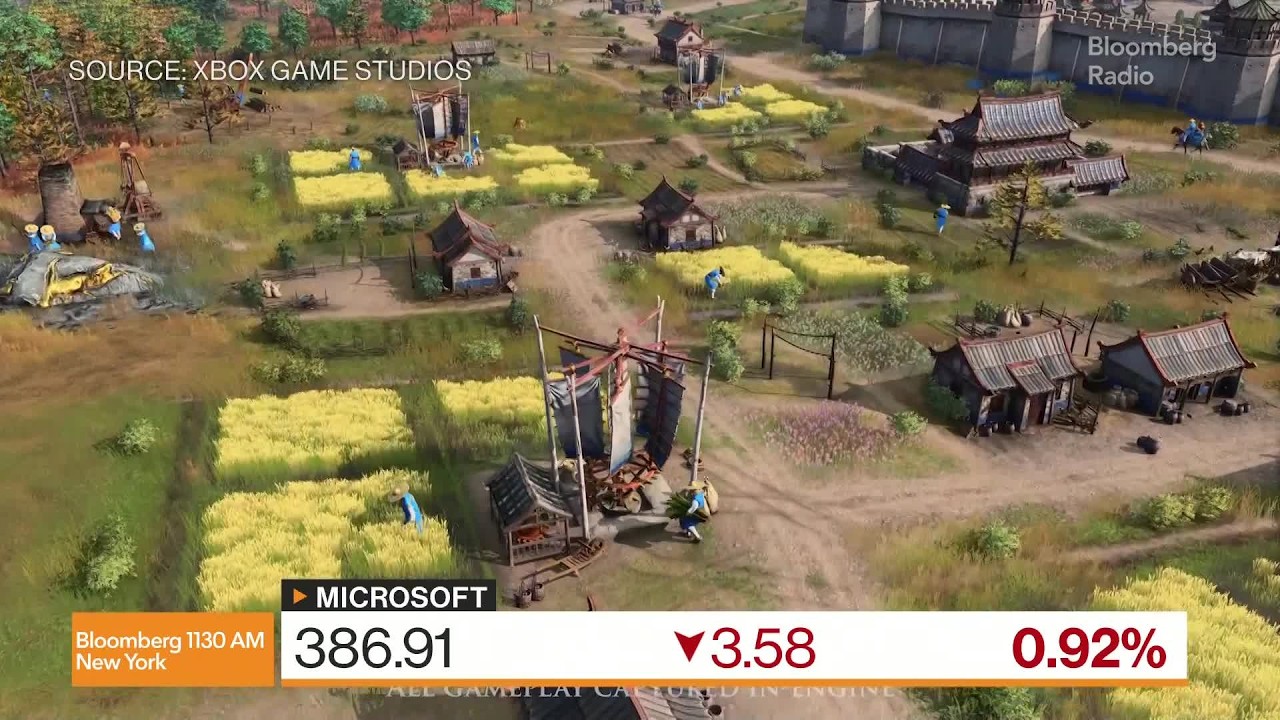

Microsoft is laying off approximately 6,400 employees in 2025, and the hardest hit division is Xbox, which is losing roughly 20% of its workforce. The reason why Microsoft is laying off employees this year comes down to a single, uncomfortable reality: the company is spending enormous sums on AI infrastructure and data centers, and something has to give. Xbox, long a low-margin business, has become the most visible casualty of that financial reckoning.
Why Is Microsoft Laying Off 6,400 Employees in 2025?
The layoffs aren't happening in a vacuum. Across the entire technology industry, companies are scrutinizing where every dollar is going — and a huge portion of those dollars are now flowing into AI development, data center construction, and chip procurement. Microsoft is no exception. With capital expenditures running into the hundreds of billions annually, executives are under pressure to demonstrate that the AI bet will actually pay off.
 00:45
Reporter explains the industry-wide trend of tech companies cutting costs to fund AI infrastructure
Watch at 00:45 →
00:45
Reporter explains the industry-wide trend of tech companies cutting costs to fund AI infrastructure
Watch at 00:45 →
The result is a company-wide push to trim headcount in areas that aren't pulling their financial weight. Sales teams, gaming studios, and support functions are all on the chopping block. Microsoft framed these cuts as a necessary step to reorient the business for the next era of growth — which, in plain terms, means redirecting resources toward AI and cloud while tightening everything else.
Why Is Xbox Cutting 20% of Its Staff?
Xbox is taking the sharpest cuts because its financial performance has simply not kept pace with the rest of Microsoft. According to a note sent to staff by the head of the Xbox division, Xbox is operating at margins that are 3 to 10 times lower than comparable businesses. That is a staggering gap, and it explains why Xbox is the division feeling the most pressure right now.
Beyond the margin problem, Microsoft's massive $69 billion acquisition of Activision Blizzard — one of the largest tech deals in history — hasn't delivered the growth that was promised. A couple of years after closing that deal, the numbers haven't kept up. The hope was that owning a library of blockbuster content would supercharge Xbox's business. Instead, the company finds itself sitting on expensive studios while consumers' attention is more fragmented than ever.
02:10
Discussion of Xbox's margins being 3 to 10 times lower than comparable businesses
Watch at 02:10 →
The response? Spin off content studios, reduce headcount, and refocus on what Microsoft actually believes it can win at: owning the platform, not the content factories.
Is Microsoft Keeping Xbox or Shutting It Down?
Microsoft is not walking away from Xbox entirely — but the version of Xbox that survives will look very different from what it is today. The company has historically struggled with consumer-facing hardware businesses. Smartphones, tablets, and other consumer devices have come and gone at Microsoft without much success. Xbox has been the exception because it found a unique niche blending hardware and software in a way that built a loyal user base.
That said, the days of Microsoft owning a sprawling empire of game development studios appear to be numbered. The new strategy centers on the Xbox platform itself — the ecosystem, the subscription services, the storefront — rather than the content created within it. Think of it less like a Hollywood studio and more like an operating system for gaming. That's the model Microsoft believes it can sustain and grow long term.
How Profitable Is Xbox for Microsoft?
Xbox represents a meaningful chunk of Microsoft's total revenue — people buy a lot of consoles and a lot of video games. But revenue and profit are two very different things, and that's exactly where Xbox runs into trouble. The margins are thin, and the Activision acquisition added significant cost without a proportional boost in profitability.
04:30
Analysis of Microsoft stock being down 20% year-to-date and the dual fears driving investor concern
Watch at 04:30 →
Making matters worse, the component crunch has hit the gaming industry hard. The cost of chips and memory — the raw materials inside every console — has risen sharply. For a business already running at slim margins, a doubling of memory chip prices is a serious problem. It accelerates every financial challenge Xbox was already facing and makes the case for restructuring even more urgent.
How Does Xbox Compare to PlayStation Financially?
It would be a mistake to assume this is purely a Microsoft problem. Sony's PlayStation division faces many of the same headwinds. Console makers broadly are being squeezed by the same memory and chip cost increases that are hurting Xbox. When your core hardware margins are already razor thin and input costs spike, every console sold becomes a smaller win — or potentially a loss.
The content side of the gaming business is also getting harder. Triple-A game development is expensive and slow, and it now has to compete for eyeballs against a much wider range of entertainment options. Streaming services, short-form video, and mobile gaming are all pulling attention away from traditional console gaming. If you're a company that makes money selling content, that is a genuinely tougher market than it was five years ago.
Why Is Microsoft Stock Down 20% in 2025?
Microsoft stock being down 20% year-to-date is notable because this is a company that has been one of the most reliable performers in the market for years. The weakness reflects two competing fears that Wall Street is holding simultaneously.
- Fear one: Microsoft is spending an almost incomprehensible amount of money on AI infrastructure. Data centers, chips, power — the capital expenditures are enormous. Investors are asking whether that spending will ever translate into returns that justify the outlay.
- Fear two: Microsoft's traditional software businesses — the ones that have made it one of the most profitable companies on earth — could be disrupted by the very AI wave it's betting on. If AI changes how enterprise software is bought and used, Microsoft's cash cow could shrink at the same time its AI costs are highest.
These twin anxieties are weighing on a stock that has long been considered a safe harbor in volatile markets. The Xbox layoffs and the broader 6,400-person cut are Microsoft's public answer to those concerns — a signal that leadership is actively managing costs even while it invests aggressively in AI.
What Will Microsoft Say on Earnings Day About the Cuts?
Microsoft is set to report quarterly earnings at the end of the month, and the Xbox restructuring will almost certainly come up. Expect carefully worded language about margin focus and operational efficiency — corporate speak for: we cut a lot of people and we're going to keep cutting where it makes sense.
The broader earnings narrative will likely center on the AI investment thesis. Executives will point to massive CapEx spending as a long-term strategic necessity while reassuring investors that cost discipline is being applied everywhere else. The Xbox cuts are a concrete example of that discipline in action — a visible proof point that Microsoft isn't just spending without accountability.
Whether investors find that reassuring enough to reverse the stock's decline remains to be seen. But one thing is clear: Microsoft is in the middle of a significant transformation, and the 6,400 employees losing their jobs — many of them at Xbox — are paying the price for that pivot.