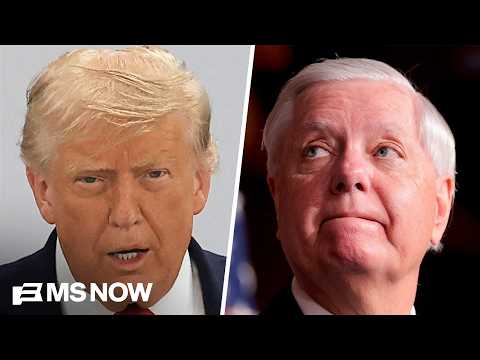
Who is Darlene Graham Nordone, and why was she just appointed to the United States Senate? She is Lindsey Graham's younger sister, a certified optician who has spent years serving visually impaired South Carolinians through the state's commission for the blind. That is genuinely admirable work. It is also, by any honest measure, not a resume for the Senate. She has never held elected office — not city council, not school board, not a single race of any kind. And yet, on a Monday afternoon, the governor of South Carolina announced she would be taking one of the most powerful legislative seats in the country. The question isn't whether she's a good person. The question is: why her, why now, and who actually made this call?
Who Is Darlene Graham Nordone and Why Was She Appointed?
Darlene Graham Nordone is a real person with a real career built around helping others. She worked for years helping blind and low-vision South Carolinians find employment and served on the state's commission for the blind. That work matters and it deserves recognition. But the leap from optician and disability advocate to United States Senator — a body that votes on war powers, confirms Supreme Court justices, and shapes the future of free elections — is not a small one. It's not even a leap. It's a completely different sport.
What makes the appointment impossible to view in isolation is the timing. Before the governor of South Carolina had even held his own press conference to announce the decision, Donald Trump had already posted about it on Truth Social — Monday morning, hours earlier — calling it a "fabulous tribute to Lindsay who loved her dearly." Senator Tim Scott went on television and described her as a "wonderful placeholder." Not a leader. Not a fighter for South Carolina. A placeholder. That single word tells you everything about what this appointment actually is.
What Qualifications Do You Actually Need to Become a US Senator?
Constitutionally speaking, the bar is shockingly low. You must be at least 30 years old, a US citizen for at least nine years, and a resident of the state you represent. That's it. No law degree required. No foreign policy experience. No military service. And as this appointment makes painfully clear, you don't even need to have ever won an election for anything — not a school board seat, not an HOA presidency, nothing.
The framers left it to the political process to filter for competence and public trust. What they didn't fully anticipate was a political environment where the only qualification that seems to matter is whether you'll vote the way the president wants. When the question "can this person do the job?" is never asked, and the only question on the table is "will this person vote how Trump wants?", the constitutional minimums become the entire job description.
Can a Governor Just Appoint a Senator Without a Vote?
Yes, in most states, they can — and South Carolina is one of them. The 17th Amendment allows state legislatures to empower governors to make temporary appointments when a Senate vacancy occurs, with a special election to follow. In practice, this means a single person in a governor's mansion can install a United States Senator, bypassing millions of voters entirely.
This isn't a new or unusual process, but the circumstances here raise serious questions about whether the governor even had meaningful agency in this decision. When the president of the United States announces your appointment on social media before you've held your own press conference, the word "appointment" starts to feel generous. It starts to feel more like an installation.
Who Really Decided This Senate Appointment — The Governor or Trump?
The sequencing of events is hard to ignore. Trump posted on Truth Social Monday morning. The governor's press conference came hours later. Trump also told NBC that Graham's last phone call before he died was Graham telling him the Senate was "all set" for the Save America Act vote. Whether or not that's true, the White House was clearly operating as if this Senate seat was already accounted for before the governor made any public announcement.
This is the part that should concern every voter regardless of party. Governors are supposed to exercise independent judgment when filling vacancies. When the outcome is effectively pre-announced by the White House, that independence disappears — and so does any meaningful check on executive overreach into the legislative branch.
What Is the Save America Act and Why Does This Appointment Matter?
The Save America Act is a bill that would require voters to show a passport or birth certificate to re-register to vote. It has failed in the Senate twice this year, losing both times by a vote of 48 to 50. The same four Republicans have voted against it each time: Collins, Murkowski, Tillis, and Mitch McConnell. Every single Republican vote in the chamber is now worth its weight in gold, and adding even one more reliable yes vote could be the difference between that bill passing or failing.
That context makes the timing of this appointment impossible to dismiss as coincidence. When a president jumps a governor's announcement to install what Tim Scott himself called a "placeholder" in the Senate — in the same week a voter suppression bill is sitting just a couple of votes short of passage — you don't need a conspiracy theory. You just need a calendar and a vote count.
Why Did Lindsey Graham Flip and Start Supporting Trump?
This is where the story gets genuinely interesting, because the answer isn't buried in rumor or speculation. It's sitting in FEC filings, available to anyone willing to look.
Back in 2017, a South Carolina political blogger published a piece literally titled "Dead Senator Walking" about Graham. His approval ratings at home were tanking. His own state's Republicans couldn't stand him. Graham knew exactly what he had to do. He even told the New York Times directly: "I went from, okay, he's president to, how can I get to be in his orbit?"
Then came the Kavanaugh hearings in October 2018. Graham delivered his now-famous red-faced, finger-wagging performance for the cameras — and his approval rating in South Carolina jumped 21 points in just six months, from 51% to 72%. The Dead Senator Walking was suddenly untouchable. And right behind the approval ratings came the money.
Record fundraising quarter. Then another record. The biggest single quarter in South Carolina Senate history. And here's the detail that really lands: approximately 87% of that money came from out of state. South Carolina didn't buy Lindsey Graham's loyalty. The national MAGA fundraising machine did. The Adelson family alone dropped a million dollars into his super PAC.
Graham did briefly try to reclaim his conscience. On January 6, 2021, he stood on the Senate floor and declared, "Count me out. Enough is enough." That lasted 103 days. Because 103 days later, a brand new committee registered with the FEC — the Trump Graham Majority Fund. A joint committee with both their names on it. Committee ID: C0000777219. You can look it up right now on opensecrets.org. It's public record.
Trump didn't have something on Lindsey Graham. Trump gave something to Lindsey Graham. Money, relevance, political survival. The deal was never hidden. It was always sitting in the open.
What Is the Trump Graham Majority Fund and How Do You Find It?
The Trump Graham Majority Fund is a joint fundraising committee registered with the Federal Election Commission bearing both Donald Trump's and Lindsey Graham's names. It was established in April 2021 — just over three months after Graham's "enough is enough" speech. The committee ID is C0000777219 and it is fully searchable through the FEC's public database and through opensecrets.org.
This is the part of political analysis that cuts through all the noise. You don't need anonymous sources or leaked documents. The financial architecture of political loyalty is publicly filed, legally required, and sitting there for any citizen to examine. When you want to understand why a politician does something that seems to contradict everything they claimed to stand for, follow the money. It's almost always already been disclosed.
What Does This Mean for Democracy Going Forward?
The Darlene Graham Nordone appointment is a symptom of something larger. It represents a system where the question of whether someone is qualified to serve in the United States Senate has become completely irrelevant. The only question being asked — and answered before the governor even calls his press conference — is whether the person will vote the way the White House wants.
A certified optician who has done genuinely good work for vulnerable people in her state is being asked to walk into a chamber that votes on war, confirms lifetime judicial appointments, and is currently deciding whether to make it harder for Americans to vote. Not because of anything she has done, built, or fought for politically. Because of her last name and her voting hand.
Whether you support Trump's agenda or oppose it, the precedent here should concern you. When Senate seats are effectively pre-announced by the White House before governors hold their own press conferences, when the word "placeholder" is used openly on national television, and when the timing of an appointment lines up perfectly with a stalled vote on a major piece of legislation — the system is not working the way it was designed to work.
When the Save America Act vote comes back around and her name gets called, you'll already know exactly how we got here. Start with opensecrets.org. The answers are already there.