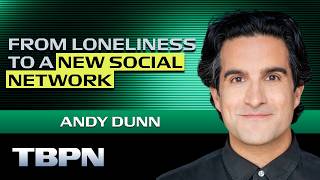
Making friends as an adult is genuinely hard — and Bonobos founder Andy Dunn knows it better than most. After moving back to Chicago during the pandemic, Dunn had a stark realization during a session with his psychiatrist: he had no local friends. Not one. That uncomfortable truth sent him down a rabbit hole that eventually became Pi, an app and AI agent designed to solve the adult friendship crisis by building infrastructure for your entire social life. Here's everything you need to know about how it works, where it's headed, and why Dunn thinks Pi could become the next great American social network.
Why Is It So Hard to Make Friends as an Adult?
When Dunn's psychiatrist asked him, "When's the last time you had dinner with a friend?" — he couldn't answer. This was 2021. He and his wife had just moved from New York to Chicago with their young son. He thought it would be a homecoming. Chicago was where he built Bonobos, where he met his wife, where his parents and sister lived. What he discovered instead was that none of his actual friends lived there anymore.
 02:14
Andy Dunn describes the moment his psychiatrist asked when he last had dinner with a friend — the origin story of Pi
Watch at 02:14 →
02:14
Andy Dunn describes the moment his psychiatrist asked when he last had dinner with a friend — the origin story of Pi
Watch at 02:14 →
"I have friends," Dunn explained, "just none of them live here." That distinction cuts to the heart of why adult friendship is so hard. Life moves us. Cities change. Careers pull people in different directions. And unlike college or early career years, there's no built-in social structure forcing you into proximity with potential friends.
Add a pandemic on top of that, and the problem becomes acute. But Dunn didn't just feel sorry for himself — he got curious. How do you make friends without feeling lame? How do you put yourself out there without an awkward app that treats friendship like a dating profile? Those questions became the founding brief for Pi.
Is Social Media Making the Loneliness Crisis Worse?
There's a painful irony at the center of the modern loneliness epidemic: we've never been more "connected" and never felt more alone. Dunn is direct about this tension. The platforms that hooked a generation on digital interaction have little incentive to push users toward in-person meetups. Every Saturday morning you spend doom-scrolling is a Saturday morning you didn't go to a run club.
08:45
Dunn explains how Pi's three core tabs — Events, Communities, and People to Meet — work together to build a social life
Watch at 08:45 →
"The only way to get off these phones is through our phones," Dunn said — and he means it as a strategy, not a contradiction. Pi is betting that the same influencers who built massive followings on TikTok and Instagram are now uniquely positioned to redirect those audiences toward IRL experiences. One of Pi's newest creators, Nadia Okamoto — who has over 4 million TikTok followers — runs a run club out of New York called Zooies. She's telling her audience to put the phone down and come run with her on Saturday.
Dunn sees a genuine cultural window opening. A lawsuit recently awarded $6 million in damages to someone who sued over social media addiction. Gen Z, more than any generation before them, is actively naming the problem. The movement toward in-person community is real — and Pi wants to be the infrastructure behind it.
What Is the Pi App and How Does It Work?
Pi is live right now in Chicago, Austin, and San Francisco, with New York and LA launching soon and smaller markets like Columbus, Milwaukee, and Atlanta in the pipeline. The app has three core tabs:
- Events: Curated local events Pi thinks you'd actually want to attend
- Communities: Groups and recurring gatherings aligned with your interests
- People to Meet: A discovery tab where you can swipe through potential friends — filtered not just by looks, but by what events they've attended and what they're into
The People to Meet tab is particularly ambitious. Dunn describes it as the first matching experience that works across friendship, platonic connection, romantic interest, and group formation — all in one place. And rather than leaving two people to awkwardly figure out what to do together, Pi nudges them toward joining a shared event on the platform. It removes the friction of planning.
14:30
The Pi Creator Club model explained: how community builders earn up to $3,500/month to host events and seed new markets
Watch at 14:30 →
Getting started is simple: download the Pi app from the App Store or Google Play Store. If you'd rather skip the app entirely, Dunn's team is building pineelope.com — a web-based entry point that drops you directly into an agentic AI experience through iMessage.
How Does Pi's AI Agent Pineelope Actually Work?
Pineelope is Pi's AI agent, and her job title is what Dunn calls a "social life instigator" and "chaos coordinator." She lives both inside the Pi app and in iMessage, and her entire purpose is to nudge you toward actually seeing the people you keep meaning to see.
Think of it this way: you might already have a decent social circle, but life gets in the way. The rat race wins. Pineelope's job is to break that pattern — identifying who you should be spending more time with, then actually helping make it happen by suggesting events, coordinating schedules, and removing the mental load of planning.
The iMessage integration is notable. Managing an AI agent through a native messaging platform is a technically and legally complex challenge — Dunn openly acknowledges the "wild west" nature of compliance in that space — but it's also a massive unlock for adoption. No new interface to learn. No extra app to open. Just a text that says, "Hey, you haven't seen Marcus in three months. There's a trivia night Thursday — want me to send him a note?"
How Pi Solved the Cold Start Problem With 800 Community Builders
Every social app faces the same existential threat at launch: nobody wants to be the first person at the party. Dunn's solution is called the Pi Creator Club (pycreatorclub.com), and it's clever.
Rather than trying to organically grow a user base from zero, Pi went hunting for "gatherers" — people who already love bringing others together. Run club organizers. Book club hosts. NBA watch party planners. Trivia night regulars. These are Pi's equivalent of Airbnb's Superhosts or Uber's drivers: the supply side that makes the platform worth showing up for.
Pi pays these community builders up to $3,500 per month through a rewards program to host and publish events on the platform. They distribute those events through their existing social followings, seeding demand organically. Pi currently has around 800 of these creators across its markets, and Dunn says the magic threshold is 50 creators in a given city — that's when the flywheel starts to spin. For the people tab, they need roughly 1,000 active users before social density reaches a tipping point.
Why Is Chicago's Tech Ecosystem Struggling to Compete?
Dunn pulls no punches: "It's bad. It's really bad." Chicago has real assets — great universities, strong corporate talent, a beautiful city, and recent wins like Spot Hero's acquisition by Uber and Tempest's IPO. But two structural problems hold it back.
First, there are almost no angels. The culture of writing $10K, $25K, or $100K early checks simply doesn't exist at scale in Chicago the way it does in San Francisco or New York. Without that seed layer of risk capital, great founders get advice to move coastal before they even get started.
Second, even Chicago-based venture firms put most of their capital into coastal companies. Dunn cites data suggesting that 90% of alpha generated by Chicago VCs comes from coast-based bets — and 90% of capital raised by Chicago's leading startups comes from outside Illinois.
His own fundraise proves the point. He pitched 15 Chicago firms for Pi's Series A. Fifteen nos. One pitch to Kirsten Green at Forerunner Ventures on the West Coast produced a term sheet in 48 hours. Dunn's conclusion: Chicago needs a $50–100 billion company to create the angel ecosystem and entrepreneurial training ground that would change the dynamic. He's building Pi to be that company.
What Did Andy Dunn Learn From Building Bonobos?
The biggest lesson Dunn carries from Bonobos into Pi is deceptively simple: it doesn't matter that much. That might sound strange from someone who built a $100M+ revenue business with 600 employees. But context is everything.
Nine years into building Bonobos, Dunn was hospitalized in the psychiatric ward at Bellevue. He had untreated bipolar type one. The company was at its peak. And he nearly lost everything — his job, his relationship, his freedom. He came out of Bellevue medicated and ready to face his diagnosis, only to walk into four NYPD officers who booked him on felony and misdemeanor assault charges. He spent the next 12 hours in jail.
"None of this stuff matters that we think matters," Dunn said, "relative to our health, our freedom, and our liberties." That perspective now shapes everything about how he builds Pi — a company literally designed around the thing that saved him: real human connection. The friendship problem isn't just a market opportunity for Dunn. It's deeply personal. And that might be exactly why Pi has a real shot at solving it.