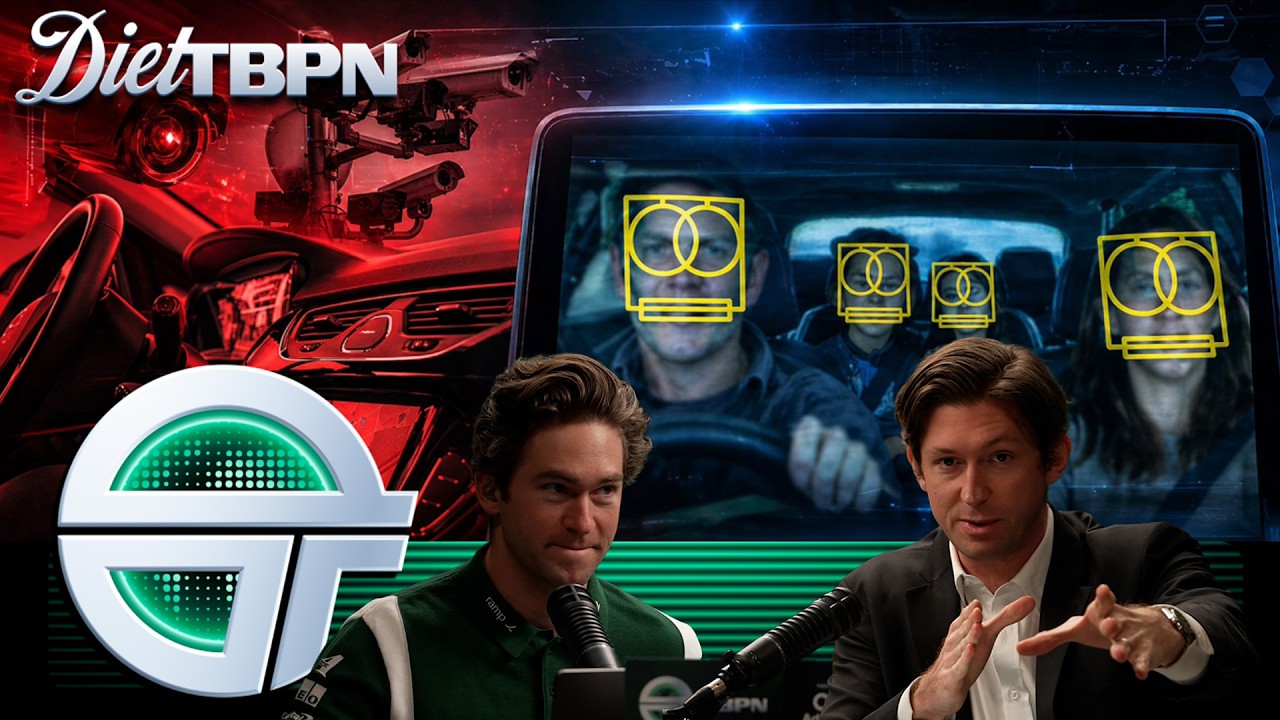

Is the 2027 In-Car Surveillance Mandate Actually Real?
Yes — and no. The viral story claiming that every new car sold in the United States will be required by law to have drunk driving detection technology by 2027 is based on something real, but the scariest details are either exaggerated or simply not part of what's currently on the table. Congress did pass a mandate directing the National Highway Traffic Safety Administration (NHTSA) to create a standard for advanced drunk driving prevention technology in new passenger vehicles. But the 2027 date being cited everywhere is not a hard deadline. The law, passed in 2024, explicitly allows for delays — the NHTSA will only issue a binding mandate requiring automakers to roll out the tech when the technology is actually ready. And right now, the NHTSA says the technology is not ready.
So the short version: the legal framework exists, the intention is real, but cars are not going to suddenly ship with government-mandated sobriety checkpoints starting January 2027. The timeline is soft, the tech still has hurdles, and the most dystopian scenarios being shared online aren't what's actually being proposed.
What Did Congress Actually Pass and What Does NHTSA Say?
The mandate was passed with bipartisan support, which tells you something about why drunk driving prevention has broad political appeal. More than 10,000 alcohol-related deaths occur on US roads every year. That's a massive, preventable public health problem, and the argument for doing something about it is hard to dismiss.
What Congress directed was essentially: NHTSA, figure out a standard for passive drunk-driving prevention technology and then require automakers to include it in new vehicles. The key word is passive. The government is not interested in the blow-into-a-tube systems that currently exist for repeat DUI offenders — those are active systems that take time and require deliberate action from the driver. The goal is something invisible, automatic, and built into the car from the factory.
NHTSA's current position is that the passive technology needed to meet that standard at scale simply isn't there yet. That's why the 2027 date has become fuzzy — it was always a target, not a law.
How Would Passive Alcohol Detection in Cars Actually Work?
This is where it gets genuinely interesting. There are three main approaches being explored:
- Breath sensing: Sensors embedded in the cabin — essentially "smell-vision" — that detect alcohol in the air. If the concentration is high enough, the car won't start.
- Touch-based detection: A sensor built into the start button that scans through your fingertip for alcohol particles in your bloodstream. It sounds sci-fi, but researchers say this is closer than most people realize.
- Camera-based AI analysis: A driver-facing camera that uses AI to assess whether the driver appears intoxicated based on eye movement, facial behavior, or other visual cues.
Each of these approaches is arguably close to functional in a lab or prototype setting. An AI startup or a university research team could probably put together something that's 90% or even 99% accurate. The problem is that 99% accuracy sounds great until you run the math on American driving habits.
What Happens When the System Gets It Wrong?
Here's the number that reframes the whole debate: Americans take roughly 224 billion driving trips per year. That's close to 350 million people each averaging about two trips a day, every day of the year. At 99.9% accuracy, you're still generating hundreds of millions of incorrect results annually. And because the overwhelming majority of trips are taken by sober drivers — drunk driving represents a tiny fraction of all trips — the false positive rate in real-world use would be staggering.
Picture this: you wake up, you're a little tired, you spritzed on some cologne before heading to work, and your car flags you as potentially intoxicated and refuses to start. You're late. Your boss is calling. And your car's AI has decided you can't be trusted with the wheel. That scenario, multiplied across millions of people every year, is a real problem — even if the underlying goal of the technology is sound.
The current thinking around a more reasonable implementation is something called pre-drive lockout — the car checks you before you start driving, rather than shutting off mid-highway. That's less dangerous than a car cutting out at speed, but it still creates edge cases. What if you're at the beach, you've had two glasses of wine, you're not planning to drive — and then a tsunami warning goes off? Your car has no mechanism to weigh your 0.08 BAC against the fact that there's a wall of water coming up the shore.
Can the Government Use This Tech to Remotely Shut Off Your Car?
This is the fear driving the most viral versions of this story, and it's worth being direct: a remote kill switch is not part of the current proposal. What's being discussed is a system that prevents the car from starting if it detects intoxication — not a system that allows government agencies or automakers to flip a switch and disable your vehicle while you're driving down the highway.
That said, libertarian-leaning critics and what you might generously call "tinfoil enthusiasts" have pointed out that once the hardware and software infrastructure for driver monitoring is baked into every new car, the capability for remote intervention becomes technically possible even if it's not the stated intention today. That's a legitimate concern about where the technology could evolve, even if it's not where the current mandate points.
The backlash has been bipartisan in its own weird way — conservatives worried about Orwellian overreach are citing the same infrastructure concerns that privacy advocates on the left have raised about data collection in connected vehicles generally. If a camera is watching you every time you drive, who owns that footage? Who can access it? Can your insurance company use it? Can law enforcement subpoena it? These questions are not answered by the current NHTSA mandate, and they won't go away as the technology matures.
Will Pre-2027 Cars Become Collector Items Over This Law?
There's already a market psychology forming around this. Car enthusiasts and collectors have long marked "the last of" moments — the last manual transmission Ferrari, the last naturally aspirated supercar, the last car without stability control. The argument being floated now is that whenever this mandate finally does kick in, the last model year before mandatory driver monitoring becomes a new category of collectible.
People in comment sections are already talking about buying a 2026 model and keeping it in pristine condition specifically to avoid having a camera watching them every time they drive. Whether that translates into meaningful price premiums the way air-cooled Porsches or pre-emissions muscle cars have is a different question — but the instinct is real and the precedent exists.
The more compelling long-term argument is that this whole conversation probably gets superseded by full self-driving technology. Once vehicles can drive themselves reliably without any human intervention required, the question of whether the human in the front seat is sober becomes largely academic. The irony is that the same AI wave making drunk driving detection systems more feasible is also building the autonomous vehicles that would make those systems unnecessary.
Bottom Line: Should You Be Worried?
The core concern is legitimate — passive alcohol detection in every new car is the direction Congress wants to go, and it will eventually happen. But the 2027 deadline is not a cliff edge, the remote kill switch is not currently on the table, and the technology still has meaningful accuracy and fairness problems to solve before it's ready for the quarter-trillion trips Americans take each year. Watch the NHTSA rulemaking process, not the viral posts. The real story is slower, messier, and more interesting than the scary version.