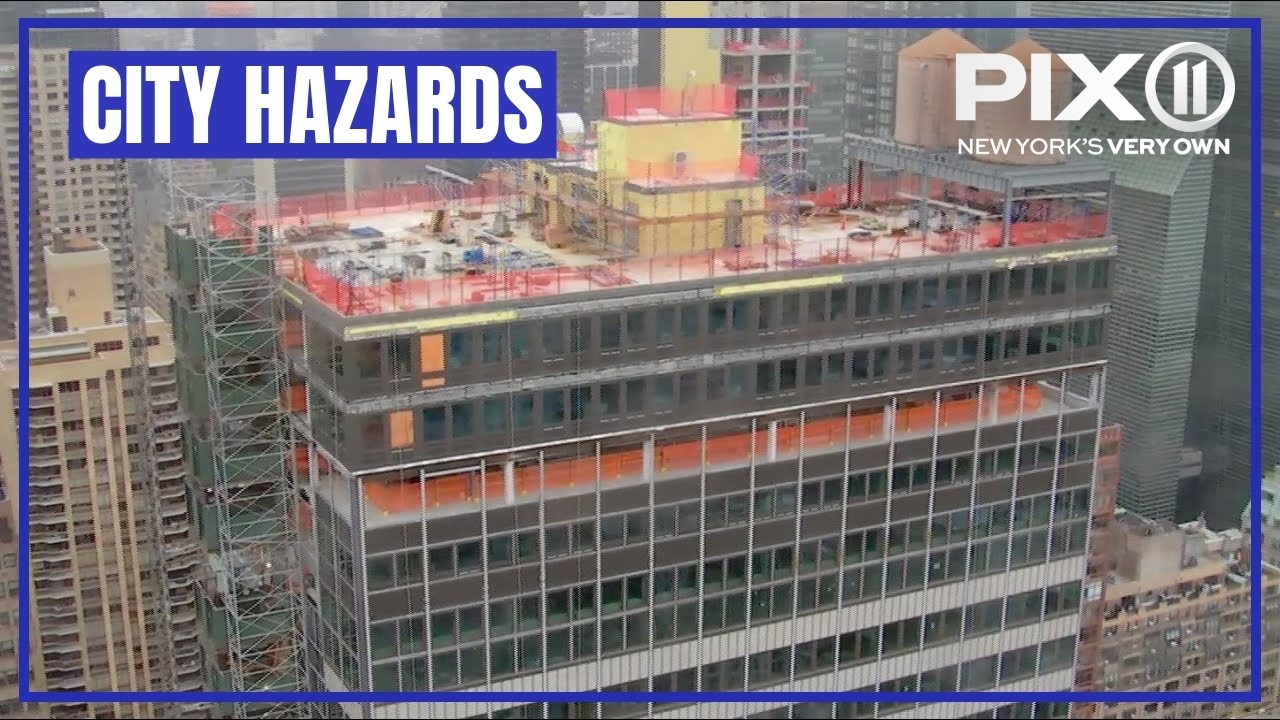

What Happened at the 42nd Street Construction Site?
Early on a busy weekday morning, a construction site at 235 East 42nd Street in Midtown Manhattan became the center of a major emergency response. Just before 8:00 AM, first responders received reports of bricks falling from the high-rise building. When firefighters and Department of Buildings officials arrived, they discovered something far more alarming: two structural columns had buckled on the 21st floor, and multiple cracks along with sagging floors were found throughout the level. Workers on site were evacuated immediately, and a large swath of 42nd Street — between Second and Third Avenues — was shut down, snarling the already busy Midtown commute.
The FDNY launched a floor-by-floor inspection of the entire structure to determine the full scope of the damage. Structural engineers were called to the scene alongside Department of Buildings inspectors, and a command post was established under scaffolding directly across from the PIX11 studios on 42nd Street. The scale of the response — fire trucks, emergency personnel, and flashing lights stretching down the block — made clear this was no minor incident.
Which Midtown NYC Building Had Structural Damage?
The building at the center of this emergency is 235 East 42nd Street, a 33-story commercial tower located between Second and Third Avenues in Midtown Manhattan. The structure sits just steps from Grand Central Terminal and is surrounded by busy office buildings, restaurants, hotels, and major transit hubs including subway stops and bus lines.
At the time of the incident, the building was an active permitted construction site. It is currently undergoing a massive conversion from commercial office space into residential apartments — a project that has drawn significant attention from city planners, developers, and housing advocates alike. The general contractor on record is Robert Travis, and PIX11 reached out to him for comment as the investigation unfolded.
From the outside, the damage was not immediately visible to onlookers. Boarded-up windows and standard construction fencing surrounded the base of the building, but it was the footage from inside the building — obtained by PIX11 — that revealed the true severity of the situation. Video showed the two beams visibly bending and straining under pressure, with one column near a window appearing severely compromised.
What Caused the Columns to Buckle in This Manhattan Building?
As of the time of reporting, investigators had not yet confirmed a definitive cause, but several theories were being examined on the ground. The FDNY noted the discovery of multiple cracks and sagging floors on the 21st floor, in addition to the two buckled structural columns. Some officials on scene suggested the damage could be weather-related, though no official cause was confirmed.
A construction worker who was evacuated from the building and spoke live on PIX11 described a frightening scene. He had been working on the 10th floor when he received a call ordering everyone out. He described the sensation that the building had shifted or tilted slightly to the left — an account that aligned with the FDNY's findings of structural distress. He and his five-man crew evacuated immediately.
Reporters and anchors on scene also raised an important question: had the construction team recently begun adding heavier materials or loads to the 21st floor as part of the office-to-residential conversion? Changing a building's internal load-bearing profile — as is required in such large-scale conversions — can introduce new stress on existing structural elements. Investigators were tasked with determining whether this, combined with any pre-existing weaknesses, contributed to the buckling.
Could Pre-Existing Issues Have Been a Factor?
One theory raised during live coverage was that crews may have actually arrived on-site that morning specifically to address pre-existing structural cracks or sagging floors — and that the situation escalated before repairs could be made. The sequence of events — bricks falling, followed by the discovery of buckled beams and sagging floors — suggested that structural problems may have been developing for some time before the morning's dramatic events.
Why Were Nearby Buildings Evacuated Near Grand Central?
Given the proximity of 235 East 42nd Street to some of Midtown Manhattan's most densely occupied real estate, authorities made the precautionary decision to evacuate nearby buildings as a safety measure. When structural integrity is in question on a high-rise, the risk of falling debris — including bricks, which had already been reported — poses a serious threat to people in adjacent structures and on the streets below.
The area around 42nd Street and Second Avenue is one of the most heavily trafficked corridors in New York City. In addition to commuters and office workers, the neighborhood is home to the Westin Hotel, several major transit lines, and sits just blocks from Grand Central Terminal. Evacuated construction workers gathered outside the Westin while awaiting word on whether they could return to the site. Commuters were also caught in the chaos, with subway riders and bus passengers rerouted or left waiting for information.
Second Avenue and portions of 42nd Street were shut down, creating gridlock that rippled through Midtown throughout the morning rush. Anyone heading into that part of the city was urged to avoid the area entirely until further notice.
Were There Any Injuries at the 42nd Street Incident?
Despite the severity of the structural damage, no injuries were reported as of the time of this report. All construction workers on site were accounted for following the evacuation. The FDNY confirmed that the evacuation was orderly and that emergency responders moved quickly to secure the perimeter and account for all personnel.
The construction worker interviewed live on PIX11 expressed relief that everyone made it out safely, noting that his team of five workers exited without incident after receiving the call to evacuate. He described the moment as "very scary," adding that the fear of a potential collapse was on everyone's mind as they left the building.
Is This the Largest Office-to-Residential Conversion in NYC History?
Yes — and the scale of this project is part of what makes this incident so significant. The building at 235 East 42nd Street is reportedly undergoing the largest office-to-residential conversion in New York City history, with plans for approximately 1,600 rental apartments upon completion. The project was slated for completion in 2027.
The conversion involves not only repurposing the existing 33-story structure but also adding 10 additional stories to the building — a major engineering undertaking that adds considerable complexity to the project. Work was ongoing both inside the building and vertically, making the structural integrity of the entire edifice critically important.
What Is the Former Pfizer HQ Being Converted Into?
For decades, 235 East 42nd Street served as the headquarters of pharmaceutical giant Pfizer. The site has long been a landmark of Midtown's commercial real estate landscape. Now, it is being reimagined as a large-scale mixed-use residential development, with rental apartments on the upper floors and commercial space remaining on the ground level.
The project had been widely cited as a bellwether for New York City's broader push to convert underutilized office space into much-needed housing — a policy priority that has gained significant momentum in recent years. The 42nd Street building was considered the flagship example of what that transformation could look like at scale. The structural emergency on its 21st floor now raises serious questions about the challenges and risks involved in such ambitious conversions, and what oversight is required to ensure worker and public safety throughout the process.
Investigators from the FDNY and Department of Buildings were continuing their floor-by-floor assessment as this story developed. Updates were expected as structural engineers completed their review of the damaged columns and surrounding floors.